Your web browser is out of date. Update your browser for more security, speed and the best experience on this site.
Find out more
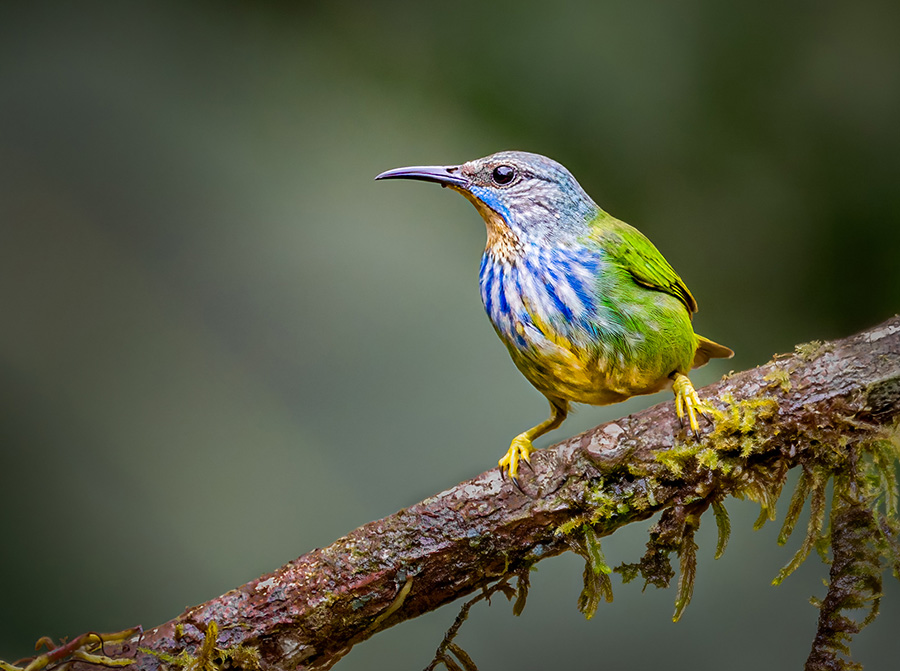
2 Louise Sayers ARPS
CREDIT: Louise Sayers ARPS

Associate (ARPS)

Associate recognises purposeful and coherent photographic practice, supported by independent photographic judgement.

The Associate of the Royal Photographic Society (ARPS) recognises photographic practice characterised by purpose, coherence and independent photographic judgement. 

At Associate, you will present a purposeful and coherent body of work. Your photographic, technical, editorial and presentational choices should work together to support your intentions for the work. 

Your submission should demonstrate considered and independent photographic judgement, with awareness of the context and audience for your work and a clear sense of your own photographic direction. 

At a glance

  1. Associate recognises: Coherent photographic intention and sustained practice, demonstrated through a purposeful and resolved body of photographic work.
  2. Your submission includes: A body of photographic work that meets the requirements for your chosen area of photographic practice and a Project Statement of no more than 300 words. For image-based submissions, your body of work consists of 15–20 images.
  3. You select: The area of photographic practice that best represents your submission.
  4. Support included: Access to structured tutorial support before assessment.
  5. Assessment: Your final submission is assessed against the Associate standard and six photographic-practice assessment criteria.
  6. Possible outcomes: Award, Resubmission or Not awarded.
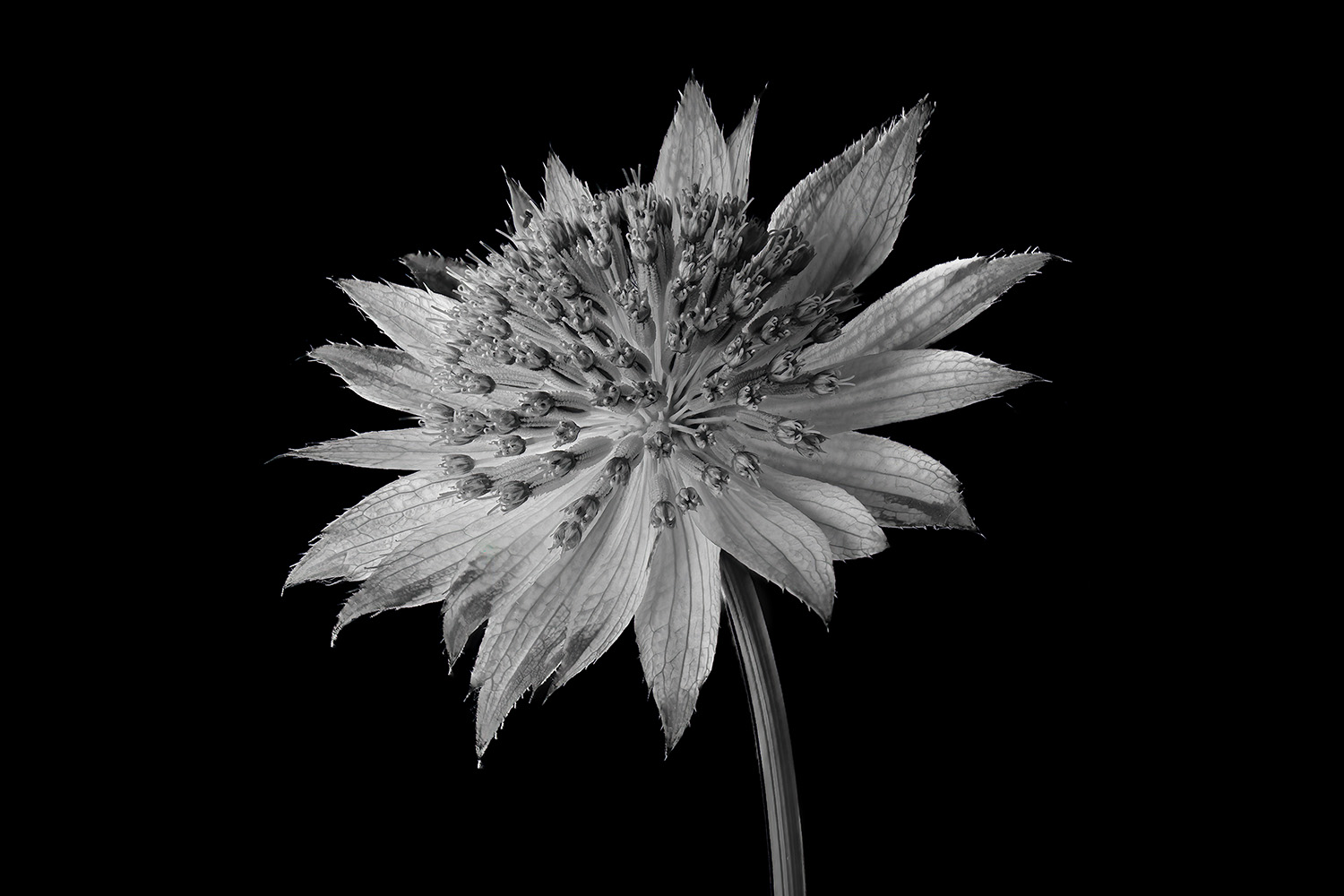
Jeremy Roussak ARPS 11
CREDIT: Jeremy Roussak ARPS

The Associate Standard

Associate recognises coherent photographic intention and sustained practice. It confirms that the applicant can develop and present a purposeful body of work in which technical, visual, editorial and presentational decisions support a clearly realised intention. The work demonstrates increasing independence, awareness of context and audience, and a developing sense of photographic direction. 

In plainer terms, Associate asks you to show that you can develop an idea, subject, project or area of photographic interest into a resolved body of work. 

Your submission should show that you understand what you are trying to achieve and can make photographic choices that support that intention consistently across the work. 

At Associate, individual photographs matter, but Distinctions Examiners are also interested in how the work functions as a body of work. Your photographic, technical, editorial and presentational decisions should work together to support your intention. 

Your submission should demonstrate that you can sustain and develop your practice, make increasingly independent photographic decisions, and consider the context in which your work sits and how it may be encountered or understood by an audience. 

Is Associate the right level for you?

Associate may be right for you if you are developing a sustained photographic practice and are ready to produce a purposeful and resolved body of work. 

You do not need to hold LRPS before applying for Associate. You can apply directly at Associate level. 

If you already hold LRPS, you do not have to change your photographic interests when progressing to Associate. You may continue developing the same subject, project or area of practice, but your Associate submission must provide new evidence of achievement at Associate level. Work submitted for an awarded Distinction cannot simply be resubmitted as evidence for a higher Distinction. 

How will your submission be assessed?

Your Associate submission is formally assessed against six criteria. 

These criteria help Examiners consider different aspects of your photographic practice and decide whether your submission demonstrates the Associate standard. They are considered together and are not scored individually. 

  1. Is your intention clear and realised through the work?

Assessment criterion: Intention and purpose 

Examiners consider the clarity and appropriateness of your photographic intention. 

At Associate, the intention should be sufficiently clear and developed to provide a meaningful basis for the body of work. 

Your Project Statement also helps Examiners understand your intention and relevant context. 

  1. Have you realised the work effectively?

Assessment criterion: Photographic and technical realisation 

Examiners consider how effectively your photographic, technical and material choices realise the work. 

The particular technical skills or processes you use will depend on your photographic practice. What matters is that your choices are controlled, appropriate and sufficiently resolved to support the intention of the work.  

  1. How effectively does the work communicate?

Assessment criterion: Visual communication 

Examiners consider how the work communicates and creates meaning for an audience. 

At Associate, this is closely connected to your intention. Examiners consider whether your visual choices support what you want the work to communicate or explore. 

  1. Have you selected, structured and presented the work effectively?

Assessment criterion: Editing, sequencing and presentation 

Examiners consider your selection of work and its order, form and presentation. 

At Associate, editing is an important part of demonstrating your photographic judgement. There is no preferred Associate layout, sequence or presentation style.The question is whether your choices help the body of work function effectively. 


  1. Is the body of work coherent and developed?

Assessment criterion: Coherence and development 

Examiners consider whether the work has been developed and sustained as a body of work, and whether its different elements contribute to a coherent and purposeful submission. 

At Associate, coherence is about more than visual similarity. It is about whether the work has developed in a way that supports the intention and whether the individual parts contribute meaningfully to the whole. 

  1. Does the submission show your own photographic judgement and direction?

Assessment criterion: Independence, context and voice 

Examiners consider your independent judgement, awareness of relevant context and audience, and whether the work begins to show an approach and set of photographic priorities that are recognisably your own. 

Assessment is holistic. Examiners consider your complete body of work and Project Statement against the Associate standard, guided by the six assessment criteria. 

The criteria are not scored separately, and you do not need to demonstrate each criterion through a particular photograph or part of your submission. Different aspects of your work may contribute to several criteria at the same time. 

Your Submission:

David Harris ARPS 1
CREDIT: David Harris ARPS

Your area of photographic practice

At Associate, you select the area of photographic practice that best represents your submission. 

Your selected area helps provide context for the work and helps the RPS allocate Examiners with appropriate knowledge and experience. It does not restrict the influences, approaches or methods that may be evident in your work. 

The areas of practice are: 

  • Documentary and photojournalism 
  • Landscape, place and environment 
  • Nature and wildlife 
  • Travel and culture 
  • Applied and professional photography
  • Visual art and constructed photography
  • Photobooks
  • Moving image, multimedia and expanded photographic practice 

The areas are deliberately broad. They are not separate qualifications and do not have different Associate standards. 

Your work may draw on more than one area. Choose the area that best represents the submission overall. 

You can find more information about each area of photographic practice, including guidance to help you choose the most appropriate area for your submission, on the RPS website.

1 Sara Cremer ARPS
CREDIT: Sara Cremer ARPS
Your Associate submission

For ARPS Photographic Practice, you submit: 

  • a body of photographic work that meets the requirements for your chosen area of photographic practice; and 
  • a Project Statement of no more than 300 words. 

For Documentary and photojournalism; Landscape, place and environment; Nature and wildlife; Travel and culture; Applied and professional photography; and Visual art and constructed photography, you submit between 15 and 20 images.


2 Louise Sayers ARPS
CREDIT: Louise Sayers ARPS
Your Project Statement 

A Project Statement of no more than 300 words forms part of every ARPS Photographic Practice submission. 

Its purpose is to help Examiners understand your photographic intention and the relevant context for the work. 

Your Project Statement should help Examiners understand: 

  • your intention for the work; 
  • the relevant context for your approach; 
  • where appropriate, how or where you intend the work to be encountered. 

You may also briefly explain an aspect of your process or way of working where this is important to understanding the submission. 

3 Nur Tucker FRPS
CREDIT: Nur Tucker FRPS
Print submissions
Submitting Your Work

Prints may be submitted mounted or unmounted. Framed work should not be submitted. 

Individual prints or mounts should normally be no larger than 16 x 24 inches (approximately 406 × 610 mm). If a larger format is integral to your photographic practice or the intended presentation of the work, contact the Distinctions team before submitting. 

Where the arrangement of the work is significant, include a simple presentation plan showing the intended order or arrangement. 


4 Jeremy Roussak ARPS
CREDIT: Jeremy Roussak ARPS
Digital Still-image submissions
Submitting Your Work

Digital still images must be submitted as JPEG files in the sRGB colour space. 

Each image must be at least 1,500 pixels on the longest edge. 

Files must be numbered in the order in which they are intended to be viewed. Use the following file-naming convention: 

Firstname_Lastname_Year_A01.jpg 

Firstname_Lastname_Year_A02.jpg 

5 Martin Houghton ARPS
CREDIT: Martin Houghton ARPS
Moving image, multimedia and expanded photographic practice 
Submitting Your Work

Moving-image files should be submitted in MP4 format and at a minimum resolution of 1,920 pixels on the longest edge. 

Moving-image submissions must not exceed 10 minutes in total duration unless different requirements are specified for the relevant form of practice. 

For multimedia, installation, interactive, expanded or other work that cannot be submitted in its original form, provide appropriate documentation in accordance with the submission requirements. The material supplied must give Examiners sufficient evidence to understand the form, scale, presentation and experience of the work.

6 Lin Wyles ARPS
CREDIT: Lin Wyles ARPS
Photobooks 
Submitting Your Work

If you are submitting a photobook, you will be able to follow the Photobooks submission requirements provided for your assessment cycle. These explain how the photobook should be supplied and any additional material required for assessment. 

Clipboard

Could you be exempt?

If you've completed one of the recognised academic courses in the last five years you can apply for an exemption.

Exemptions