
Minke Groenewoud-van Velden is a member of the RPS Benelux Chapter who lives in the region of West-Friesland in The Netherlands. In May 2025, she was awarded her Associateship with a successful submission of her panel ‘Transience’. Minke shares with us her inspiration, aim and theme for her panel of work, the process and path she followed from idea to submission and her recommendations if you are embarking on your own Distinctions journey.
Claudine: What gave you the inspiration for your Distinctions panel?
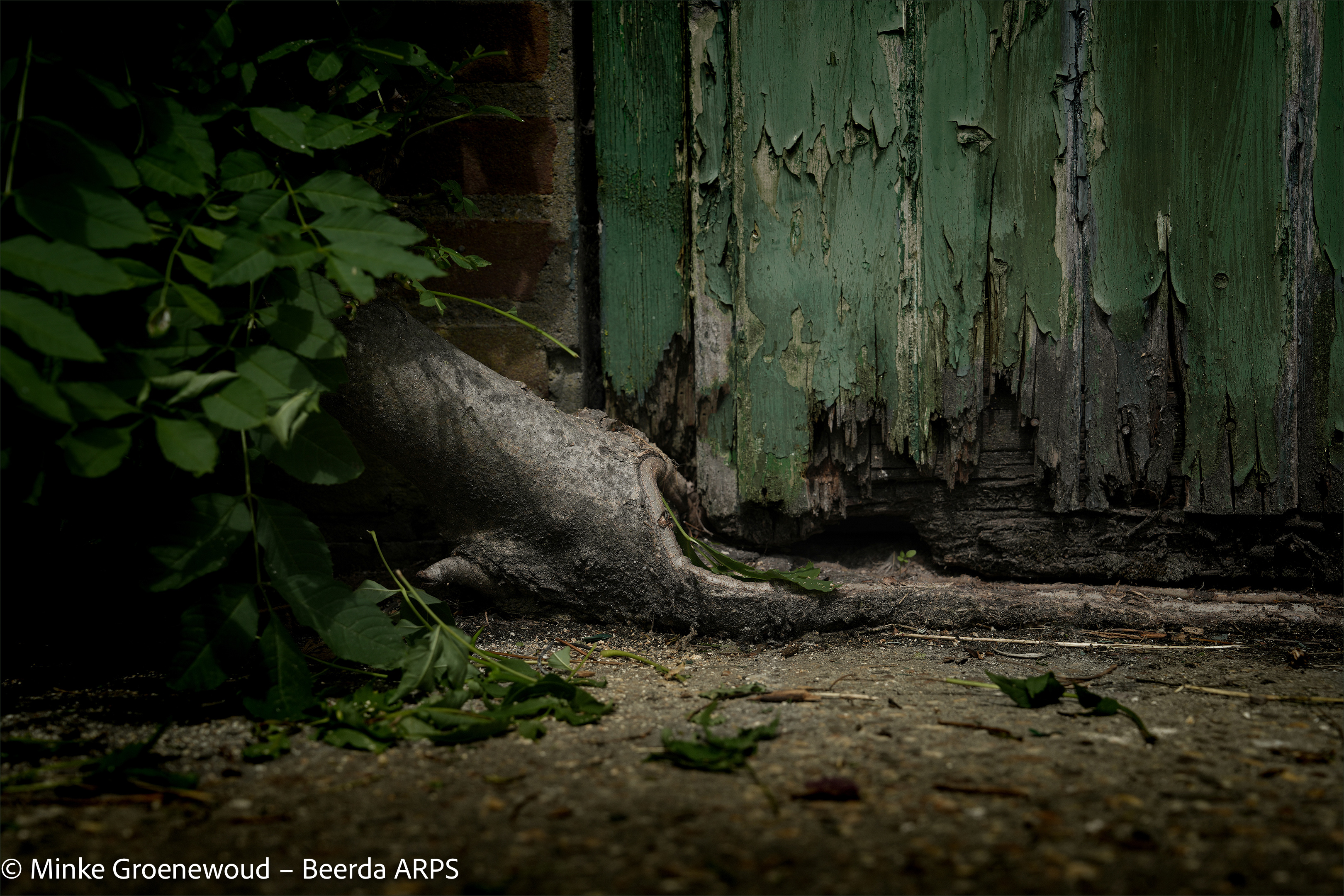
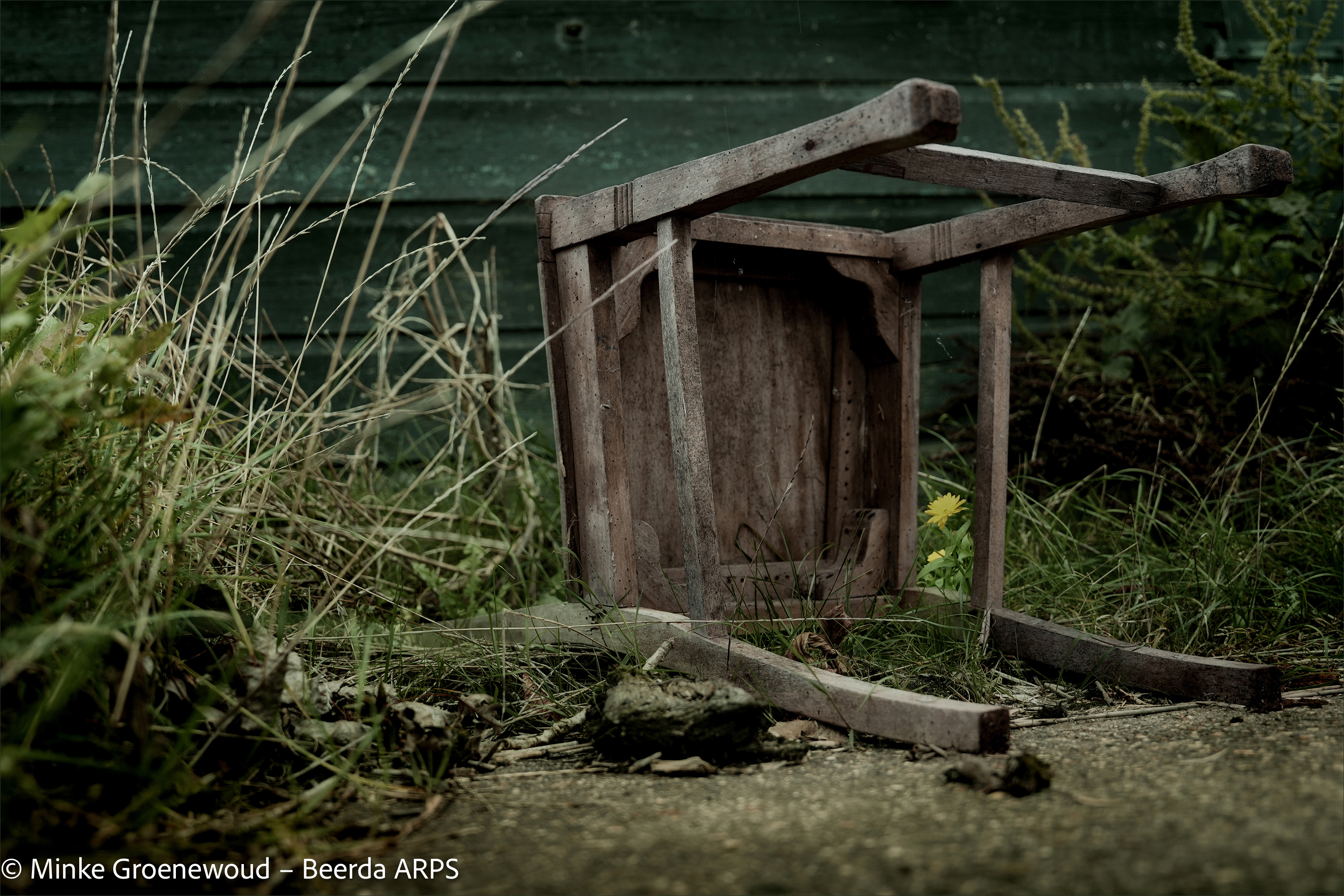
The inspiration for my ARPS panel Transience came from an abandoned farm in West-Friesland, the region in the Netherlands where I live. The farm is just a five-minute bike ride from my home. This place became a metaphor for impermanence, not only of buildings but also of time, culture and human presence. The farm offered me the opportunity to explore transience in a restrained and contemplative way, which closely aligns with my way of working as a photographer.
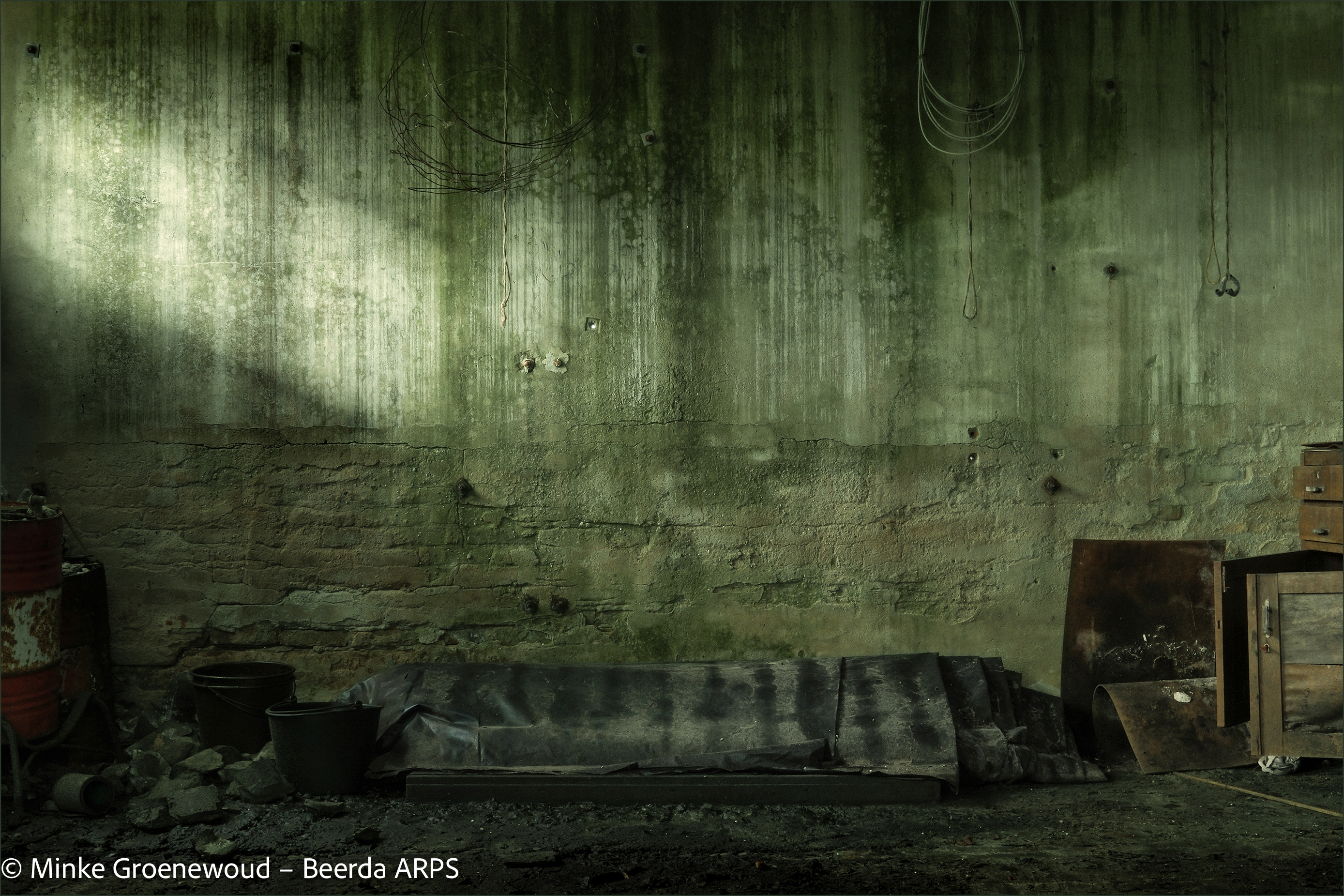
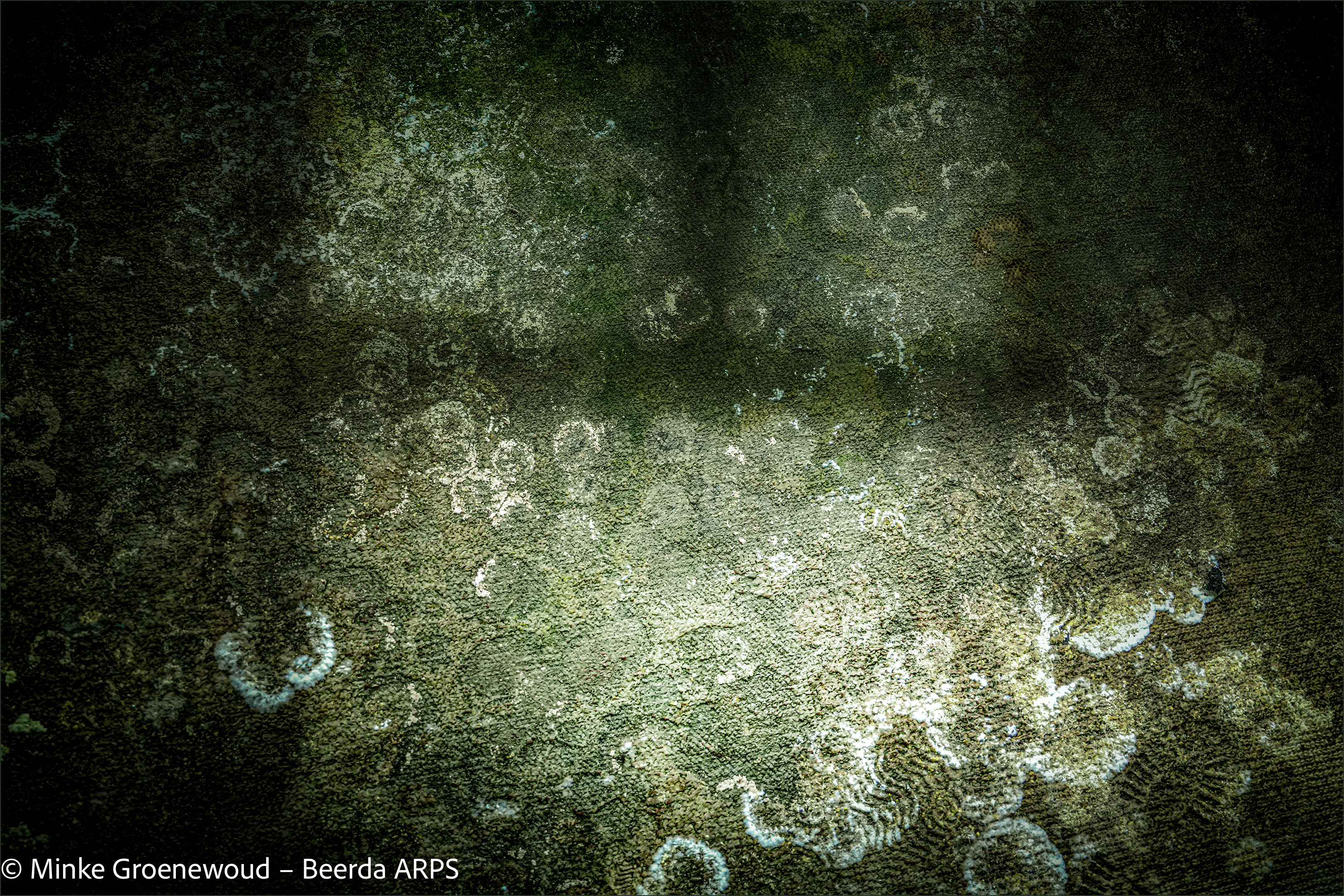
02 Layers of time - Stains, textures and traces on the wall reveal years of slow decay and neglect.
Claudine: Did you set out with a clear theme, or did it emerge through the process?
Although the idea of impermanence was present from an early stage, the series developed organically while photographing the farm. Already as I took my first images of the location, I realised that this work had the potential to develop into an Associate panel.
At the start, I worked very intuitively, responding to light and shadow, texture and atmosphere. Only later, when reviewing the work as a whole, did the coherence of the series become clearly visible. I recognised which elements were still missing and returned one final time to the location with a clearer sense of what I was looking for. From that point onwards, I consciously refined the project, strengthening its visual and emotional consistency so that the theme of transience was not explained literally, but that it was also felt.
Claudine: How did you select your images?
Image selection proved to be one of the most demanding stages of the process. Each photograph needed to stand strong on its own, while also contributing to the coherence of the panel as a whole. I paid close attention to tonal consistency, the balance between interior and exterior spaces, and a calm visual flow throughout the series.
The decisive question was whether an image genuinely contributed to the narrative of slow decay and the gradual reclaiming by nature, and whether it visually supported what I articulated in my Statement of Intent. A number of ‘darlings’ had to be removed because they disrupted the overall balance and quiet rhythm of the panel.
Claudine: Are there images that are particularly important to you?
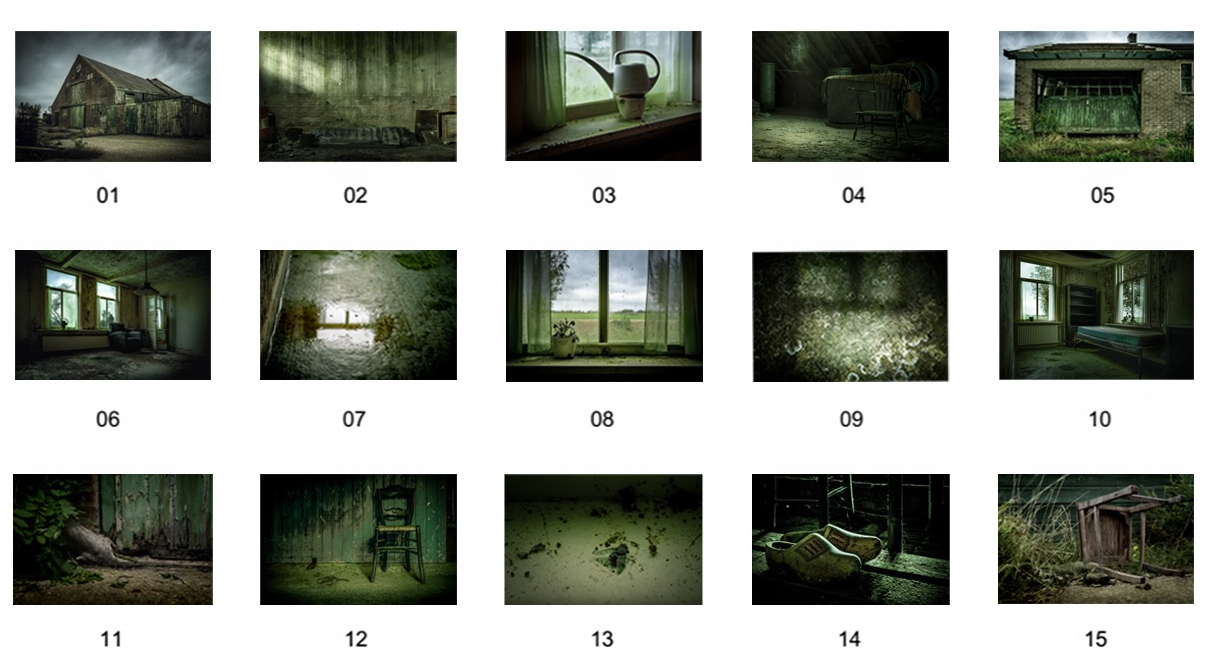
Yes, several images are especially representative of what I aimed to achieve with this series. The exterior view of the farm in the opening landscape image acts as an anchor for the panel and firmly places the story in its context.
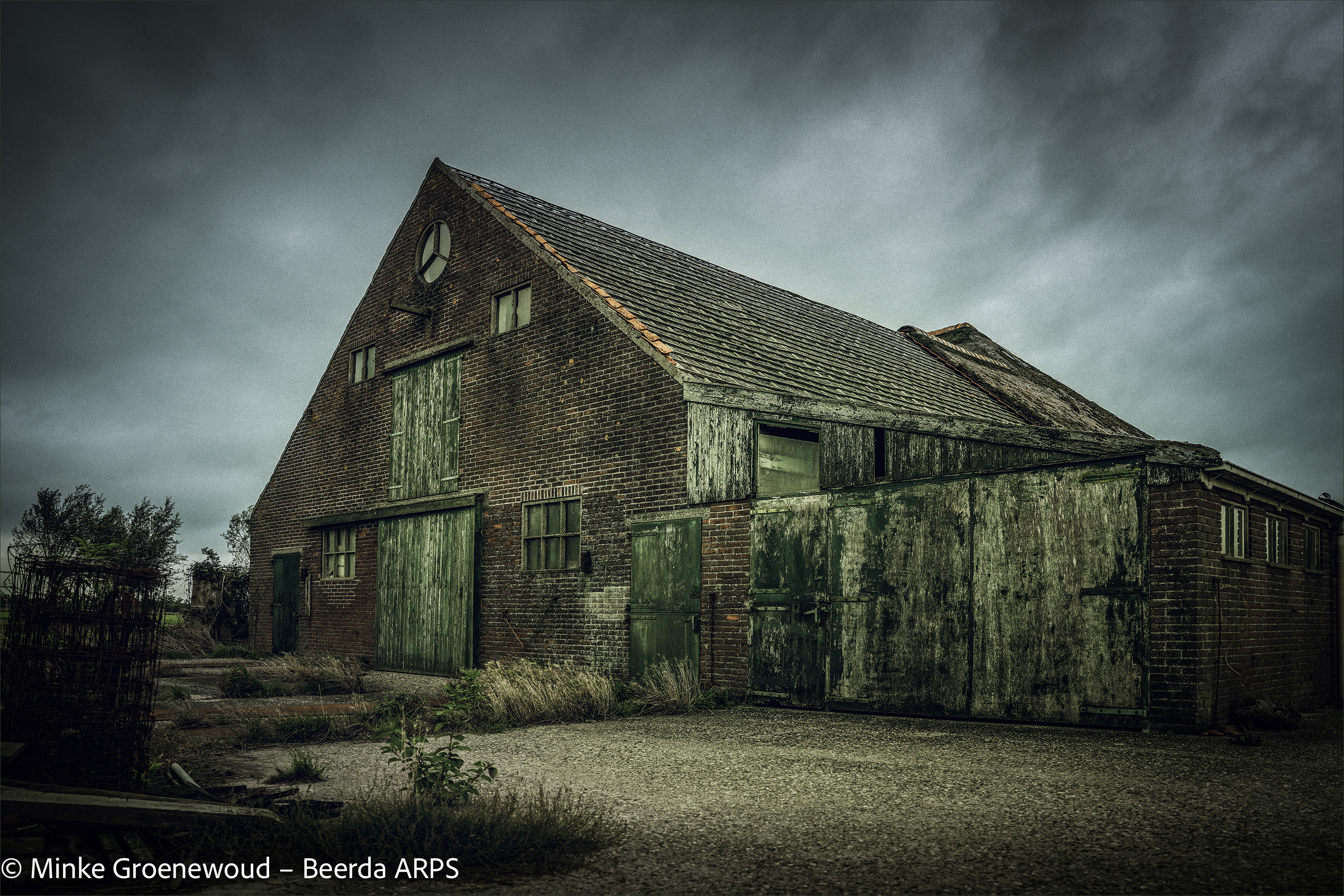
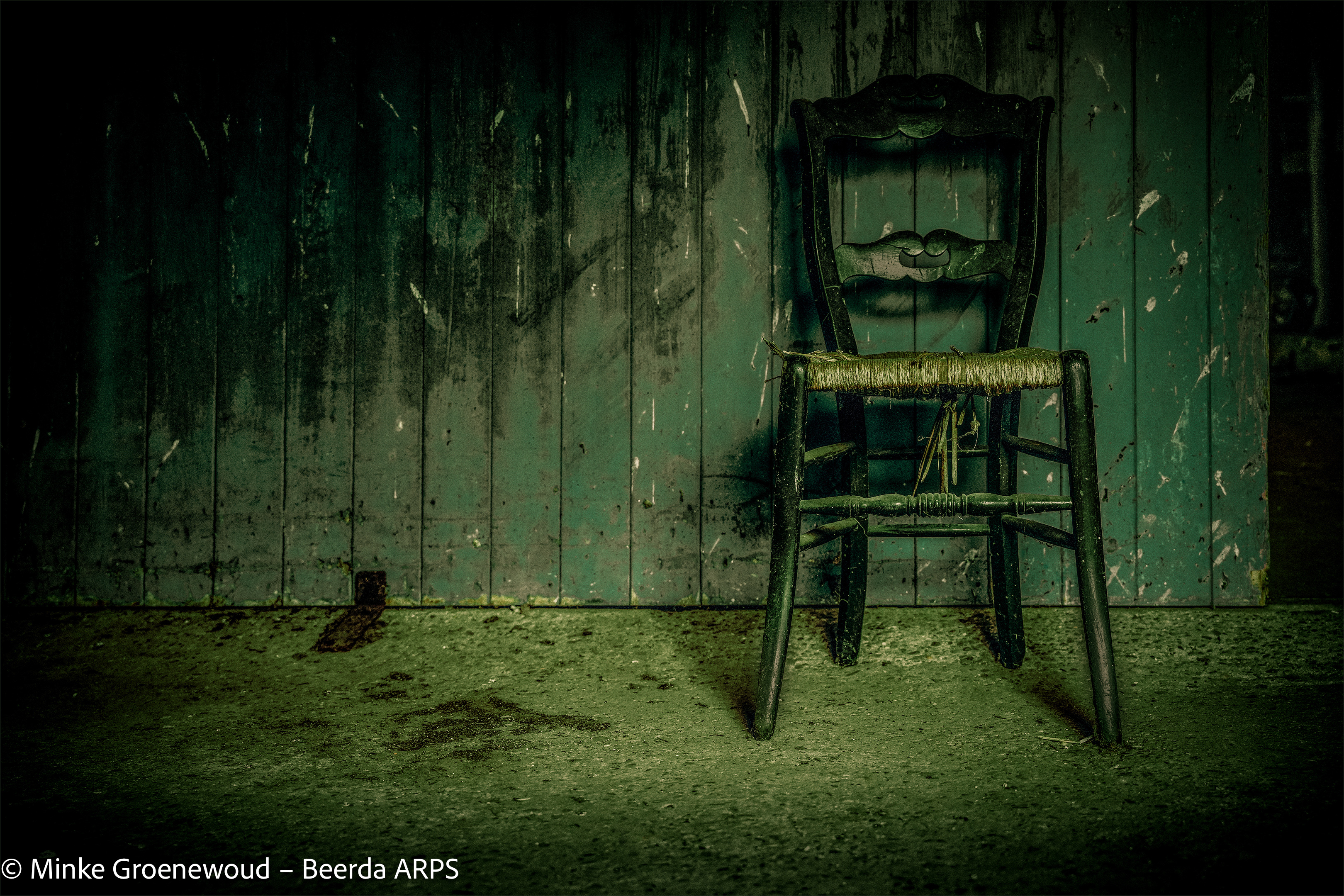
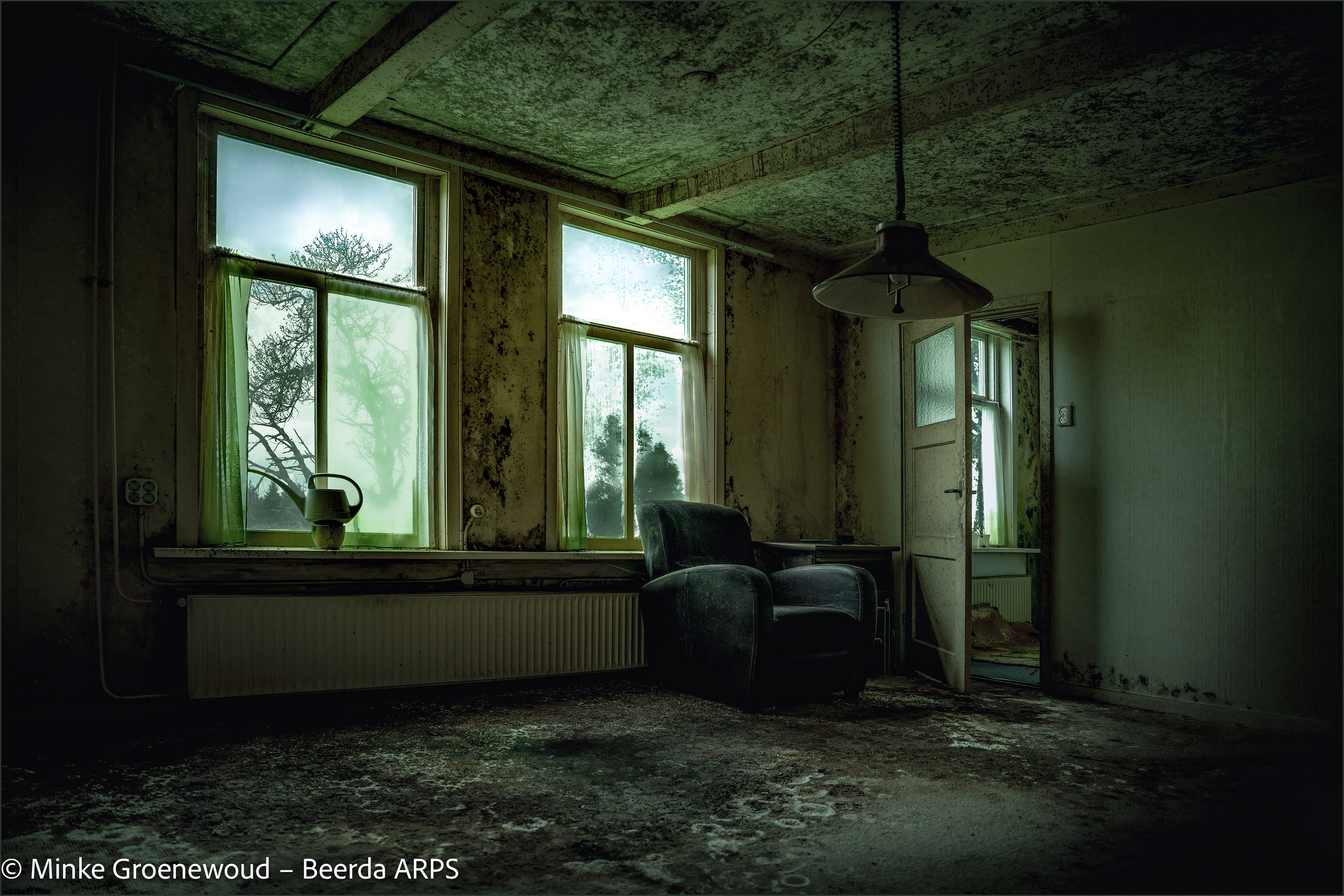
My narrative centres on this farm and many others like it, as increasing numbers of such monumental buildings disappear. The recurring and characteristic green colour remains a constant visual element throughout the panel. This green paint, so defining within the West Frisian landscape, plays an important role here and symbolizes a fading aspect of regional culture which I wanted to preserve visually. The interior images featuring windows function as transitional images between inside and outside, past and present.
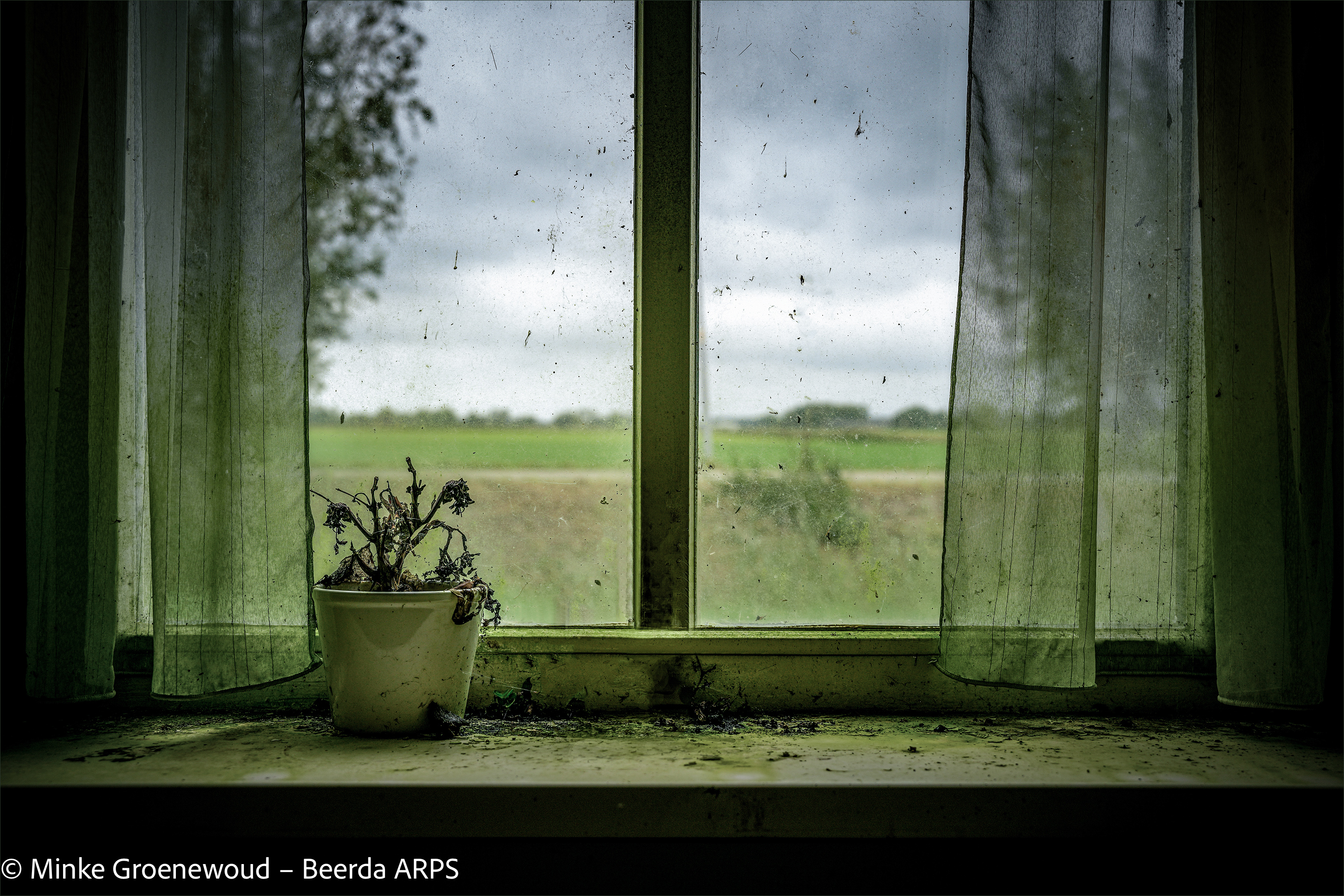
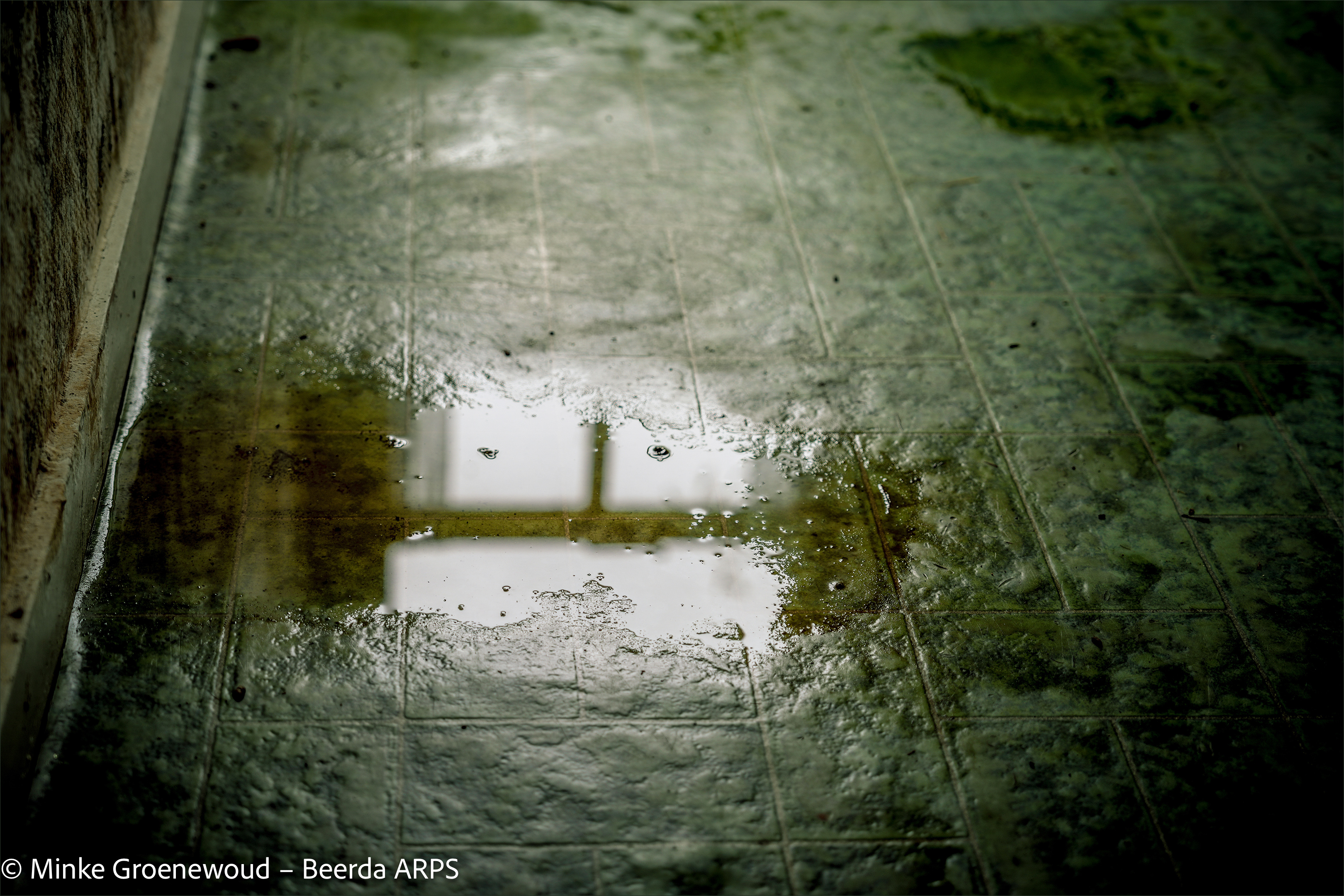
The more abstract detail images slow the pace of the panel and invite contemplation, for example, the puddle of water on the groundsheet reflecting the window silhouette and the mould-covered flooring with a visible footprint, and the central image of the window with a withered plant on the windowsill are among my personal favourites. Together, these images convey both physical decay and cultural impermanence.
Claudine: How did you approach the layout and presentation of your panel?
The layout was carefully defined to guide the viewer calmly through the series. I aimed for a balanced rhythm in which wider contextual images alternate with more intimate details. Transitions between images were deliberately chosen based on tone, colour and visual weight. Not only does the sequence read coherently horizontal and vertical within each row, but the diagonal relationships across the panel were also consciously considered.
Claudine: Did you have any support during the process?
I received valuable feedback from Richard Hall during a RPS one-to-one mentoring session. He pointed out a subtle halo in the sky of the landscape image featuring the farm (01) which I subsequently corrected. He also gave me the advice to keep the Statement of Intent concise and to the point. Beyond that, his response was very encouraging. The session gave me greater confidence and confirmed that I was on the right path.
TRANSIENCE
This panel explores the concept of transience through the quiet and relentless decay of an abandoned farm in
West-Friesland, The Netherlands.
The images examines how nature gradually and relentlessly reclaims manmade structures, I see this process as a metaphor for the impermanence of life and the passage of time.
In my series, I aimed to incorporate the signature of the typical 'West Frisian' green color of paint found on (and in) the traditional old farms in this particular region. This is also the region where I live. This color represents a fading aspect of Dutch culture that I wanted to preserve and showcase in a style that is recognizable as my own."
112 words
Minke Groenewoud-Beerda
Date of assessment: 14/05/2025
Claudine: What surprised you most during the process?
What surprised me the most was how my pursuit of perfection continued to grow. There never seemed to be a moment when the panel felt finished. Initially, I opted for a digital submission but I later realised that my work would benefit even more from being presented as prints. However, my increasing perfectionism meant that I ultimately missed the deadline for a printed submission. As the deadline for the digital submission approached, there came a moment when the panel finally felt complete to me.
Claudine: What was the outcome?
I was awarded my Associateship in May 2025. This achievement was both affirming and clarifying. It was not only a recognition of the work itself, but also a confirmation of my artistic direction and capabilities. The process strengthened my confidence as a photographer and deepened my understanding of building a coherent photographic narrative and working in series.
Claudine: What advice would you give to someone embarking on a Distinctions submission?
Allow yourself time to grow into your series so that you can recognise what is missing and what can be removed. Ensure you have sufficient time and enough images to choose from. Be critical. Be more critical. Place prints somewhere in your living space and walk past them regularly. Additionally, create an overview image on your smartphone so you encounter the series frequently.
It is easy to overlook issues on a computer screen, while they often become apparent when seen repeatedly in a domestic environment. Also consider the overview image as a standalone photograph: does the balance of colour, line and symmetry work? This image is assessed very critically.
Claudine: Finally, what’s next for you, and where can people see your photography?
Alongside several smaller projects, I am currently focusing more on discussing and judging photography. This is something which I enjoy immensely and wish to develop further. Due to health-related reasons, I went through a long period during which I photographed less, but ideas for new work continued to surface and were captured in notes. As soon as my health allows, I look forward to developing these ideas and returning fully to photographing.
I also intend to continue working on long-term projects. I am currently preparing a new series titled Cuckoo’s Child. This is an autobiographical project about discovering a different biological father after 51 years, suddenly gaining nine siblings, and how my maiden name of Beerda changed to van Velden. Maybe this will become a Fellowship submission? Time will tell.
In my opinion, Distinctions are not an end point, but a framework which builds confidence. From that confidence, growth becomes possible.
‘The journey towards achieving a distinction is a photographer's growth’.
My ARPS panel can be viewed on the RPS International Members - Distinctions website: https://rps.org/international/distinctions/minke-groenewoud-beerda-arps/
My website: http://www.photostudiobeautifulpeople.com/
Facebook: https://www.facebook.com/PhotostudioBeautifulPeople
Thank you very much Minke for sharing your fabulous panel of work and process with us. You have a beautiful and harmonious set of images.