

An Interview With Minke Groenewoud-van Velden ARPS
Minke Groenewoud-van Velden is a member of the RPS Benelux Chapter who lives in the region of West-Friesland in The Netherlands. In May 2025, she was awarded her Associateship with a successful submission of her panel ‘Transience’. Minke shares with us her inspiration, aim and theme for her panel of work, the process and path she followed from idea to submission and her recommendations if you are embarking on your own Distinctions journey.
Claudine: What gave you the inspiration for your Distinctions panel?
The inspiration for my ARPS panel Transience came from an abandoned farm in West-Friesland, the region in the Netherlands where I live. The farm is just a five-minute bike ride from my home. This place became a metaphor for impermanence, not only of buildings but also of time, culture and human presence. The farm offered me the opportunity to explore transience in a restrained and contemplative way, which closely aligns with my way of working as a photographer.
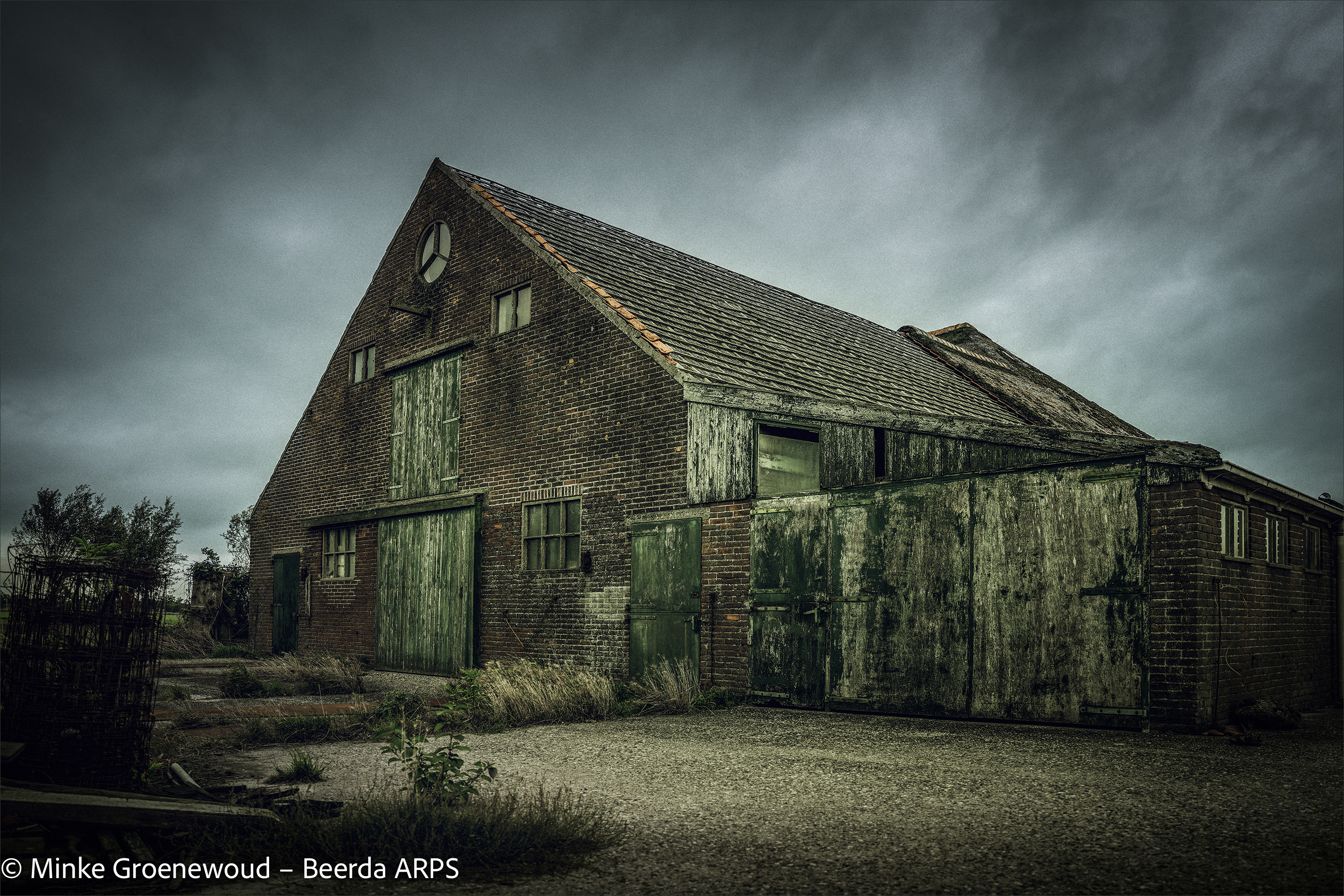
02 Layers of time - Stains, textures and traces on the wall reveal years of slow decay and neglect.
Claudine: Did you set out with a clear theme, or did it emerge through the process?
Although the idea of impermanence was present from an early stage, the series developed organically while photographing the farm. Already as I took my first images of the location, I realised that this work had the potential to develop into an Associate panel.
At the start, I worked very intuitively, responding to light and shadow, texture and atmosphere. Only later, when reviewing the work as a whole, did the coherence of the series become clearly visible. I recognised which elements were still missing and returned one final time to the location with a clearer sense of what I was looking for. From that point onwards, I consciously refined the project, strengthening its visual and emotional consistency so that the theme of transience was not explained literally, but that it was also felt.