
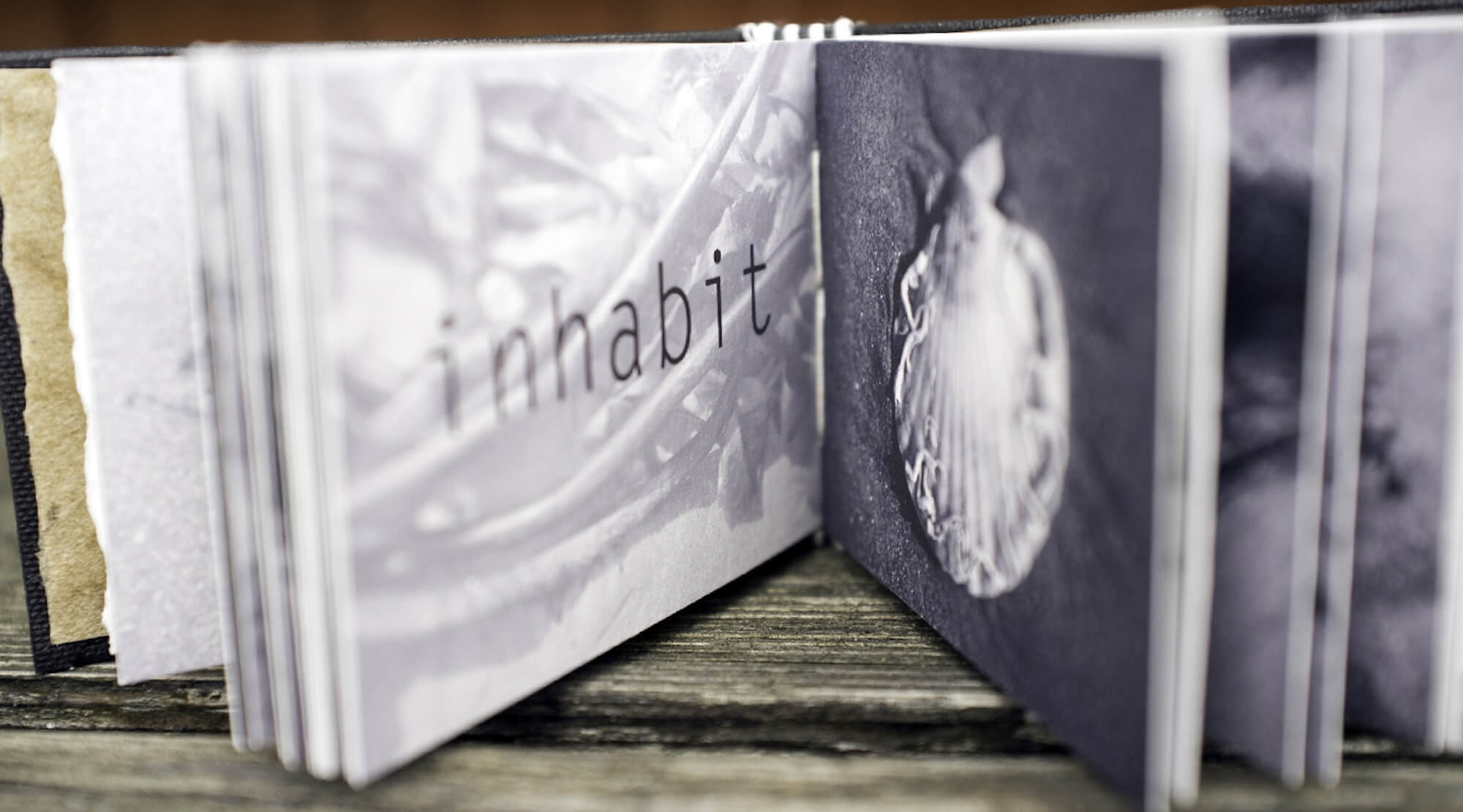
‘Little book of memories’ by Lynne Connolly
In an era where everyone is a photographer and few print the pictures they create, the photobook still has a place at the heart of an image-obsessed world.
That’s the firm belief of Lynne Connolly, a photographer, educator and photobook maker based between Northern Ireland and the north of England, whose work intriguingly explores “the intersection of photography, collage, stitching and book arts”.
Senior lecturer in photography at the University of Chester, Connolly is passionate about making books – and believes anyone can turn their hand to it with a decent set of images. She spends some of her time leading RPS workshops on making photobooks – pamphlet books, accordion books, crown books, spider books.
Here, the photographer explains just what is so special about photobooks – and why they have a bright future.
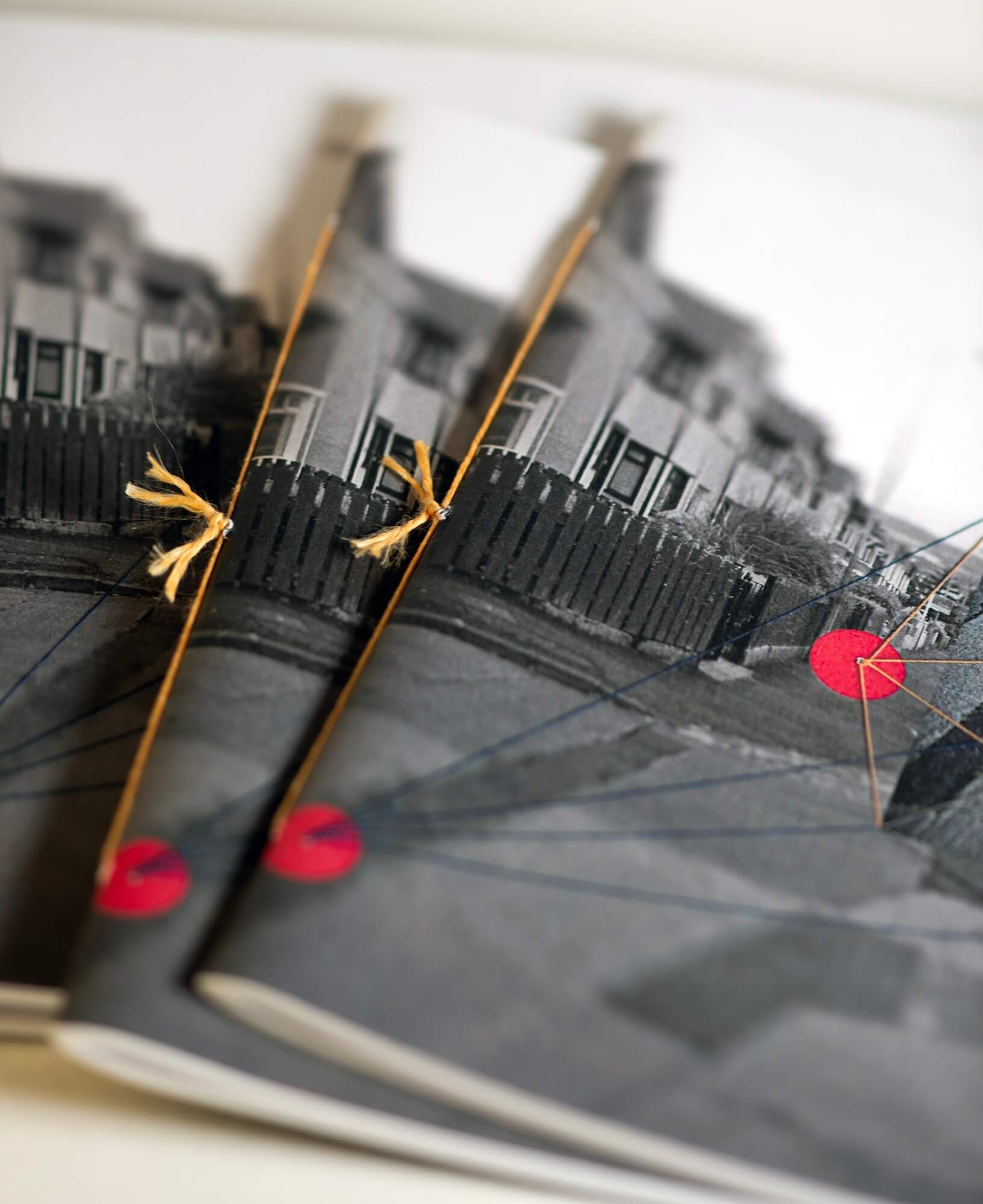
‘Photomontage photobook’ by Lynne Connolly
Describe your role in the world of photography.
I’m an artist who likes to experiment with analogue and digital processes, and to share skills and knowledge with others. I have worked in education for some time and that reflects my desire to support others in their learning journey.
What was your first photobook, and do you still have it?
It was a book by Mari Mahr, actually more of a photographic catalogue. As a student I was visiting the print room at the Photographers’ Gallery – when it was in Newport Street, London – to see Mari’s work. The print room attendant kindly gave me a spare copy of the catalogue of the exhibition Isolated Incidents, which was a little dog-eared on the dust cover. I still have it and treasure that gift.
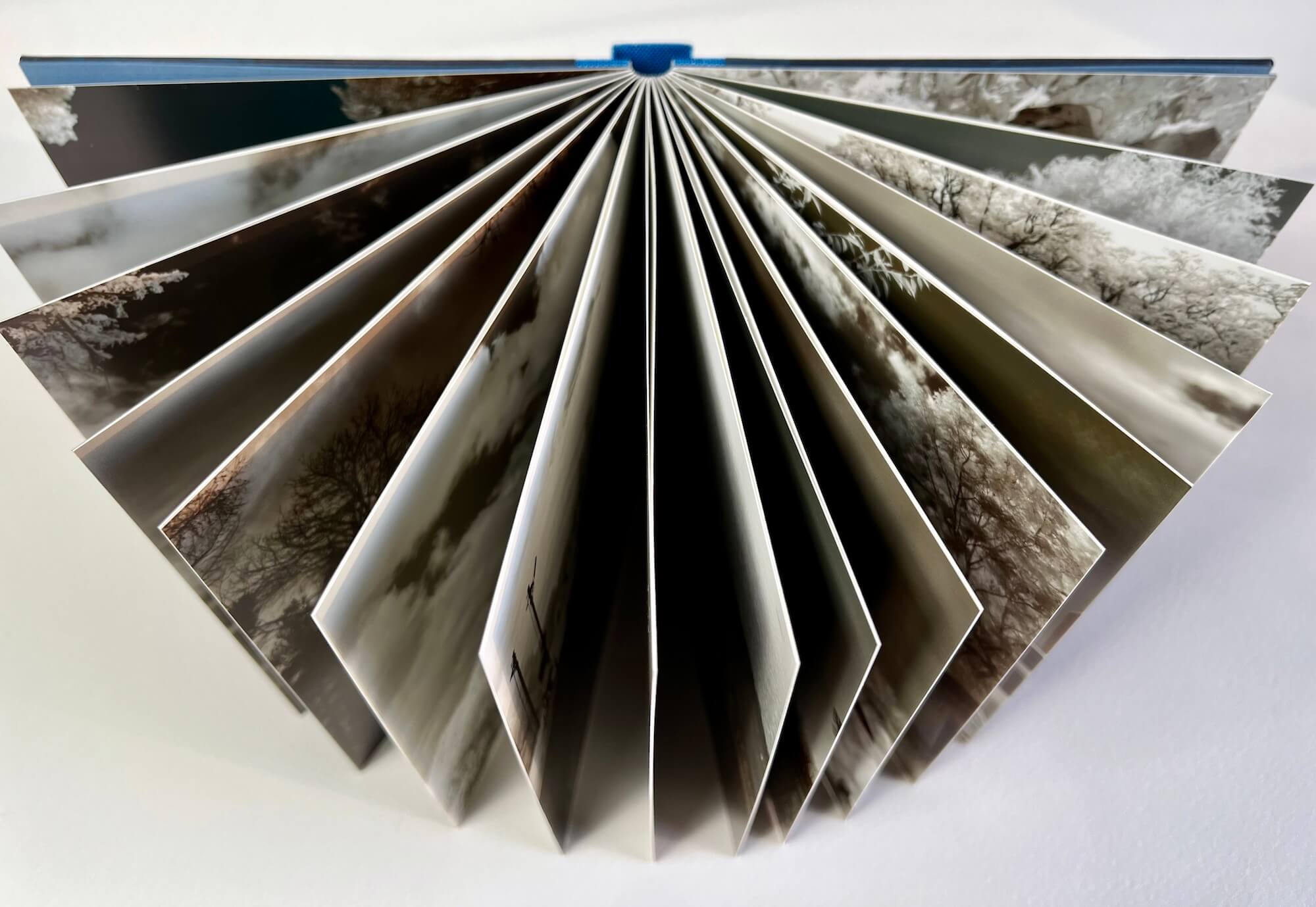
‘Drum leaf binding photobook’ by Lynne Connolly
Are photobooks relevant in an era where everyone stores hundreds of images on their smartphone?
The photobook is even more relevant now for exactly that reason. We have so many images taken and stored and often not looked at again. Compiling them into a sequence or collection brings together key visual notes to create a narrative of a series of images. This allows for time to be taken, consideration of the images, and the sequence and narrative you wish, as the photographer, to be imparted to your audience.
Can anyone make a photobook?
Yes, of course. There are varied approaches from handmade books that you can insert printed images into, books that can be made from one sheet of paper, physical and digitally constructed books that utilise your prints to become the pages, as well as options to send work to a print provider to finalise and print books for you. It helps to have a theme or series of images that build a narrative, but images may also provide a sort of puzzle or question in relation to each other. There are many creative and technical possibilities.
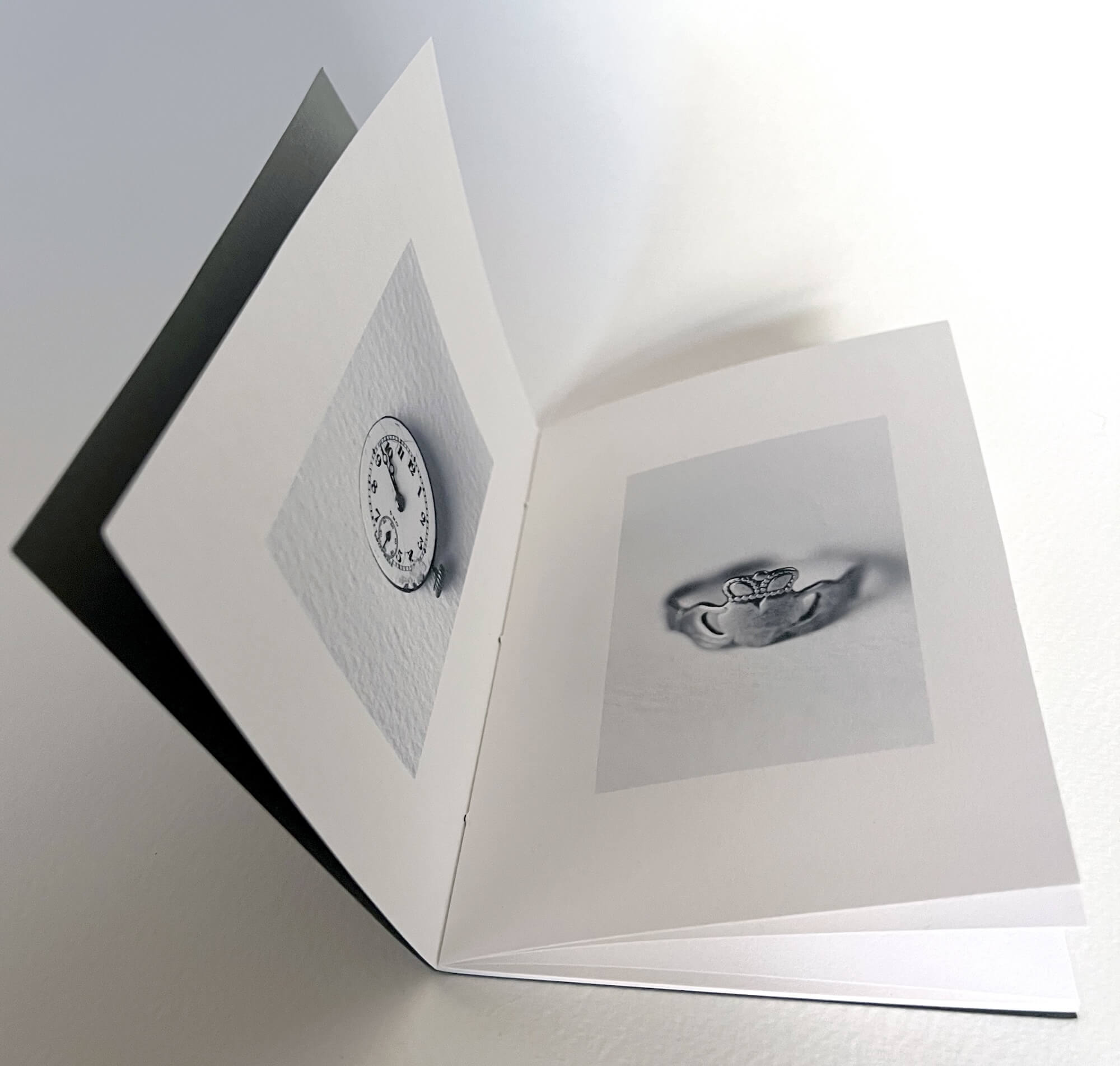
‘Pamphlet photobook’ by Lynne Connolly
You describe your photobooks as ‘book arts’. Why?
Book arts encompass a way of working that can use photography, visual art forms, words and so forth, to bring together a theme of ideas. It allows for a development of the structure of the book to also work with the content. The narrative may not flow in a linear way, but the impact of the book will have a relationship between how it is formed structurally as well as the content to be viewed. Book arts can challenge the traditional codex structure of a book with groupings of pages that open sequentially. Book arts explore this interaction and surprise along with the experience of engaging with the work.
Should photobooks still exist when there are pressures on the world’s resources?
Handling book forms is a different sensory experience to viewing them on screen. There is a more intimate connection for the viewer as well as maker of the work. This haptic experience of touching paper, viewing images held in your hands and turning pages creates a different and deeper experience of the work. I would suggest this connection is even more important now in what can feel like a virtual and fractured society. It allows for a recentring and connection through the physicality of the book. It encourages a viewer to take time looking at the work rather than walking by a gallery wall and scanning images. In terms of resources, papers can be made from recycled materials, they can be small scale and short runs of imprints, or a unique one of a kind.
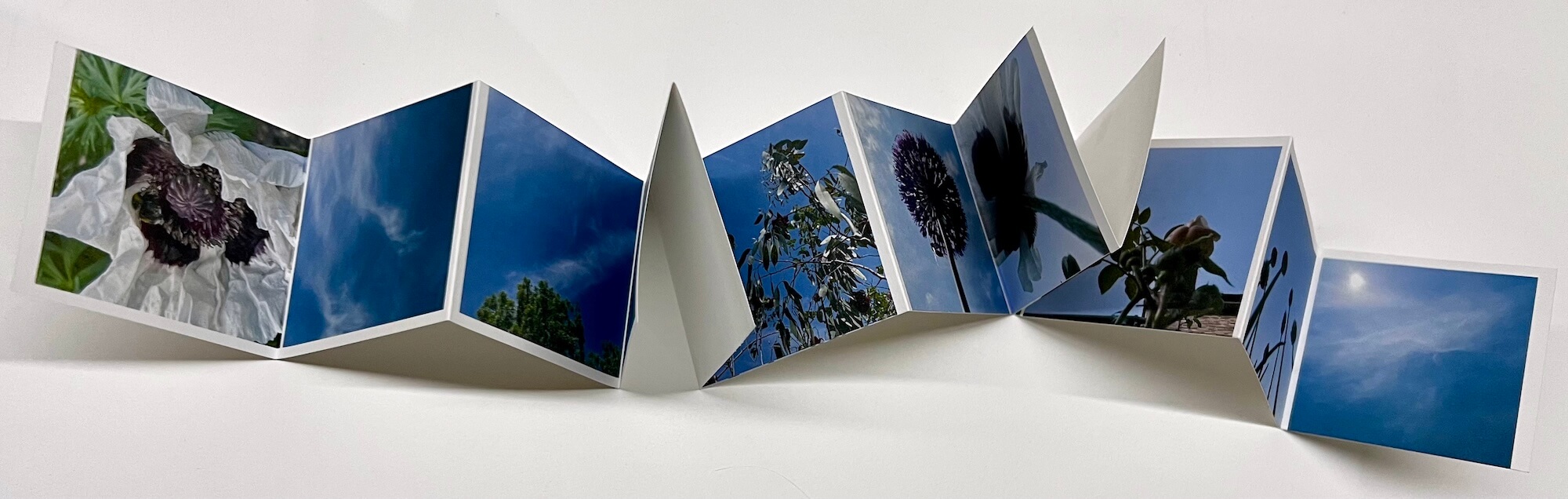
‘One page photobook’ by Lynne Connnolly
What photobook would you like to make next?
My next book will be a collection of photographs taken around the northeast coast of Northern Ireland. They have been hiding on a hard drive for some time, so will get the chance to be seen and shared in a limited edition of handmade photo books.
What photobook would you like to read next?
The Stillness of Life by Don McCullin HonFRPS, published by GOST books in October 2025. I also teach still life photography for the RPS and see it as an accessible photographic art form that encourages us to explore depth and symbolism through objects. I can see that for McCullin this would have a profound therapeutic effect and act as a counterbalance to the many years of war and social photography he has shared with us.
Find out more about making a photobook by enrolling on an online RPS workshop led by Lynne Connolly.
The RPS Journal is available exclusively to members. Join us to receive our award-winning magazine and read more inspiring features. Explore full member benefits here.