

‘Victoria Falls, 2012’ from The Rift: Scar of Africa by Shem Compion
It all began when Shem Compion packed in his job, sold his belongings and set off in a Land Rover on a seven-month expedition across Africa, determined to make it as a wildlife photographer.
Almost 25 years later, the Cape Town-born photographer who trained in conservation and wildlife management is a naturalist, educator and author. His eighth book, The Rift: Scar of Africa, focuses on the cultures and wildlife of the extraordinary valley systems of Kenya and Ethiopia.
Here, he describes how he has explored the Great Rift Valley – and why it is at the root of humanity’s story.
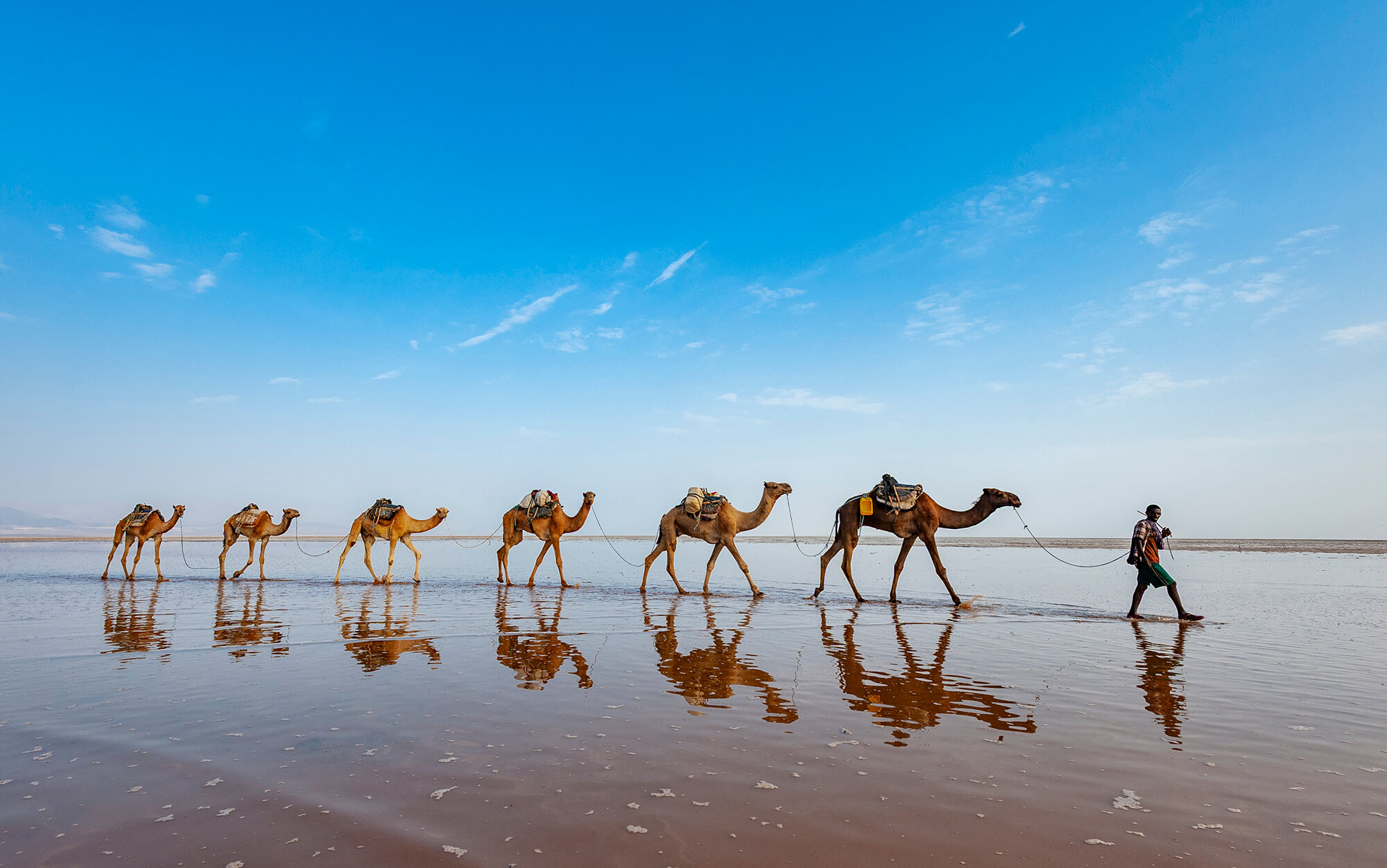
‘A salt caravan treks along an eight-day ancient trade route to collect salt carved from a dry sea bed, 2013’ from The Rift: Scar of Africa by Shem Compion
Why have you photographed the Great Rift Valley across two decades?
I started photographing in 2000, combining my naturalist background with the camera to photograph wildlife. In 2002, on a seven-month expedition into Africa, my first real glimpse of the Great Rift Valley was near Lake Nakuru in Kenya. Rounding a corner and seeing the lake with thousands upon thousands of pink flamingos some 700m below stopped me in my tracks.
The dramatic landscape, the lake and an incredible pink wildlife phenomenon, all in one scene, captured my imagination. From there, the passion was simple. The Rift has so many interconnected relationships – our shared humanity, biodiversity hotspots, geological drama, and it is the greatest repository of the origin of humankind.
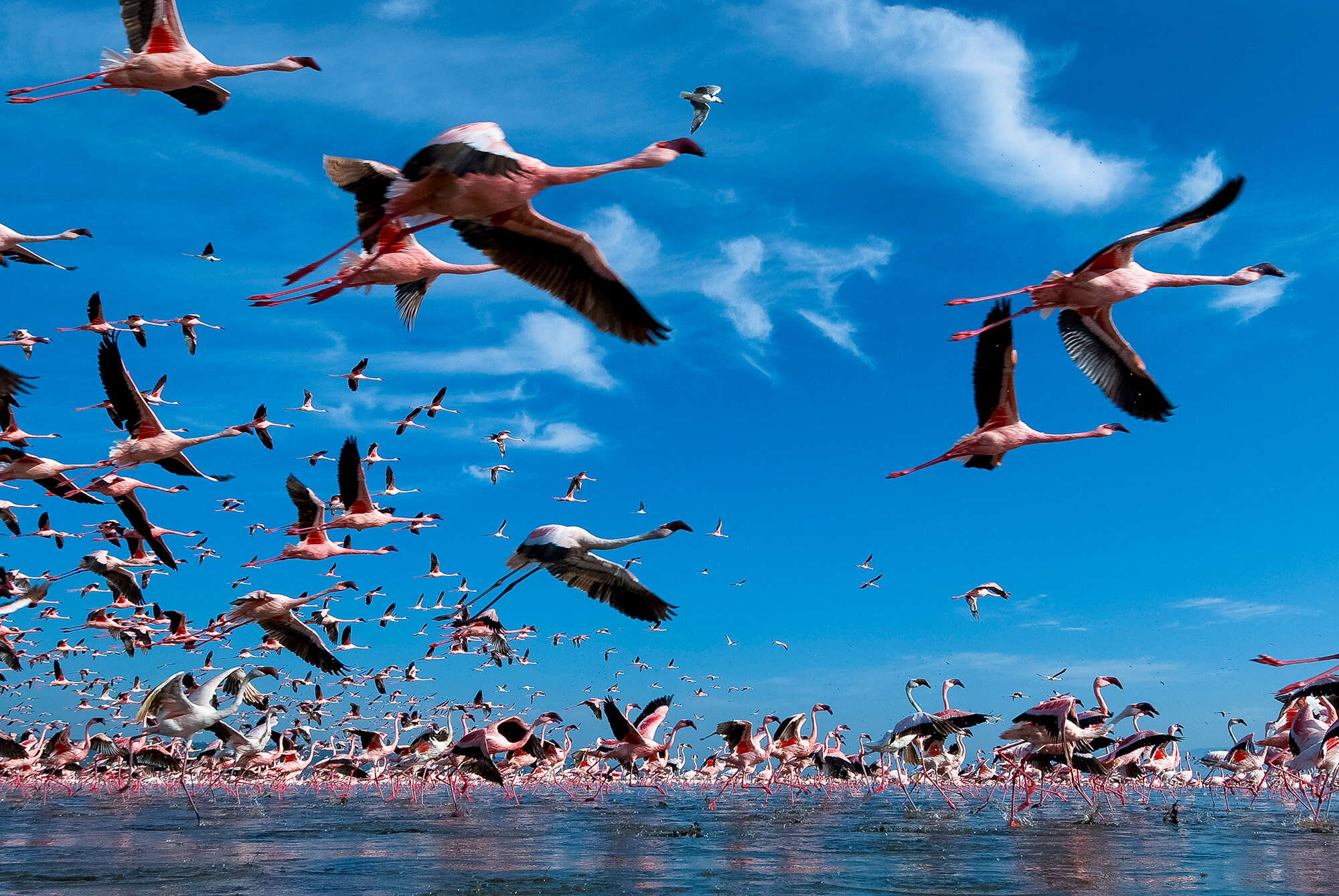
‘Rising water levels at Lake Nakuru, Kenya, have led to a decline in lesser flamingo populations, 2008’ from The Rift: Scar of Africa by Shem Compion
What is the geological and cultural significance of the Rift Valley?
I discovered for myself that the Rift is not a piece of geology, as we were taught in our school textbooks, running as a fault line from Ethiopia to Mozambique. It is in fact a living, breathing organism which affects so many people daily. Kenya receives 47% of its electrical power from geothermal vents in the Rift. Rwanda receives 25% of its power from methane in Lake Kivu. The tourism industry is underpinned by the great mammal abundance of the Serengeti/Mara ecosystems which are nourished by the volcanic ash originating six million years ago when the Rift started fracturing.
There are many more interconnected parts to the story, some positive and some creating pressure on the environment. It shows how we should appreciate what’s in front of us and cherish and preserve it – all so we can continue to benefit from this great organism that is the Rift.
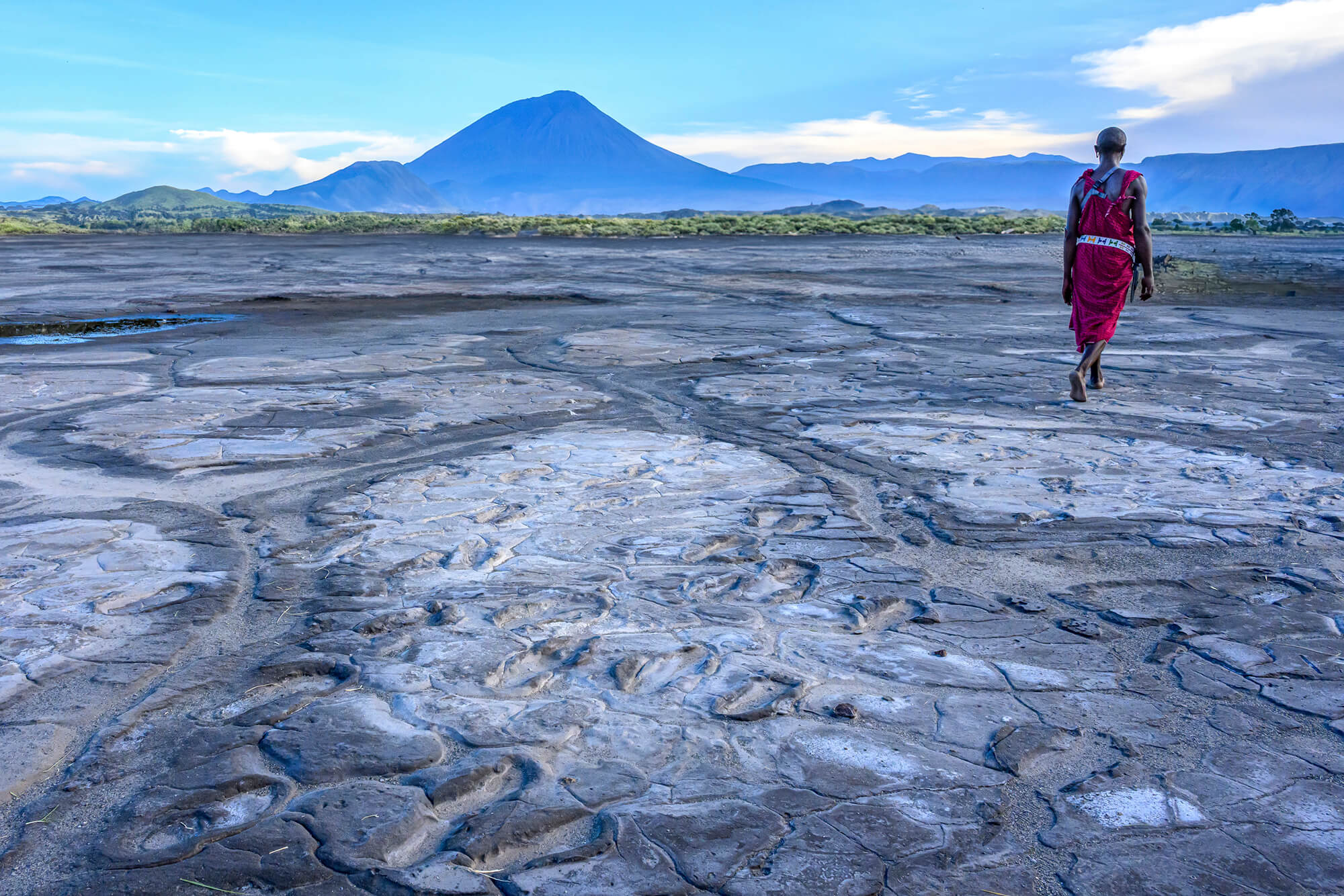
‘Human footprints dating back 10,000 years captured in cooling lava provide incredible ethnography of our ancestors in the shadow of Ol Doinyo Lengai, 2025’ from The Rift: Scar of Africa by Shem Compion
What are the ethical and practical responsibilities of a photographer capturing sometimes fragile landscapes, environments and species?
My mandate is always to leave a place in the same or better state than when I arrived. I like to return to inspiring places and so if I denude it via a short-term transactional relationship, I'll ultimately also lose out.
This is even more relevant with cultures. Over time I searched into the more remote areas and worked with tribal groups where we could build strong relationships. With one group, the Suri, we started a mother tongue education initiative with a Language NGO. In another area with the Mursi, we focused on improving food and health security. When the relationship is mutual rather than transactional, you foster great human connections.
I am not a photographer who wants to go into an area, take photos and leave. I want to return and learn more, each time gleaning new experiences and making images with a deeper connection. These initiatives have facilitated that – and it shows.
Images with candour make for a great human connection and translate incredibly well, which is what I seek.

‘Maasai living in the shadow of the active Ol Doinyo Lengai volcano consider it “the mountain of God” due its frequent changes in shape and colour from eruptions, 2012’ from The Rift: Scar of Africa by Shem Compion
The Rift: Scar of Africa by Shem Compion is published by HPH at £75.
The RPS Journal is available exclusively to members. Join the RPS to receive our award-winning magazine and read more inspiring features. Explore full member benefits here.