

‘Amazonas, Brazil, 14 June 2022’ by Tommaso Protti: The Solimões River at the tri-border of Brazil, Colombia and Peru – a strategic crossing that has become one of the Amazon’s main drug trafficking corridors. From here, cocaine produced in the Andes is smuggled downstream.
Photojournalist Tommaso Protti has been recognised with the 2026 Dr Jane Goodall Environmental Photography fellowship for his long-running exploration of the challenges faced by Brazil’s Indigenous communities.
Awarded by Vital Impacts, a non-profit co-founded by photojournalist Ami Vitale to support conservation efforts through visual storytelling, the fellowship is named after the late Dr Jane Goodall, a renowned conservationist who died in October 2025.
Terra Vermelha, meaning ‘red earth’, is Protti’s decade-long investigation into the impact of deforestation, political pressure and organised crime on traditional ways of life.
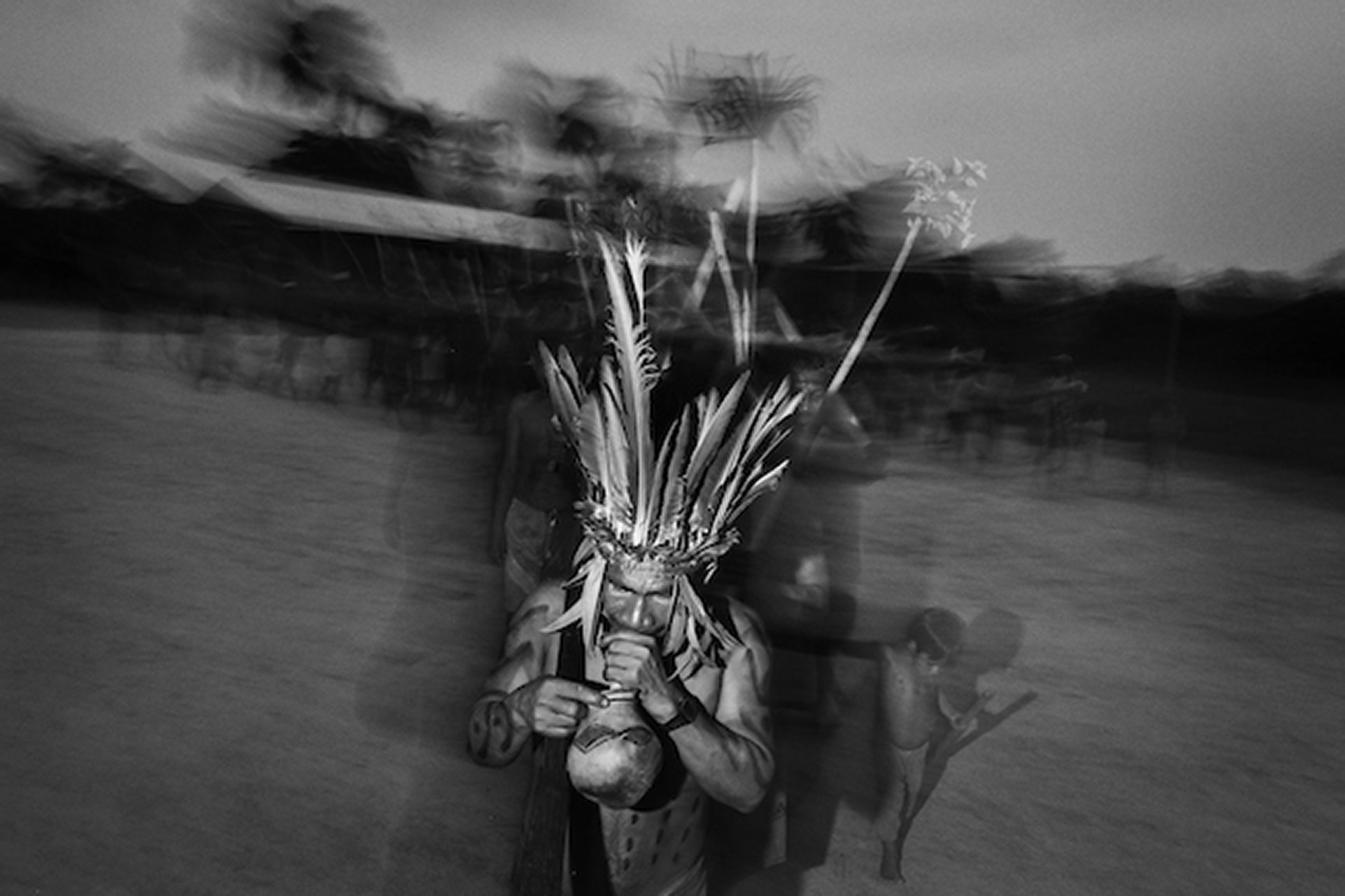
‘Vale do Javari, Brazil, 12 August 2021’ by Tommaso Protti: Kanamari men perform the ancient Hai Hai ceremony in Sao Luis village.
Protti, who was born in Italy, says, “When I moved to Brazil, I felt an urgency to dedicate my work to understanding and documenting the country I was now living in. The Amazon is often perceived as something detached from Brazil’s broader reality, yet it is shaped by the same social, political and economic dynamics.
“I wanted to challenge simplified narratives – whether of untouched wilderness or total devastation – and construct a more complex portrait.
“My intention was to connect environmental crime, land grabbing, inequality and political neglect, showing how deforestation is not an isolated phenomenon but the visible expression of deeper structural forces.
“What began as a personal challenge to move beyond surface-level reporting gradually became a long-term commitment to documenting the Amazon as a territory defined not only by environmental concerns, but by power, conflict and resistance."

‘Santa Cruz, Brazil, 16 June 2022’ by Tommaso Protti: Antonio (left) with his father on the Itaquai River near the riverine community of Santa Cruz, 15km from Atalaia do Norte. A fisherman by trade, Antonio has twice been fined for catching pirarucu fish.
Protti, a regular contributor to the Wall Street Journal and Le Monde, moved to São Paulo in Brazil a decade ago to cover the social and political upheavals endemic to the region. The causes of this unrest, he discovered, included inequality, crime and the legacies of colonialism, as well as the resulting violence and environmental destruction.
Protti points out the loss of Amazon forest is not only rooted in environmental destruction but also in governmental neglect and organised crime. A black economy driven initially by the drugs trade has led to the expansion of coca plantations and associated criminality surrounding smuggling routes.
Recent increases in the price of gold have also led to the proliferation of illegal mining in the region, an industry now more profitable than the cocaine trade. Mining has significant health impacts on people and ecosystems due to the poisonous effects of mercury being used to process gold.
Indigenous communities have been locked in a struggle against illicit activity in the Amazon including mining, logging and other organised crime for many years now. This has been lethal for some, with 49 members of the Guajajara people being killed between 2000 and 2020 in conflict with illegal loggers.
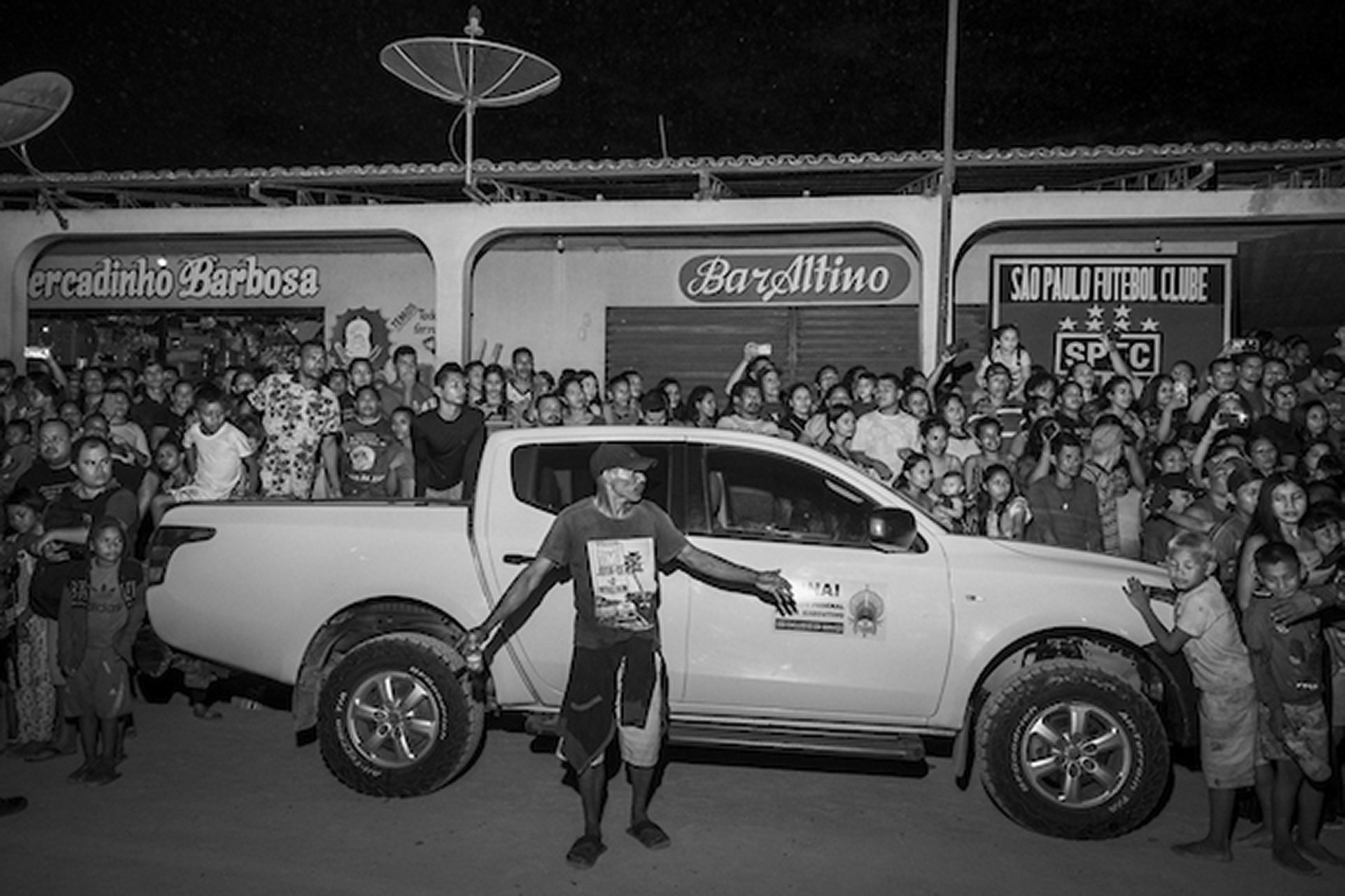
‘Atalaia do Norte, 15 June 2022’ by Tommaso Protti: Residents of Atalaia do Norte wait at the port as police search for the remains of Dom Phillips and Bruno Pereira, murdered while reporting during a boat trip in the Javari Valley.
Protti says, “Engaging with Indigenous communities carries many questions, including the distance between a foreign white man and Native peoples, the risk of distorting their culture, and the danger of exoticising their realities.
“I have tried to approach this work with honesty, always considering the specific context in which each group lives and resisting simplification.
“From my experience, what stands out most is their determination to remain on their land despite immense pressure, and their resistance is expressed through continuity, in staying, maintaining their practices and carrying their culture forward.”
In such a resource-rich and diverse environment as the Amazon, the people who live there face head-on the complex and multifaceted challenges posed by environmental destruction and criminality. So can photography projects such as Terra Vermelha shine a light on such issues, and make them tangible for global audiences to bear witness?
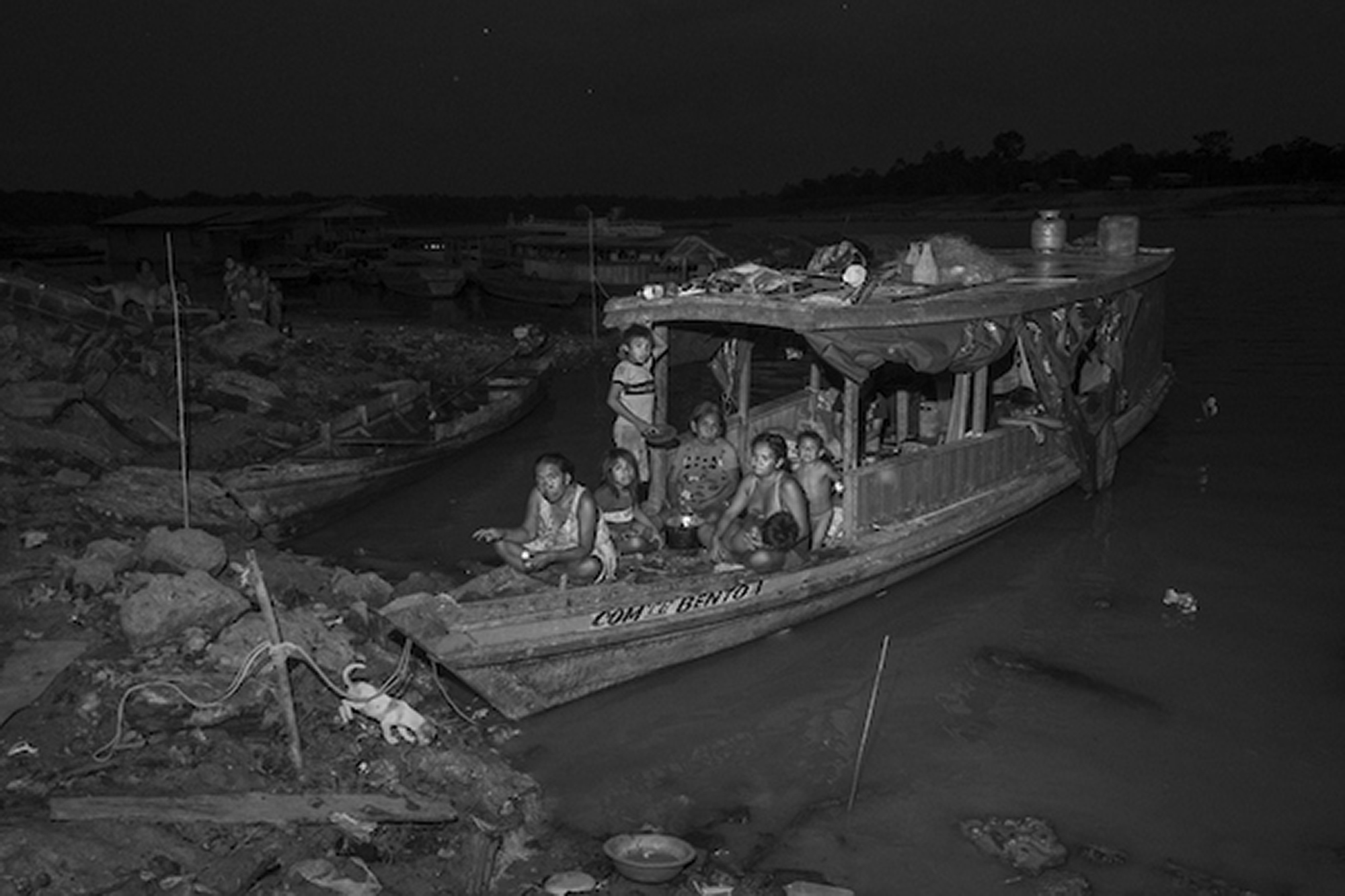
‘Atalaia Do Norte, Brazil, 15 August 2021’ by Tommaso Protti: Despite originating from various villages in the Vale do Javari indigenous territory, this Kanamari family now finds itself living on a boat on the banks of the Javari River in Atalaia do Norte.
“I believe photography in general is essential for investigating reality,” says Protti. “It endures over time, preserves memory and can serve as evidence within our shared history, so no one can say it didn’t happen or didn’t exist.
“I try to reveal what is hidden and to bear witness, especially at a time when everything can be questioned in terms of authenticity because of AI.”
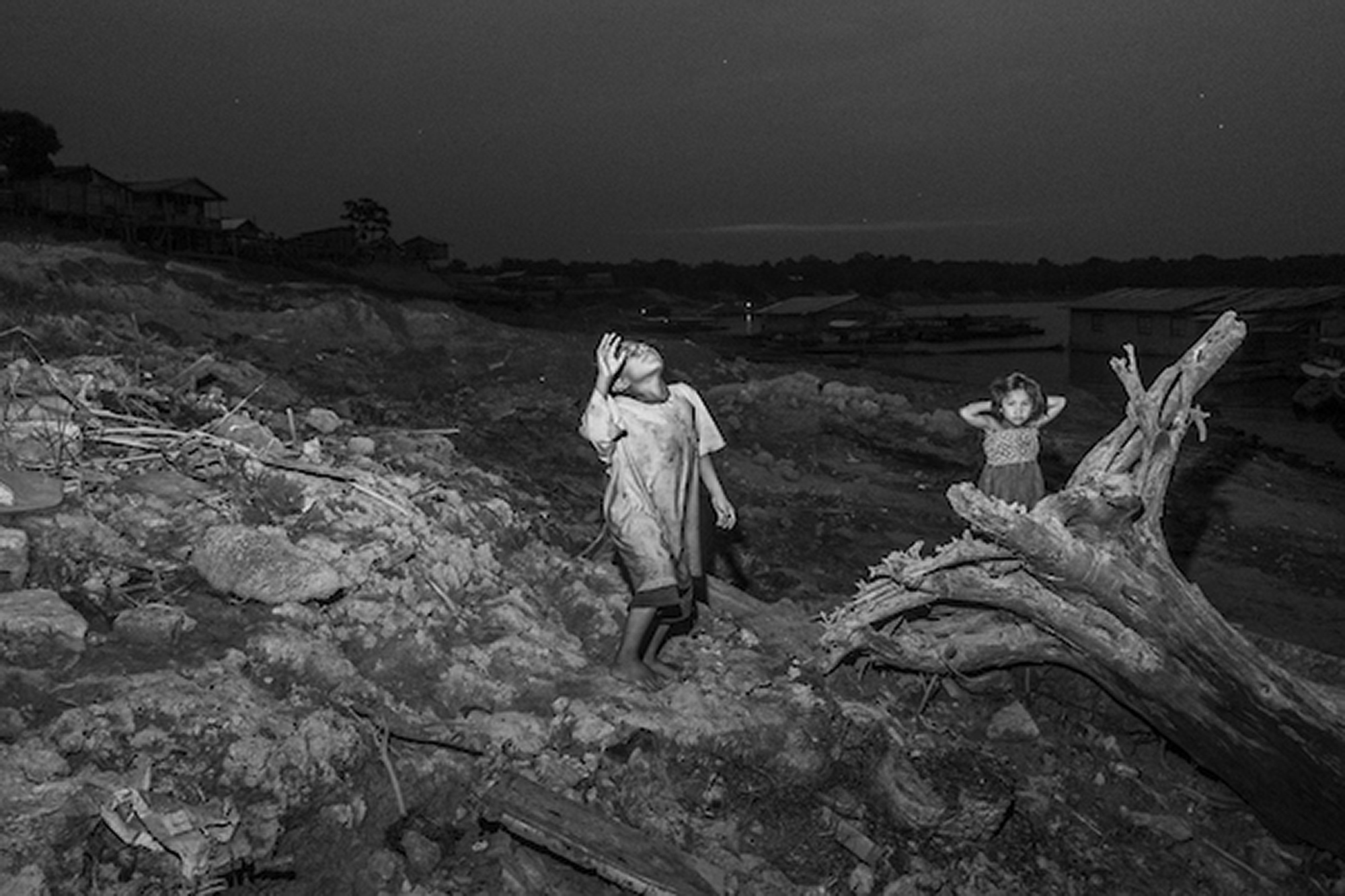
‘Atalaia Do Norte, August 2021’ by Tommaso Protti" Kanamari children, originally from various villages in the Vale do Javari indigenous territory, find themselves stranded in a makeshift camp on the banks of the Javari River in Atalaia do Norte.
Protti will continue to explore the impact on Indigenous people in the region with projects planned over the coming years. He outlines some of his ambitions for the future.
“I’m about to start a new chapter of my long-term project in the Vale do Javari Indigenous Territory, at the border between Brazil and Peru. It’s one of the most remote regions of the Amazon and home to the highest concentration of uncontacted Indigenous peoples in the world. At the same time it has become a new frontline for illegal activities and territorial disputes. Beyond that, I have other ongoing projects across Latin America.”
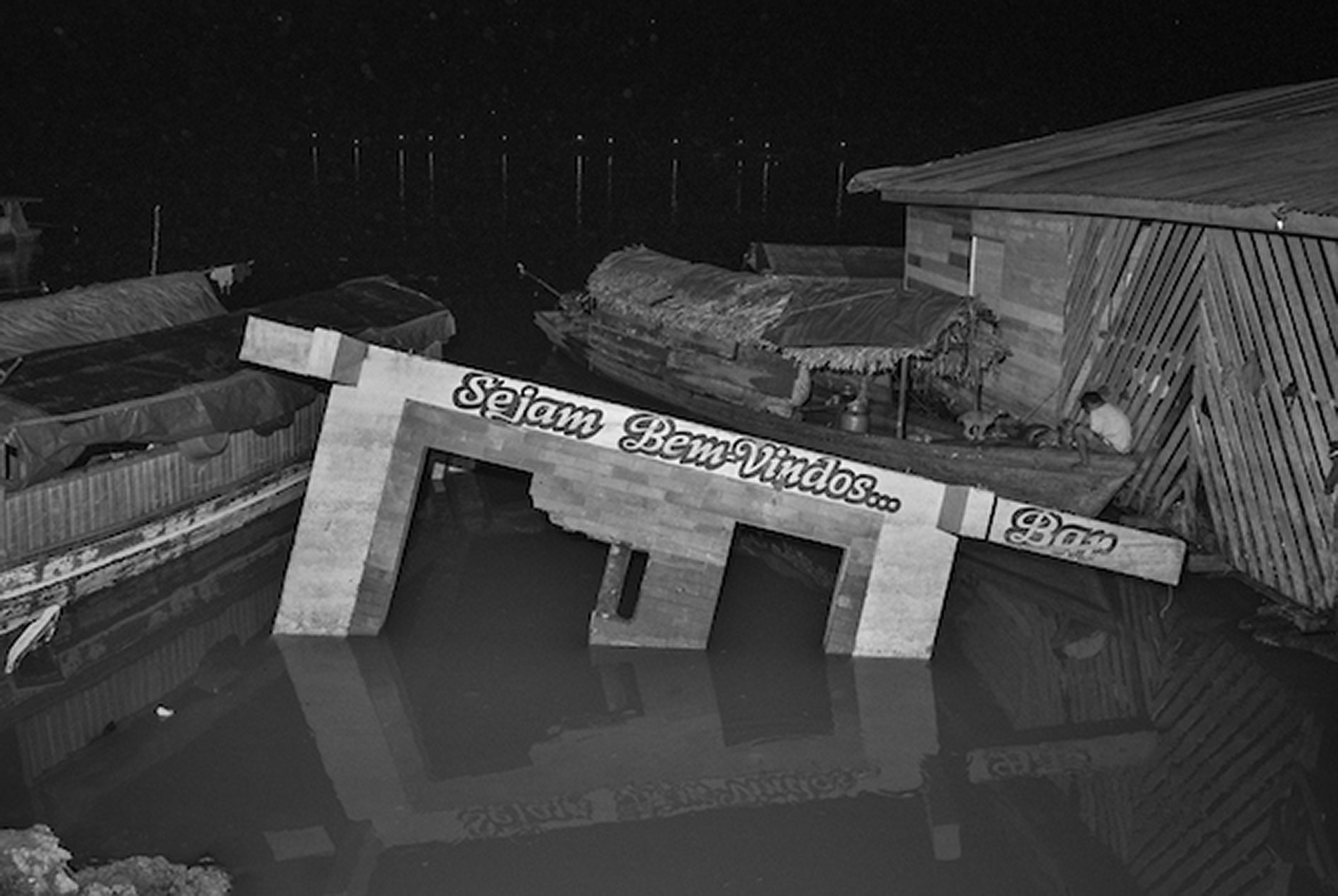
‘Atalaia Do Norte, Brazil, 15 June 2022’ by Tommaso Protti: A flooded bar along the Javari River in Atalaia do Norte, Amazonas state. Atalaia do Norte is the entry point for the Vale do Javari, Brazil's second largest indigenous territory.
The RPS Journal is available exclusively to members. Join the RPS to receive our award-winning magazine and read more inspiring features. Explore full member benefits here.