
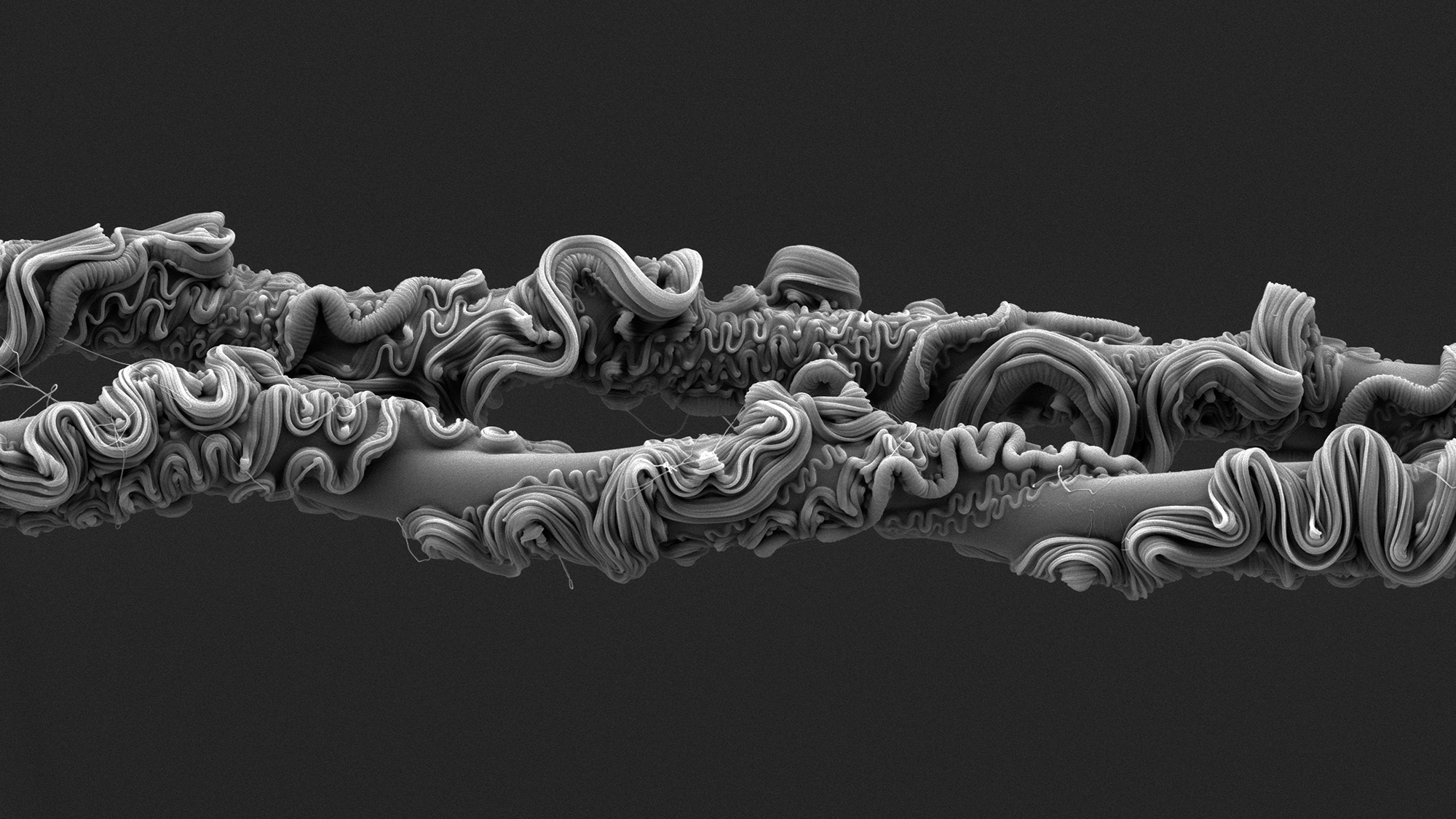
‘Mesmerising spider threads’ by Dr Martín J Ramírez
It takes more than clever use of technology and knowledge to make submissions truly pop for the selectors of the Royal Society Publishing Photography Competition.
A celebration of images illuminating hidden scientific phenomenon all around us, the competition attracted submissions across five categories – Astronomy, Behaviour, Earth Science and Climatology, Ecology and Environmental Science, and Microimaging.
Hugh Turvey ASIS Hon FRPS, an X-ray artist and chair of the RPS Science Committee, explains what the selectors were looking for. “Our discussions constantly balanced scientific rigour with aesthetic impact, searching for images that didn’t just document data, but evoked a sense of wonder,” he says.
The contest, run in association with the RPS, was won by Dr Martín J Ramírez, a research scientist at the Bernardino Rivadavia Natural Sciences Argentine Museum. His image of two strings of silk from a rufous net-casting spider (Asianopis subrufa) – lethal for its prey – was taken using a scanning electron microscope.
“What the image reveals is this very complicated spinning of the net-casting spiders, and the winding fibres that allow for its unique strength and stretchiness,” explains Ramírez.
The scientist, who works in the systematics, evolutionary morphology and biogeography of spiders, was startled to be named Overall Winner since it was his first submission to the competition. “I knew my image was nice, but it is very surprising to be competing with these awesome photographers,” Ramírez says.
Besides Turvey, the selection panel included Professor Jon Blundy FRS (volcanology), Professor Duncan Mackay (applied mathematics and solar physics) and Professor Ulrike Muller (biomechanics).
Here, the selectors describe why the winning images captured their collective imagination.
Microimaging and Overall Competition Winner: ‘Mesmerising spider threads’ by Dr Martín J Ramírez (main image, above)
For a selection panel fascinated by structure and texture, the decision on this scanning electron microscope (SEM) image was unanimous. Ramirez has captured the cribellate silk of the net-casting spider with such sculptural depth that it ceases to be mere biology and becomes abstract art. By coating the sample in gold-palladium and imaging under high vacuum, he reveals the ‘meandering’ bundles of the elastomeric core in breathtaking detail. We loved how the visual rhythm of the looping fibres draws the eye, perfectly illustrating the mechanical wonder of a web built to stretch and entrap.
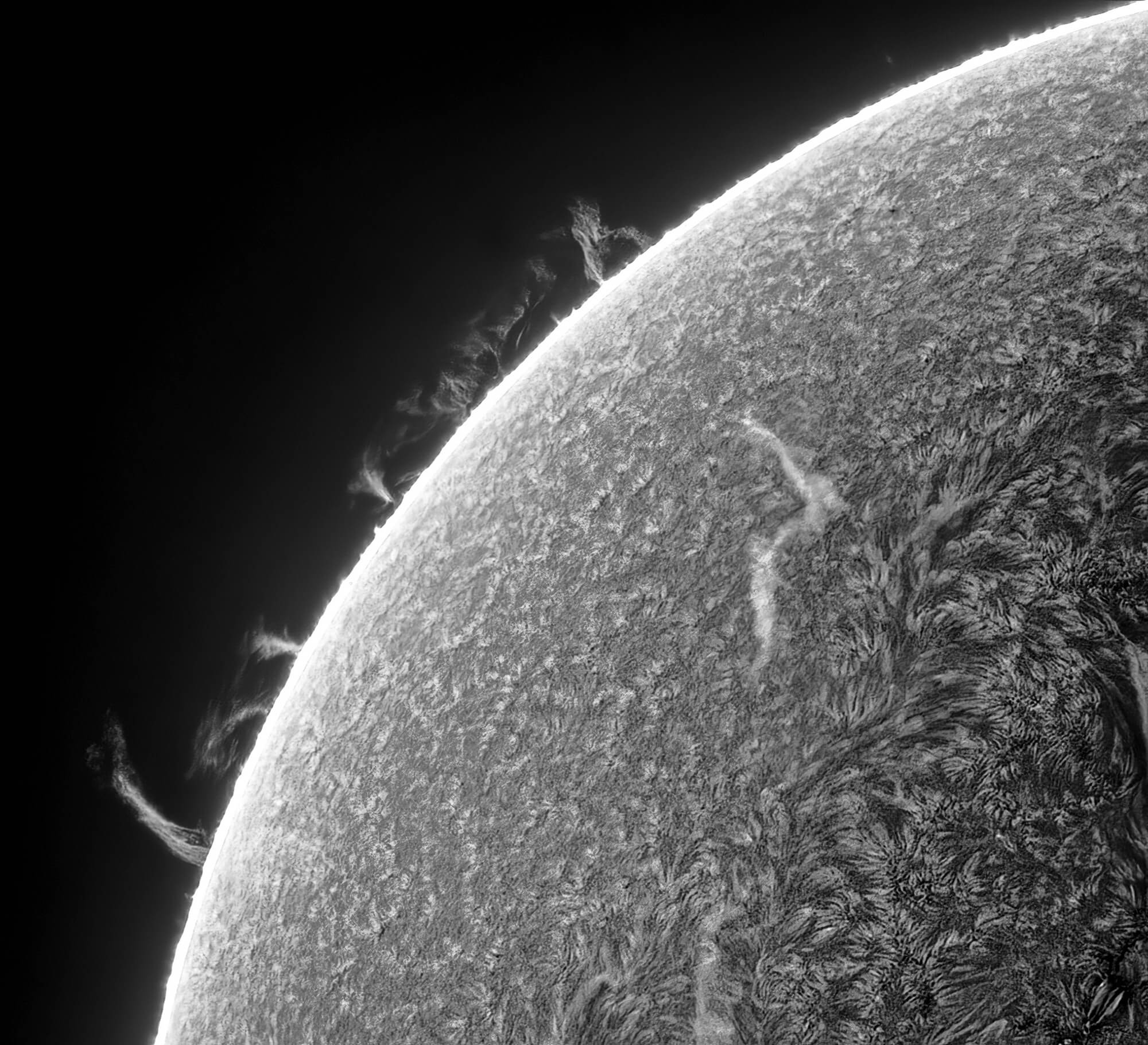
Astronomy Winner: ‘Dancing on the edge of fire’ by Imran Sultan
In a field often dominated by data, Sultan’s portrait of the sun stood out for its tangible sense of motion. By inverting the image – a creative choice we applauded – he transformed the solar limb into a relief map of roiling plasma. Using a Hydrogen-alpha filter to isolate the sun’s chromosphere, he stacked a minute’s worth of frames to reveal the delicate ‘dance’ of prominences. It is a stunning example of how technical proficiency – maximising signal-to-noise – can serve an artistic vision, turning a chaotic solar maximum into a structured, fiery ballet.
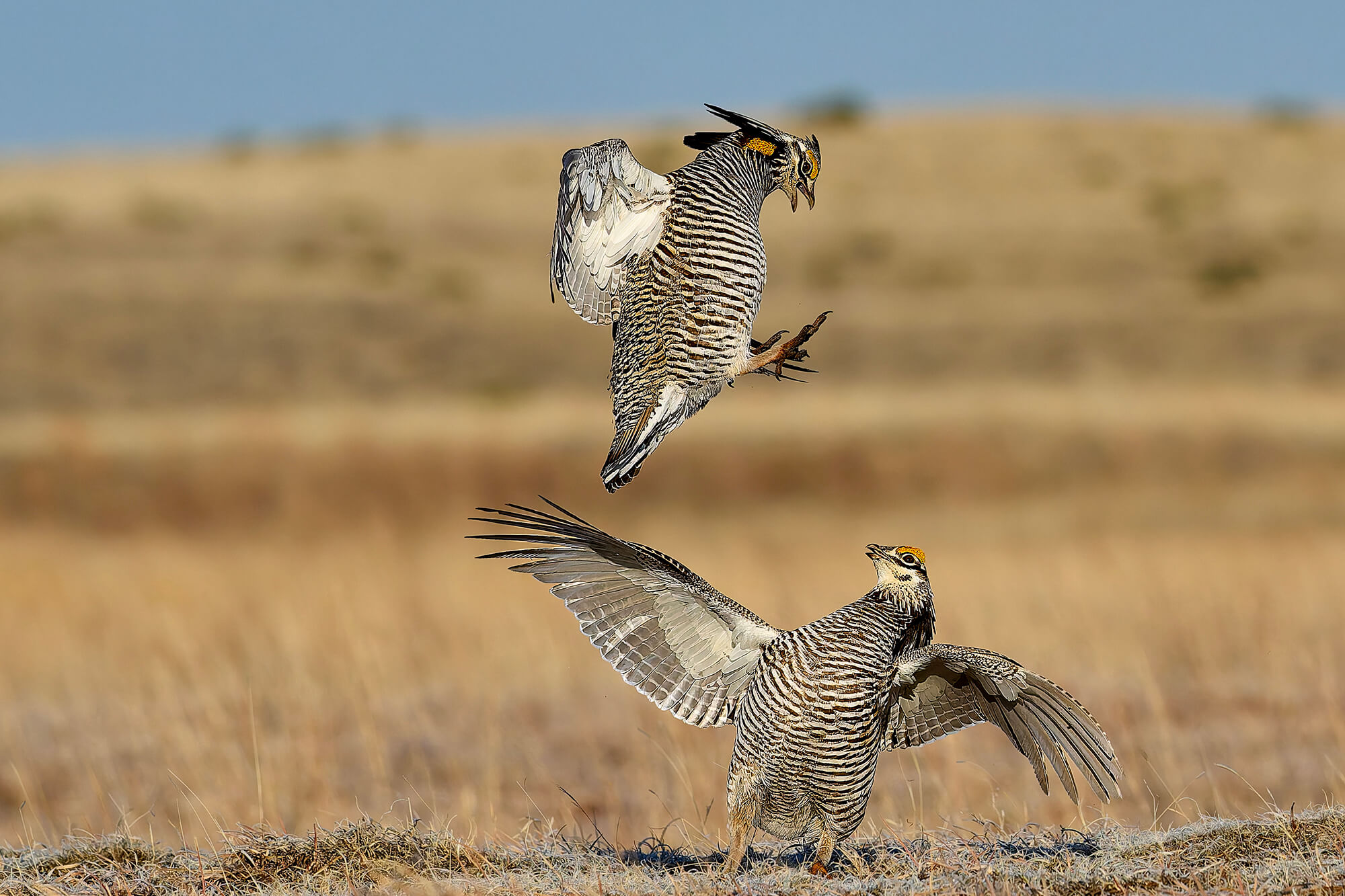
Behaviour Winner: ‘Prairie-chicken jump off’ by Peter Hudson
This image thrilled the selection panel with its kinetic energy, freezing a ‘decisive moment’ of raw natural aggression. Hudson utilised a blistering 1/8000s shutter speed to arrest the aerial strike of a greater prairie-chicken, keeping the plumage razor-sharp while blurring the background to emphasise the action. Beyond the technical mastery, we were drawn to the narrative – a visual study of sexual selection where the violence of the lek is driven by female choice. It is a powerful observation of social dynamics rendered with the immediacy of sports photography.
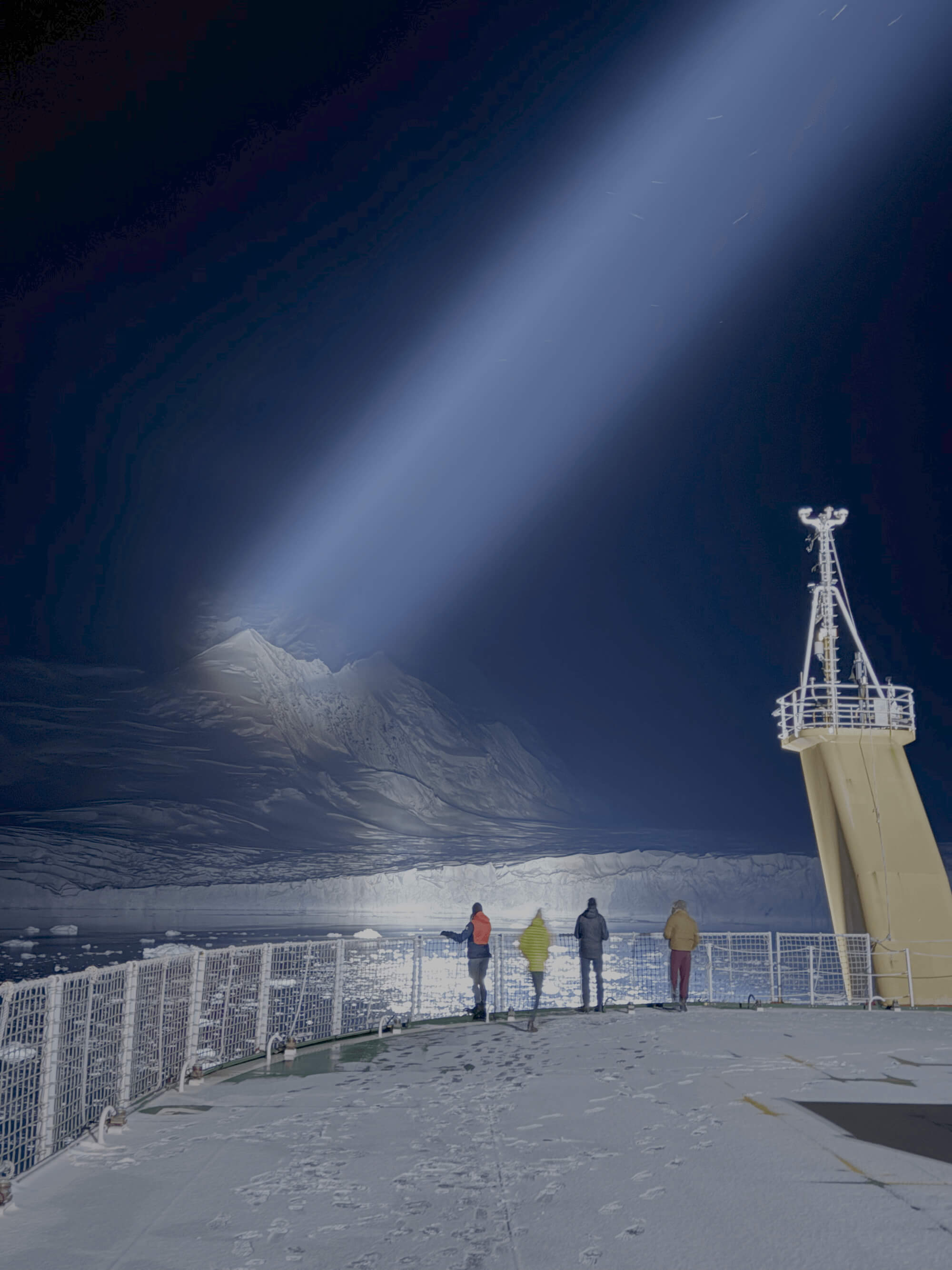
Earth Science and Climatology Winner: ‘Scanning glaciers in the Antarctic winter’ by Michael Meredith
Sometimes the most powerful tools are the simplest. The selection panel were deeply moved by this iPhone capture, which uses the stark contrast of ship searchlights cutting through the Antarctic night to illuminate the William Glacier. The unmanipulated, documentary quality gives it a haunting authenticity. The beam of light acts as a visual metaphor for scientific inquiry, isolating the fragile ice front against the immense darkness. It is a sombre, beautiful reminder of the field conditions that researchers face, successfully bridging the gap between hard data and human experience.
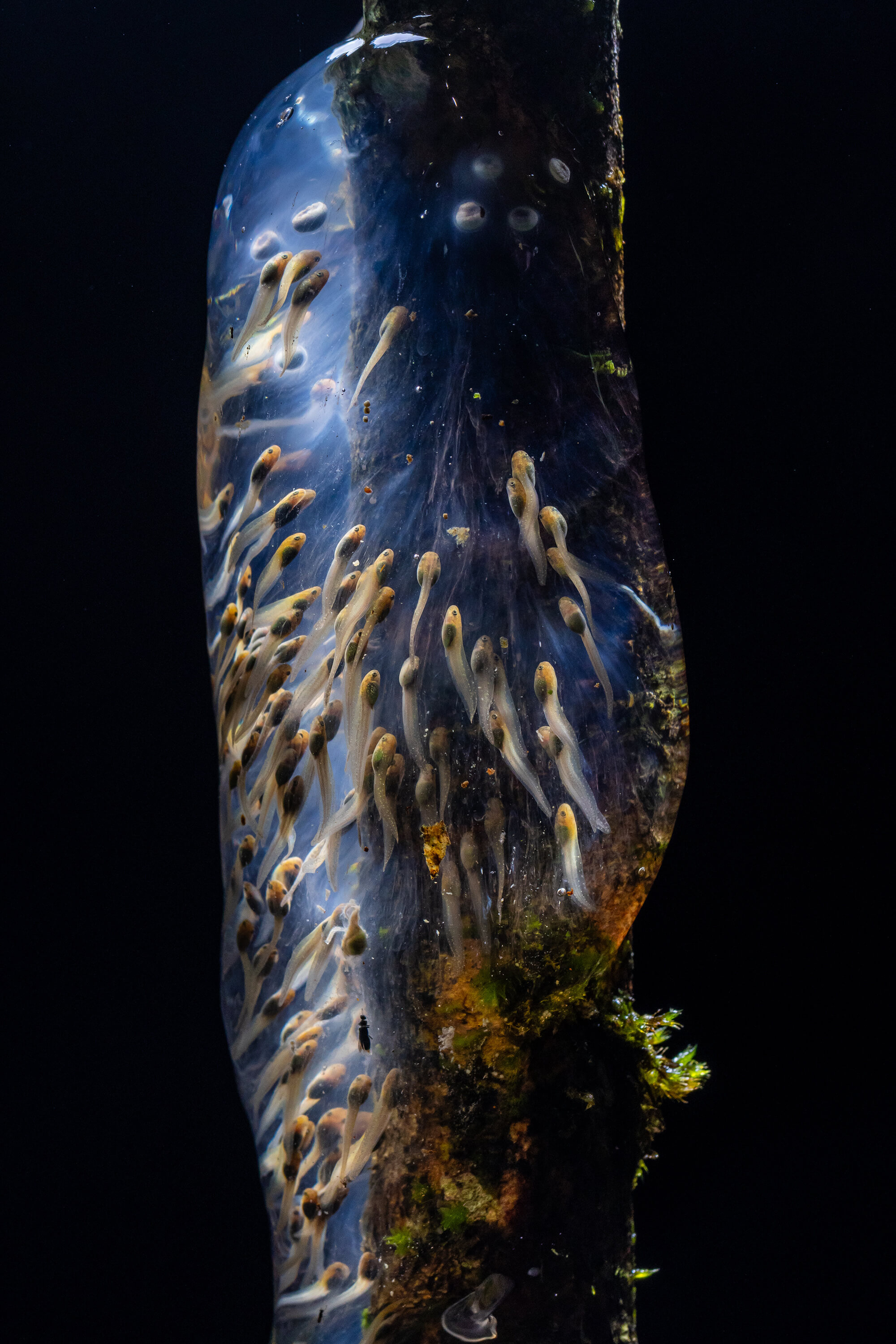
Ecology and Environmental Science Winner: ‘Amphibian galaxy’ by Filippo Carugati
Carugati’s image is a masterclass in lighting, transforming a biological subject into a celestial landscape. By backlighting a Guibemantis egg clutch with a remote flash, he rendered the gelatinous mass as a glowing, cosmic nebula. The selection panel were captivated by the ‘amphibian galaxy’ aesthetic, where developing tadpoles float like stars in suspension. The macro work (Canon 100mm) is technically flawless, but it is the imaginative vision – seeing the universe in a frog’s egg – that makes this image truly unforgettable.
The RPS Journal is available exclusively to members. Join the RPS to receive our award-winning magazine and read more inspiring features. Explore full member benefits here.