
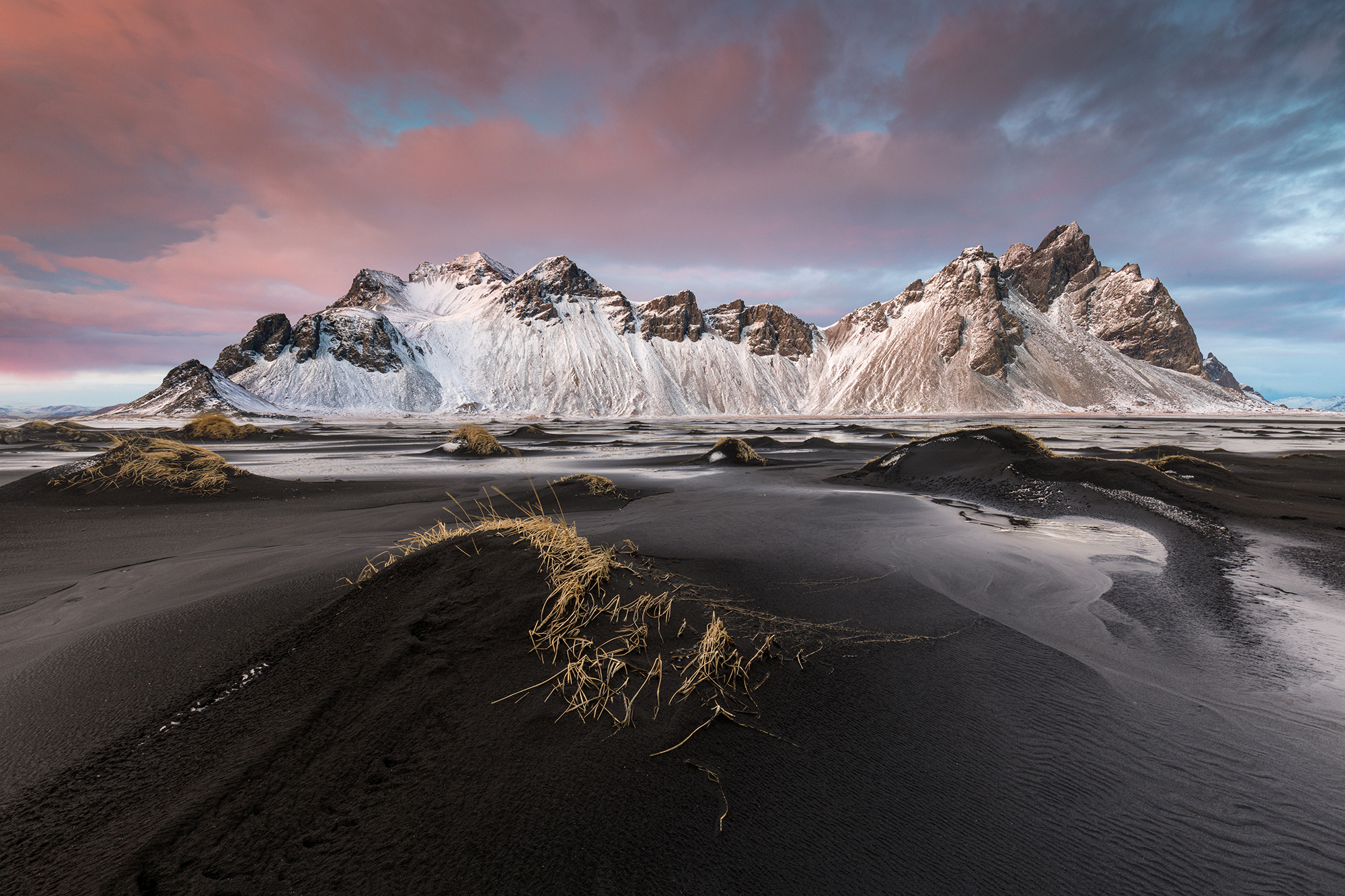
‘Vestrahorn in winter’ by Justin Minns FRPS
“The joy of landscape photography is in the moment,” says professional landscape photographer Justin Minns FRPS.
Although best known for creating atmospheric images of East Anglia in the UK, the Suffolk-based photographer has traversed the world in search of that ‘joy’, from the wild expanses of Iceland’s glaciers to the dramatic deserts of Namibia.
Each experience has expanded Minns’ storytelling, strengthening his ability to capture mood and sense of place for personal projects or clients such as the National Trust, English Heritage, the British Museum and NEOM.
His work has been widely published – appearing on everything from book covers to jam jars. His achievements including being named the overall winner of Wildlife Photographer of Year 2025, publishing his 2024 book, Explore and Discover Essex, and being awarded his Fellowship Distinction by the RPS in 2023.
Here, Minns talks about the lure of landscape photography, his inspirations, achieving his Fellowship and his favourite locations.
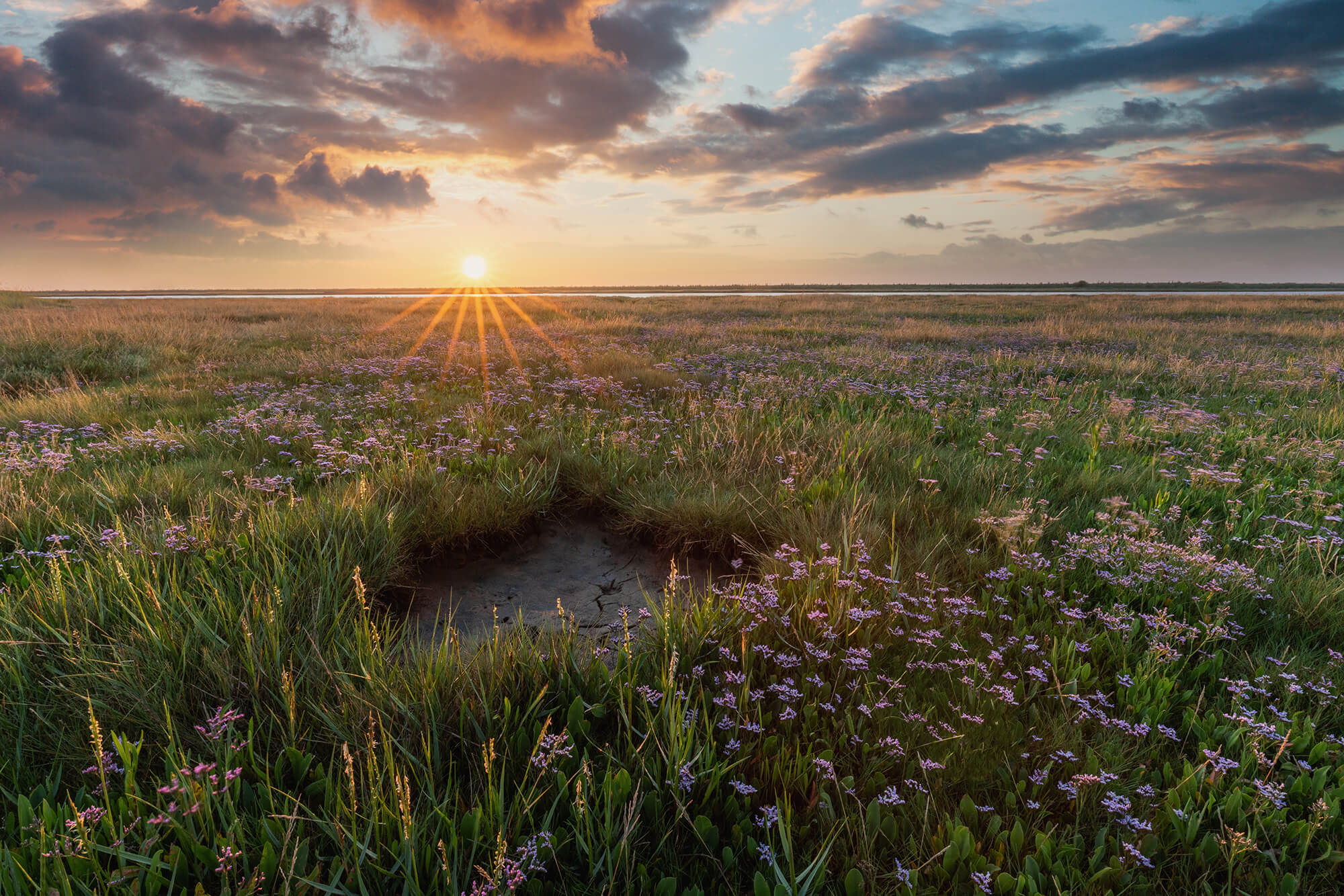
‘Summer on the marsh’ by Justin Minns FRPS
Tell us about yourself
I grew up in a village close to the River Stour on the Essex-Suffolk border, a stone’s throw from Flatford in the heart of Constable Country. I haven’t moved too far since as I’m now based in a village near Bury St Edmunds in Suffolk.
I’ve always loved the outdoors but photographing it has been a relatively recent thing. I’ve owned a camera for 20 years but I’m not sure at what point I considered myself a photographer.
How did you get involved in photography?
I’ve always been creative – from painting and drawing as a hobby to a career as a graphic designer. My interest in photography, though, was quite accidental.
I got my first proper camera – a Canon A640 digital compact – for Christmas in 2005 so I could take snaps on my travels. I quickly became fascinated with photography and the effects that could be achieved with aperture, focal length and shutter speed.
What is it about landscape photography that draws you in?
I love nature, so the joy of landscape photography for me is being out in all weathers and witnessing its wonders, like those fleeting moments of light that make the heart beat a little faster. The challenge lies in capturing the atmosphere of those moments in my work.
Whose work inspires you?
David Noton has always been a photographer I admire. Not only his work, but his approach to landscape photography. I also take a lot of inspiration from other genres, including the way street photographers like Mark Fearnley use light, shadow, lines and shapes in their compositions.
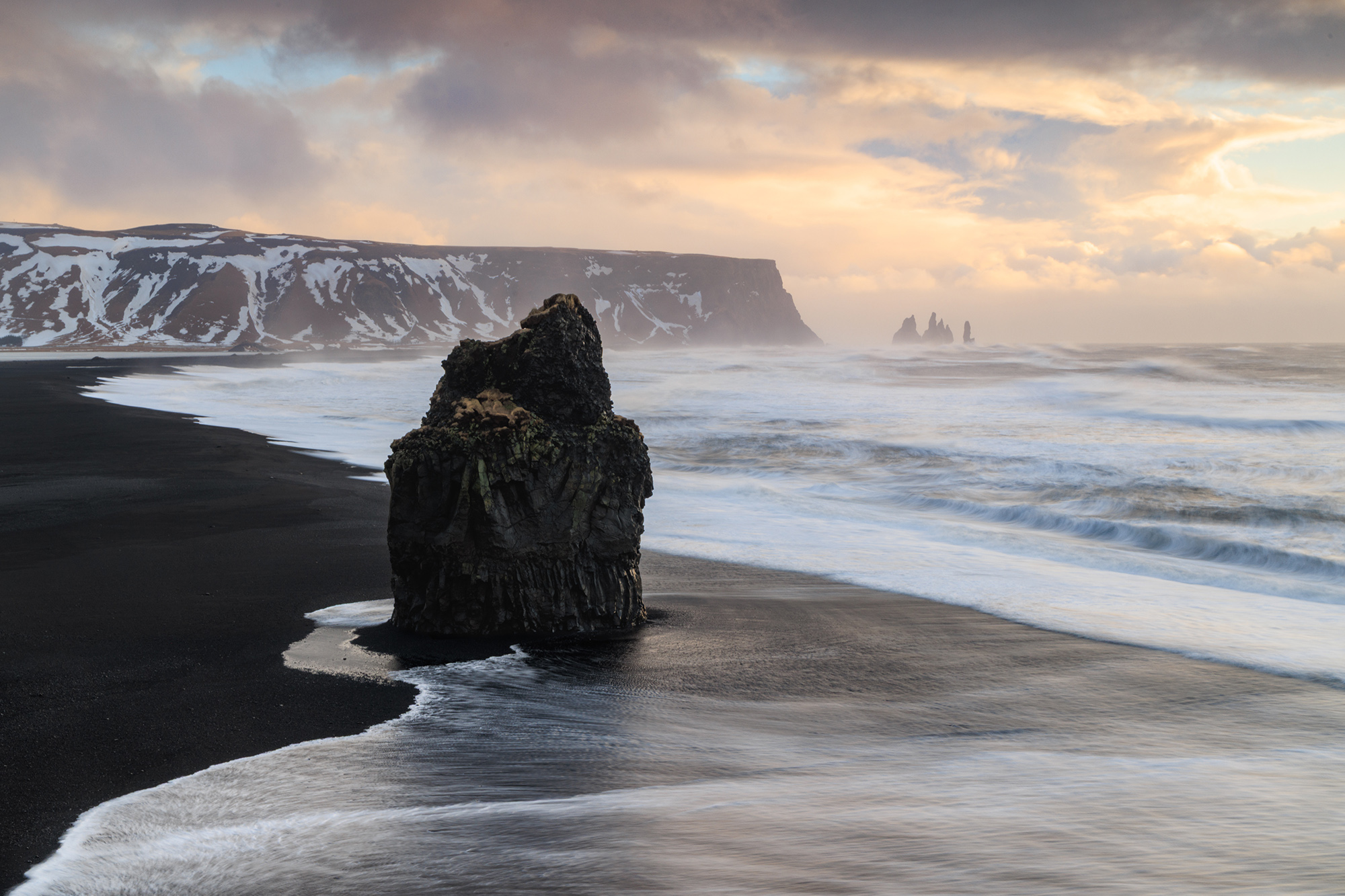
‘The view from Dyrhólaey’ by Justin Minns FRPS
What do you enjoy about being an RPS member?
I joined in 2013. I’m a member of the Landscape Group and I’ve been increasingly involved in running events for them and other groups. It’s inspiring spending time with other photographers and learning how they see the world.
When did you achieve your Licentiate?
I achieved my Licentiate in 2014 and intended to go for Associate, but life got in the way. When I came back to the idea more recently, I decided on the advice of a well-known photographer to go for Fellowship instead.
Describe your Fellowship Distinction project
I achieved my Fellowship in 2023 with a portfolio focused on the Essex coast.
This project was a little unusual in that I’d been creating a book about Essex for several years, so I had an existing body of work already. I‘d expected that I’d have to add to that work to put my Fellowship panel together. In the end, my panel was comprised purely of existing images.
One of the main things that I took away from my Fellowship Distinctions experience was advice the Society gave me at the start of this work – consistency and a clear voice are essential. Having a theme on a local place that’s close to my heart helped me achieve this.
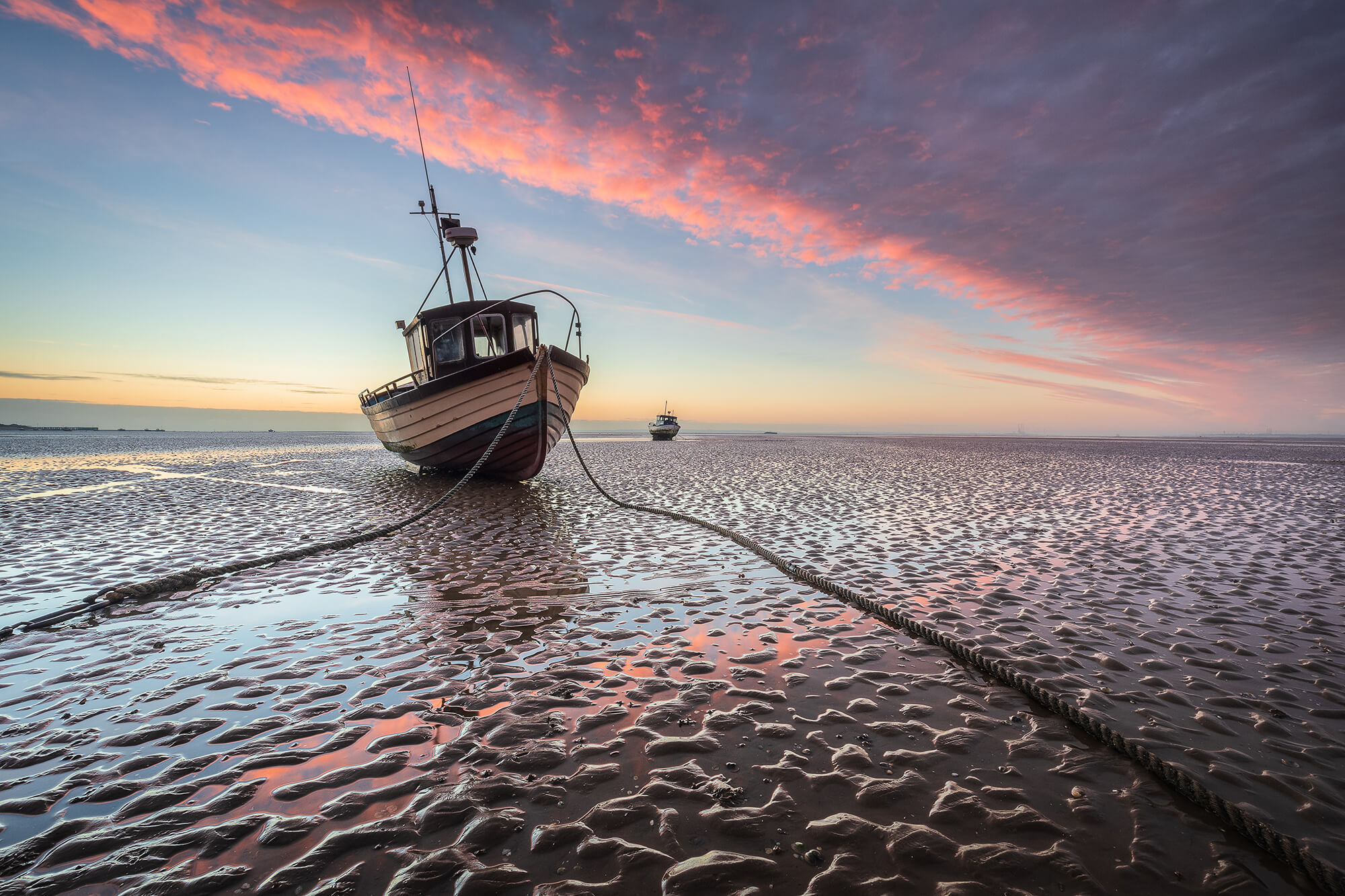
‘Low tide on the Thames Estuary’ by Justin Minns FRPS
What are your favourite landscapes to photograph?
My current favourite places to photograph are the bleak but beautiful lunar-like Icelandic landscapes. They never fail to inspire. The gentler landscape of East Anglia is something I have a lifelong connection to.
Talk us through capturing your photograph ‘Low tide on the Thames Estuary’
This image of boats on the mudflats at Thorpe Bay in Essex appeared in my Fellowship submission. At low tide boats are left scattered over the mud flats on the Thames Estuary here – not perhaps a typical East Anglian landscape but a great place for dramatic wide angle lens shots, a look that I love.
Using a wide-angle lens enables me to get low and close to capture the wonderful texture in the mudflats’ rippled patterns while still including plenty of sky. The way this focal length also appears to stretch out perspective and exaggerate the distance between things is great for capturing the sense of space on these vast mudflats.
Although I put a lot of effort into planning my shoots to improve my chances of being in the right place at the right time, there’s always an element of luck involved. On this occasion I took full advantage of the triangle created by the colours in the clouds and their reflections which turned out to be perfect for framing the view of my boats.
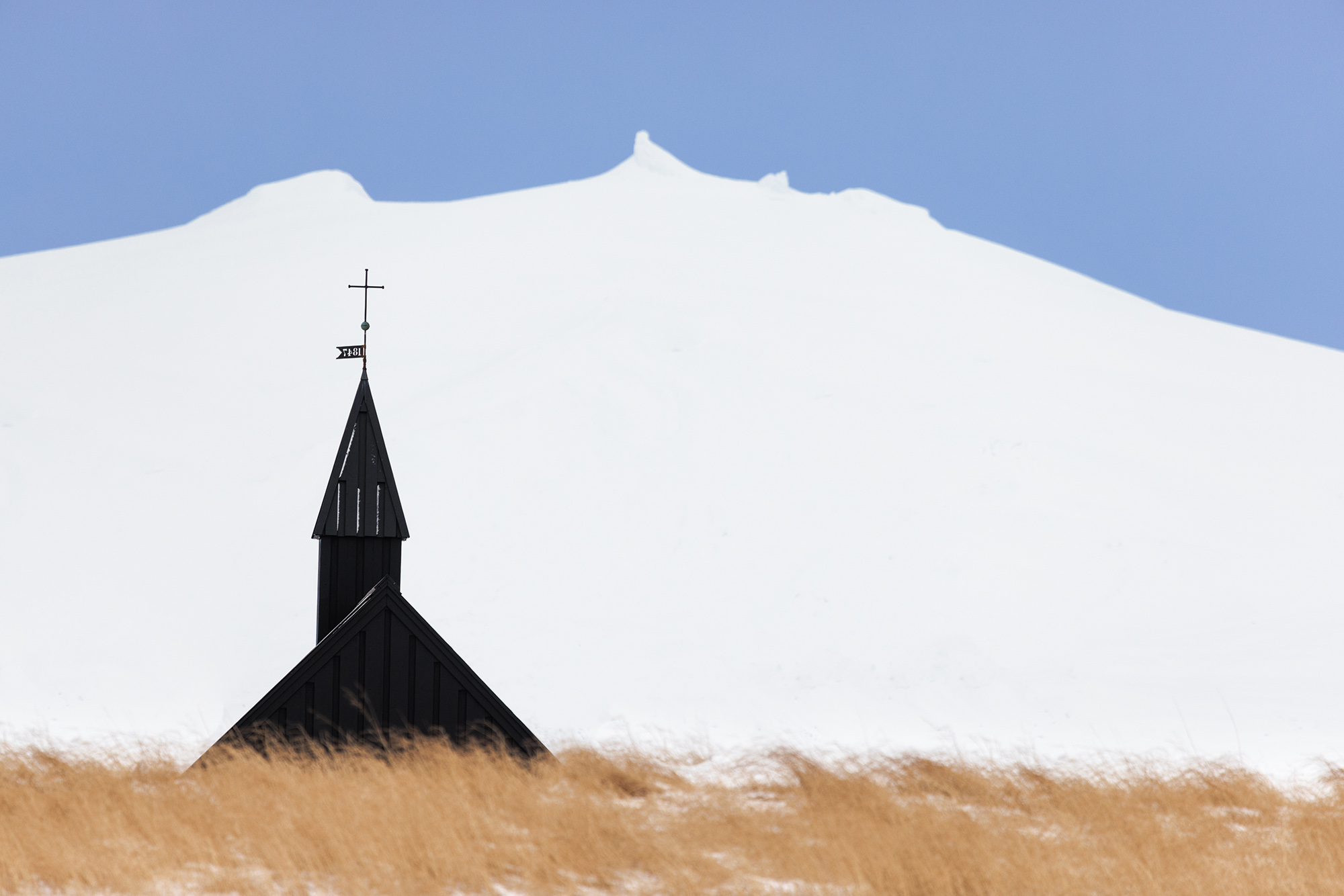
‘The black church’ by Justin Minns FRPS
What’s the story behind shooting the image ‘The black church’?
Sitting as it does on a remote lava field dwarfed by the mountains behind, Budakirkja – the tiny black church of the Icelandic hamlet Budir – has endless possibilities for compositions. This one came about as I walked around searching for an angle that included both the church and the distinctive peak of Snaefell which, often obscured by low cloud, was visible for once.
The angle I found was in a dip in the landscape. Much of the church was hidden and quite distant, so I used a telephoto lens to make the church appear bigger and closer to the mountain.
As I zoomed in, I noticed it cut out much of the cloud detail and colour variation in the sky, making the hues appear like flat blocks of colour. Although a happy accident, I loved this look and zoomed in more to emphasise the effect. The result was this simple image with bold blocks of shape and colour. Often these unexpected results are the most satisfying.
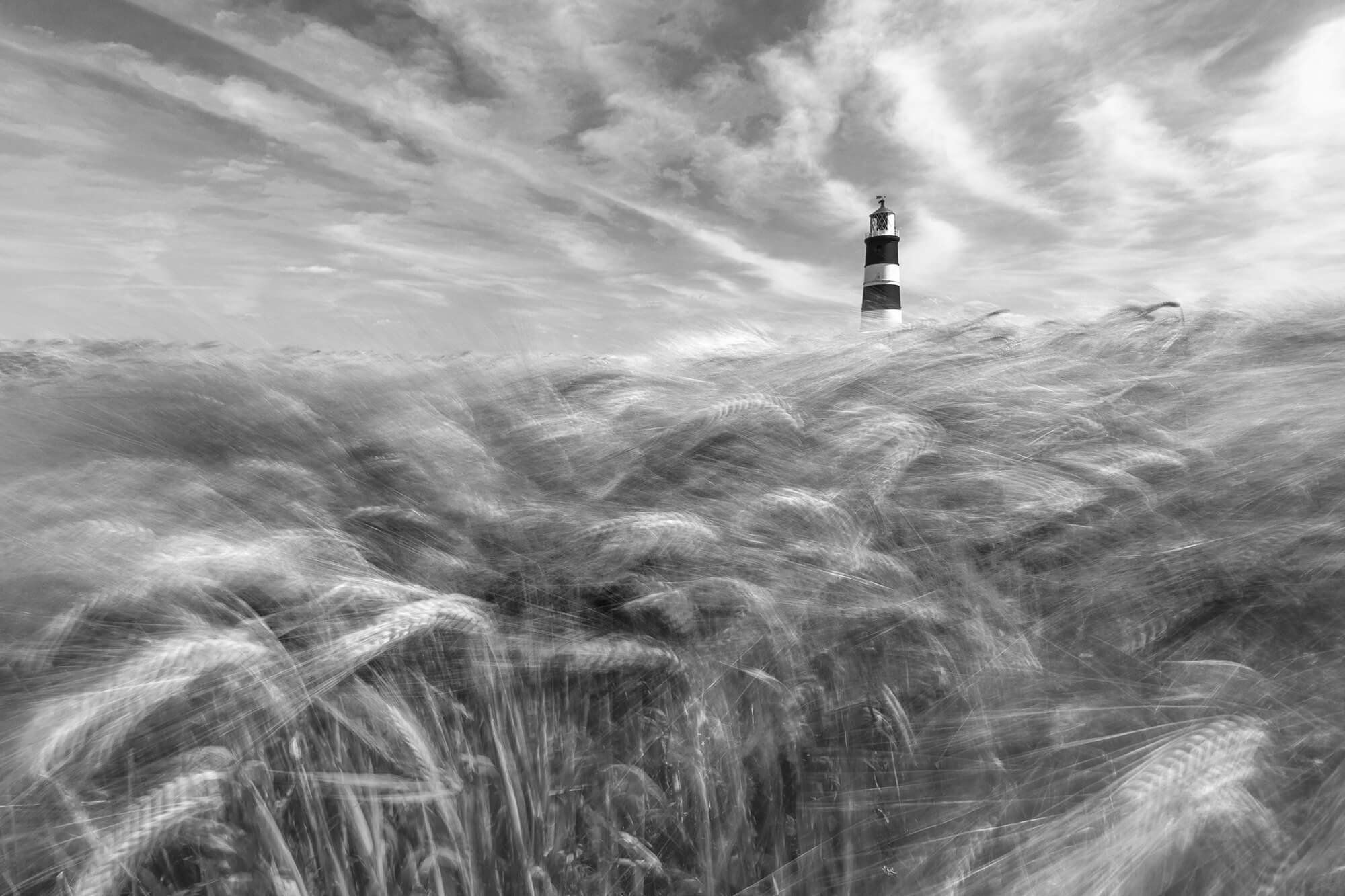
‘Sea of barley’ by Justin Minns FRPS
What are your proudest photographic achievements?
Achieving my Fellowship was a big deal for me. As was the first time one of my images was recognised in a major competition, Landscape Photographer of the Year 2012.
I run a lot of landscape photography workshops and helping participants improve their photography is a great feeling too.
What do you want audiences to take from your images?
It would be nice to think my images might inspire somebody to get out and enjoy nature or another photographer to try landscape photography for themselves.