

‘Neil Armstrong's spacesuit from the first moonwalk, the Smithsonian Air & Space Museum, 1990’ by Albert Watson HonFRPS
From Steve Jobs to Madonna, Jack Nicholson to Uma Thurman, the photographer Albert Watson HonFRPS is renowned for his portraiture.
That, though, is just one part of a kaleidoscopic body of work that also spans landscape, fine art, fashion, dance and more.
Now, a book celebrating Watson’s diverse portfolio is offering a fresh perspective on the image-maker who was awarded the RPS Centenary medal in 2010. Albert Watson – Kaos, published by Taschen, features images spanning nearly half a century, from Scottish landscapes to some of his 100 covers for Voguemagazine.
Below, in an extract from the book, Philippe Garner, former head of photographs at Christie’s, explores the roots of Watson’s remarkable talent.
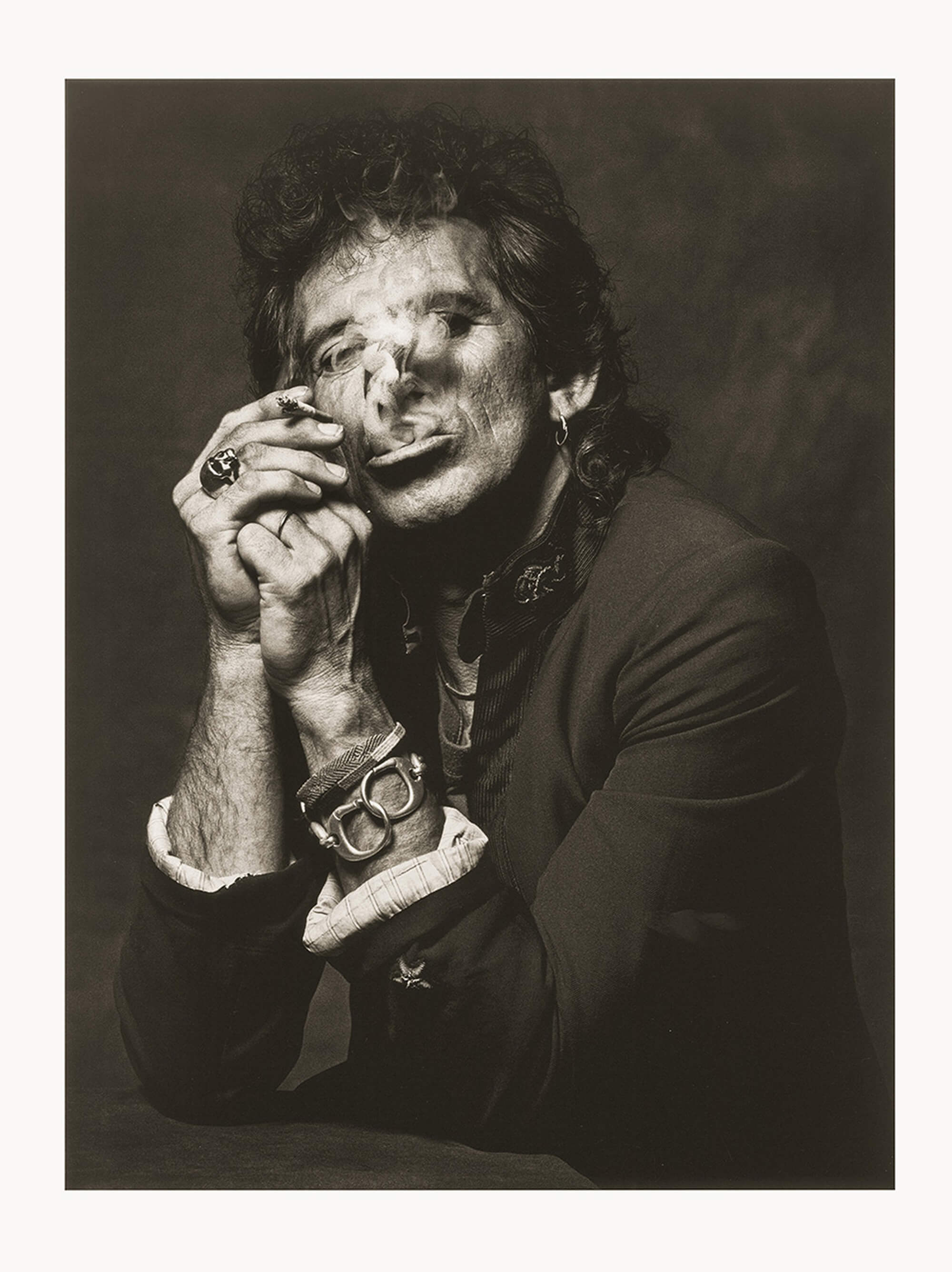
‘Keith Richards, New York City, 1988’ by Albert Watson HonFRPS
We know so well so many of Albert Watson’s pictures, such is their indelible ‘once seen, never forgotten’ authority. We know less well the dedicated and wide-ranging creative imagination behind them, for Watson has preferred to avoid the limelight, systematically deflecting attention in favour of his chosen subject matter and letting the photographs speak for themselves.
Albert Watson’s photographic portfolio is exceptionally diverse, embracing fashion and portraiture, nudes and dance, still life and landscape, photo essays and advertising campaigns. Across this range there is no one signature style, but rather Watson finds a pictorial solution to each specific challenge, whatever the photographic genre.
Yet across this broad and ambitious portfolio, Watson’s work does reveal distinct consistencies, and within these common threads – the DNA, so to speak, of his way of working – we can measure the personality and the creative sensibility of the photographer.
Particularly striking is the graphic clarity that Watson brings to his picture-making. He proves himself highly adept at distilling each subject to its essence, and in doing so creates impactful, memorable images that have lucidity, polish and their own insistent, hyperreal presence.

‘Cindy Sherman and parrot, New York City, 1994’ by Albert Watson HonFRPS
The consistent, overarching impression is of an ever-curious problem solver who delights in translating his observations and ideas into powerful statement pictures. “I have sometimes been rather good at conceptualizing,” is Watson’s on-target self-assessment.
Equally, in these pictures we recognise Watson as a committed master of his medium, a meticulous artisan who understands intimately the potential of the optics, photo chemistry and photo technology at his disposal. These twin interwoven strands – of creativity and of craftsmanship – have defined Watson’s long and distinguished career across genres through both his commissioned and his independent work.
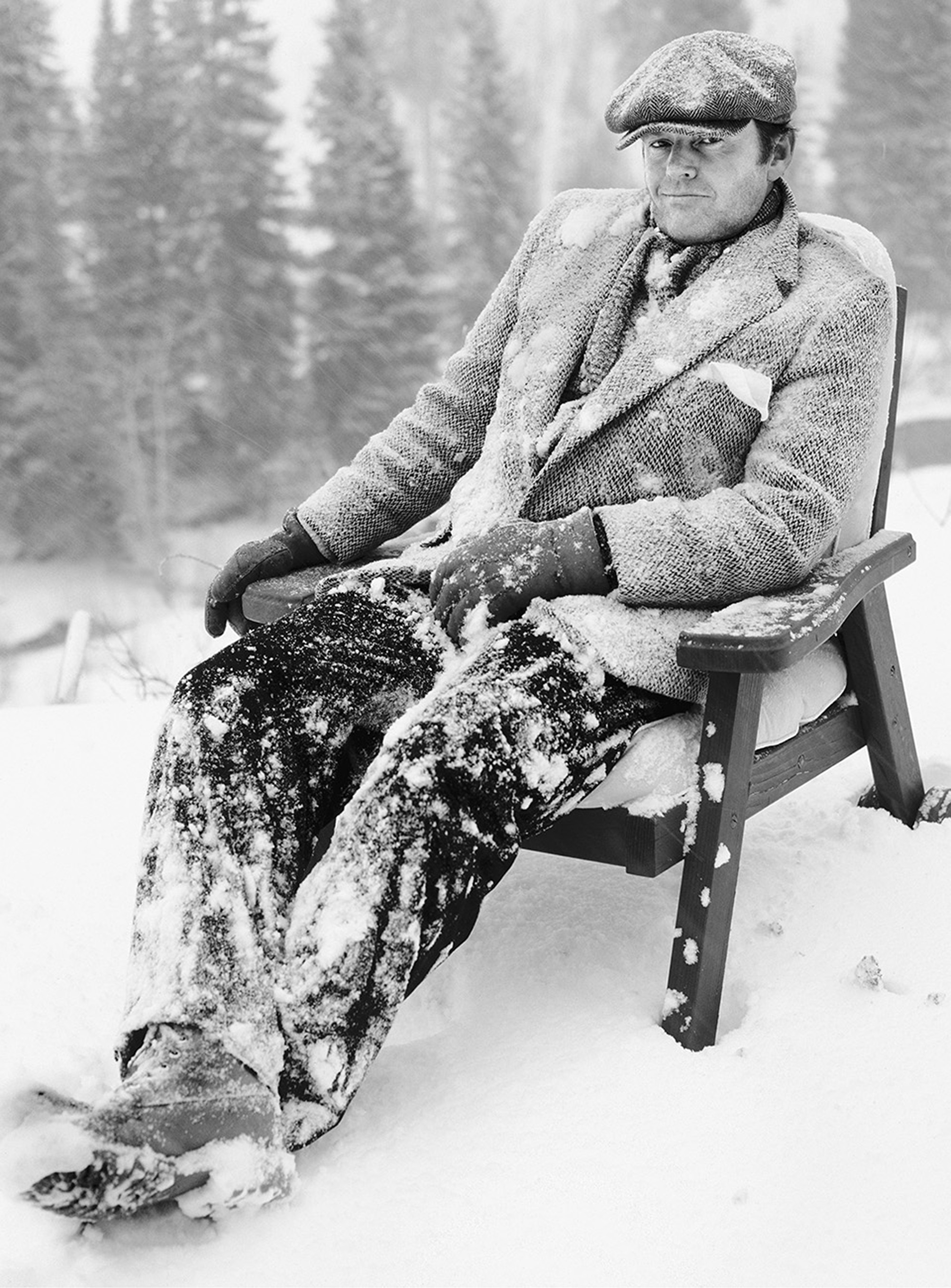
‘Jack Nicholson, Aspen, Colorado, 1981’ by Albert Watson HonFRPS
Who is this engaging, understated, fastidious, intensely focused Scot – the man in black – who has established his base in New York and earned his position among the most in-demand photographers of the last four decades?
Watson’s Edinburgh upbringing gave no suggestion of the path he would follow; there was no place for the visual arts. His father was a physical education instructor and boxer, who was nonetheless supportive of his son’s decision to develop his creative skills; though some years later, when Watson started making fashion pictures, his father thought this “funny work for a man”.
Watson spent four years, from 1962, studying graphic design at Dundee’s Duncan of Jordanstone College of Art and Design, then three years pursuing film studies at London’s Royal College of Art. At Dundee he was expected to attend secondary classes in a chosen craft, and he opted for photography. The seeds of his career were sown. His training in graphic design was formative. “I was drawn into graphics,” he explains. “The subject felt like the right fit.”
Watson found great inspiration in the work of a generation of talented and influential American designers, notable among them Milton Glaser and Seymour Chwast of Push Pin Studios, Saul Bass, designer of memorable film posters, and William Golden, creator of the celebrated eye logo for CBS. He was also receptive to the ideas of an exceptionally gifted contemporary generation of Polish designers, among them Roman Cieślewicz and Jan Lenica. Watson learned how intelligently conceived graphics could serve as highly effective tools of communication, catching the viewer’s attention and fixing the intended message in their mind.
“Through the ’70s and ’till the mid-’80s, I was always buying books on graphic design,” he recalls, “then I paid more and more attention to painting, buying countless art books, looking at the work of so many artists.”

‘Fairy Glen, Isle of Skye, Scotland, 2013’ by Albert Watson HonFRPS
Watson’s analytical mind loves to explore their various approaches to making pictures. He references, for instance, his fascination with Gerhard Richter, whose paintings have frequently played with the phenomena of perception within photographs. He is also intrigued by the art of a fellow Scot, Peter Doig – which makes sense when we look at Watson’s recent Isle of Skye landscapes, images that challenge our readings of structure, colour and texture across a densely detailed picture plane.
Watson has recently been looking very closely at Seurat, exploring pointillist image structures and the effects achievable through various types of granularity. This intensive and always ongoing formation in tightly focused pictorial messaging and effects, drawing on graphic design and painting, is the defining paradigm to his approach, underpinning every project he undertakes.

This is an extract from the book Albert Watson – Kaos, published by Taschen at £125.
The RPS Journal is available exclusively to members. Join the RPS to receive our award-winning magazine and read more inspiring features. Explore full member benefits here.