
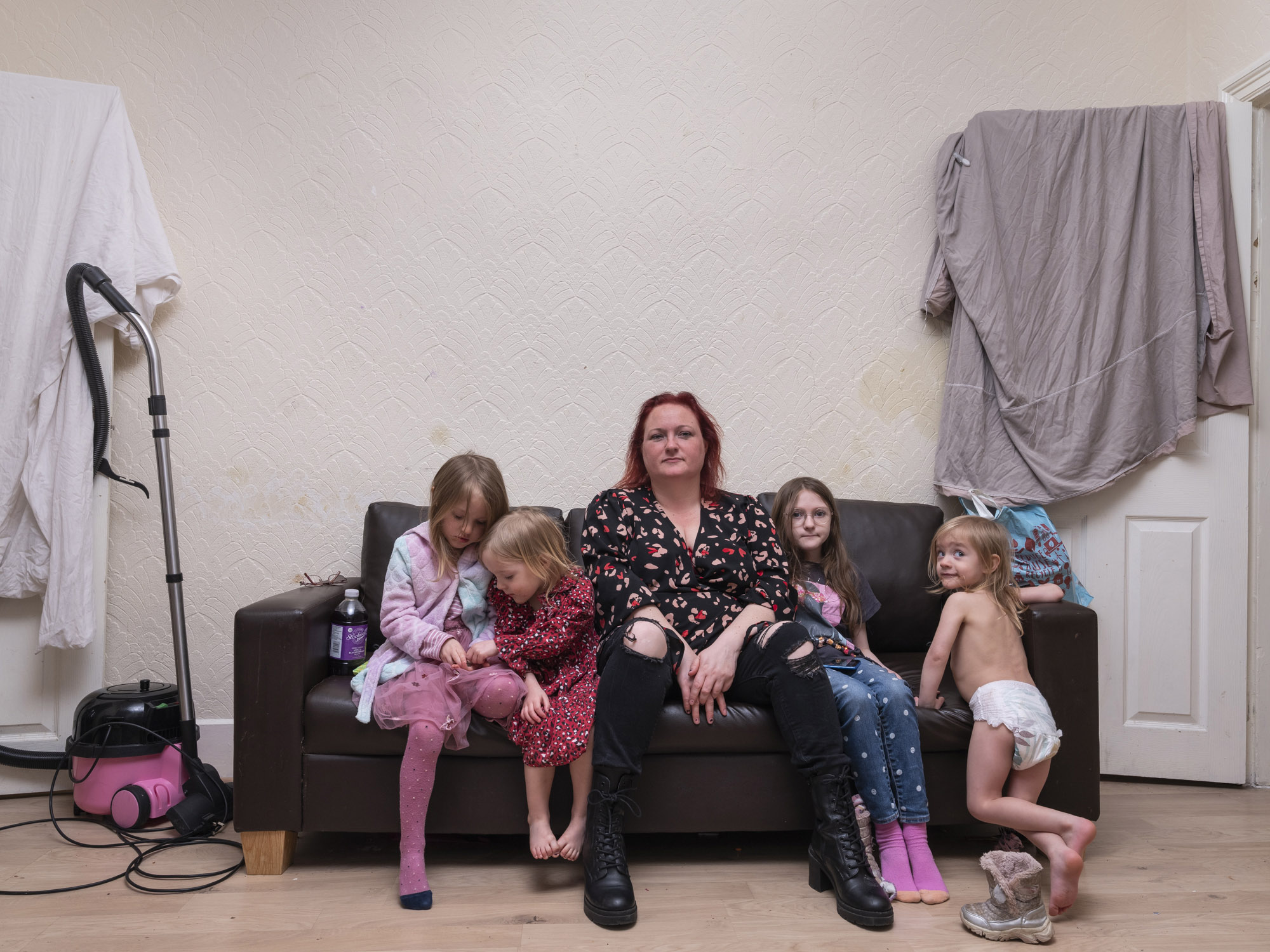
‘Tessa (5), Theadora (3), Sylvi (42), Niamh (9), Alexandria (3)’ from the series Families Living in Temporary Accommodation by Anthony Luvera
Anthony Luvera was well known to RPS members before taking up the role of Director of Education for the Society.
The Australia-born artist is renowned for socially-engaged, long-term collaborative series. His work has been exhibited in spaces from the Houses of Parliament to the British Museum, via Tate Liverpool and the international photo festival circuit. It has also graced the pages of the membership magazine the RPS Journal.
As passionate about education as his own practice, he has lectured at universities and community workshops alike, keen to share his knowledge – and to show how photography can offer a voice to the voiceless.
Here, he tells us about his ongoing series Families Living in Temporary Accommodation, while his collaborators reveal the challenges they have faced.
Describe yourself as a photographer.
I’ve had a long career working across a range of different photographic practices, and around 2002 I began to focus on participatory and collaborative ways of working, often described as socially engaged practice.
My work is rooted in long-term engagement with individuals and communities, often those who are underrepresented or misrepresented. For me, photography is not just about making images. It is about creating a space where people can represent themselves and be seen and heard on their own terms.
Tell us about your role as Director of Education at the RPS.
My portfolio encompasses three strands – Distinctions, learning and engagement, and exhibitions. The role involves working closely with colleagues across the Society to develop and deliver programmes that support photographers at different stages of their practice, and to encourage thoughtful and ethical approaches to making and presenting work.
As a membership organisation, the RPS is shaped by its Special Interest Groups and regional networks, which lead a wide range of their own education-focused activities. An important part of my role is to support and connect with these groups, ensuring opportunities for shared learning and exchange across the Society.
How did the series Families Living in Temporary Accommodation come about?
I’ve worked with people experiencing homelessness in towns and cities across the UK for over 20 years, and the project grew out of that ongoing practice. It began through a collaboration with Shared Health Foundation, where I was embedded within a team of focused care practitioners working with homeless families in Greater Manchester between 2022 and 2024.
I spent time with families living in temporary accommodation, getting to know their experiences and circumstances that had led them there. Families can find themselves in this situation for many reasons and their experiences are often overlooked in public discussions about homelessness.
The work developed into a collaborative process with the families, to represent those experiences more directly. Over time, we made portraits together and recorded conversations, allowing each family to describe their situation in their own words and to shape how they are represented.
You describe your practice as collaborative. How does this work?
Collaboration in my practice is about working with people over time and creating the conditions for them to take an active role in how they are represented. Rather than arriving with a fixed idea, I begin by spending time getting to know participants and building a relationship based on trust and dialogue.
The process often involves workshops, conversations and making work together. Participants are involved in decisions about how images are produced, how their stories are shared and how the work is presented. This can include making portraits together, writing or recording their own accounts and shaping the context in which the work is seen.
It is also about acknowledging and trying to shift the usual power dynamics of photography. The aim is not to speak on behalf of others, but to create the conditions in which people can represent themselves and have agency over how they are seen and understood.
Can photography change lives?
Photography can be a powerful storytelling tool, particularly in how it makes experiences visible and creates opportunities for people to be heard. Its strength lies in its ability to connect people, to communicate something of lived experience that might otherwise go unseen or unacknowledged.
At the same time, it is important to recognise its limits. Photography on its own does not change structural conditions, but it can contribute to processes that do. When used thoughtfully it can support dialogue, challenge assumptions and bring different perspectives into public and policy conversations.
In my own practice, the emphasis is on how photography can be used with people rather than about them. When participants are involved in shaping how their stories are told, the process can be affirming and can create a sense of agency. The impact is not only in the images themselves, but in the relationships and exchanges that take place through making the work.
What are your next steps as a photographer?
I will continue to develop long-term collaborative projects that engage with social issues, particularly around housing and inequality. An important part of that is thinking about how the work can operate beyond traditional contexts, including contributing to policy discussions, advocacy and public dialogue.
I am also interested in extending the ways in which participants are involved, and how these collaborative processes can continue to evolve. Alongside this, I want to support and contribute to wider conversations around ethical and participatory approaches to photography, through my own work and my role in education.
The RPS Journal is available exclusively to members. Join the RPS to receive our award-winning magazine and read more inspiring features. Explore full member benefits here.
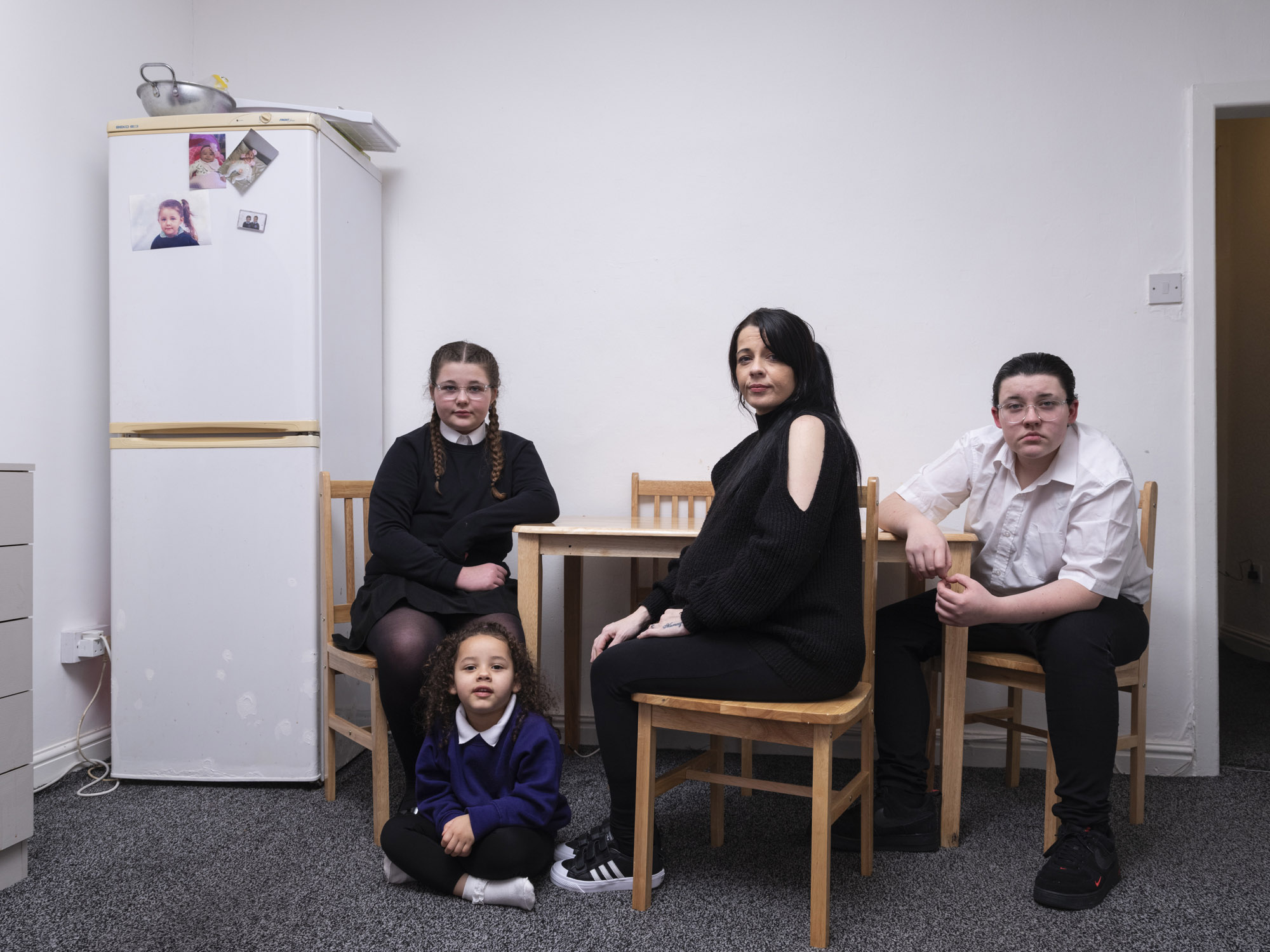
‘Gracie (12), Freya (3), Kelly (34), Mia (16)’ from the series Families Living in Temporary Accommodation by Anthony Luvera
“My kid’s dad, he weren’t a good guy. So, we ended up moving away from him cos he was threatening me and stuff while I was pregnant with the baby. I had three children at the time so I couldn’t get them in schools. I couldn’t get them into a doctor’s because we weren’t in one place long enough and we didn’t have an address. I’m in an area I don’t know, but I’m not allowed to refuse that either, otherwise they take me off the list. There’s no support for the kids. It was hard for me as well being pregnant, and then not being able to get doctors and stuff. It’s hard work, the not knowing.”
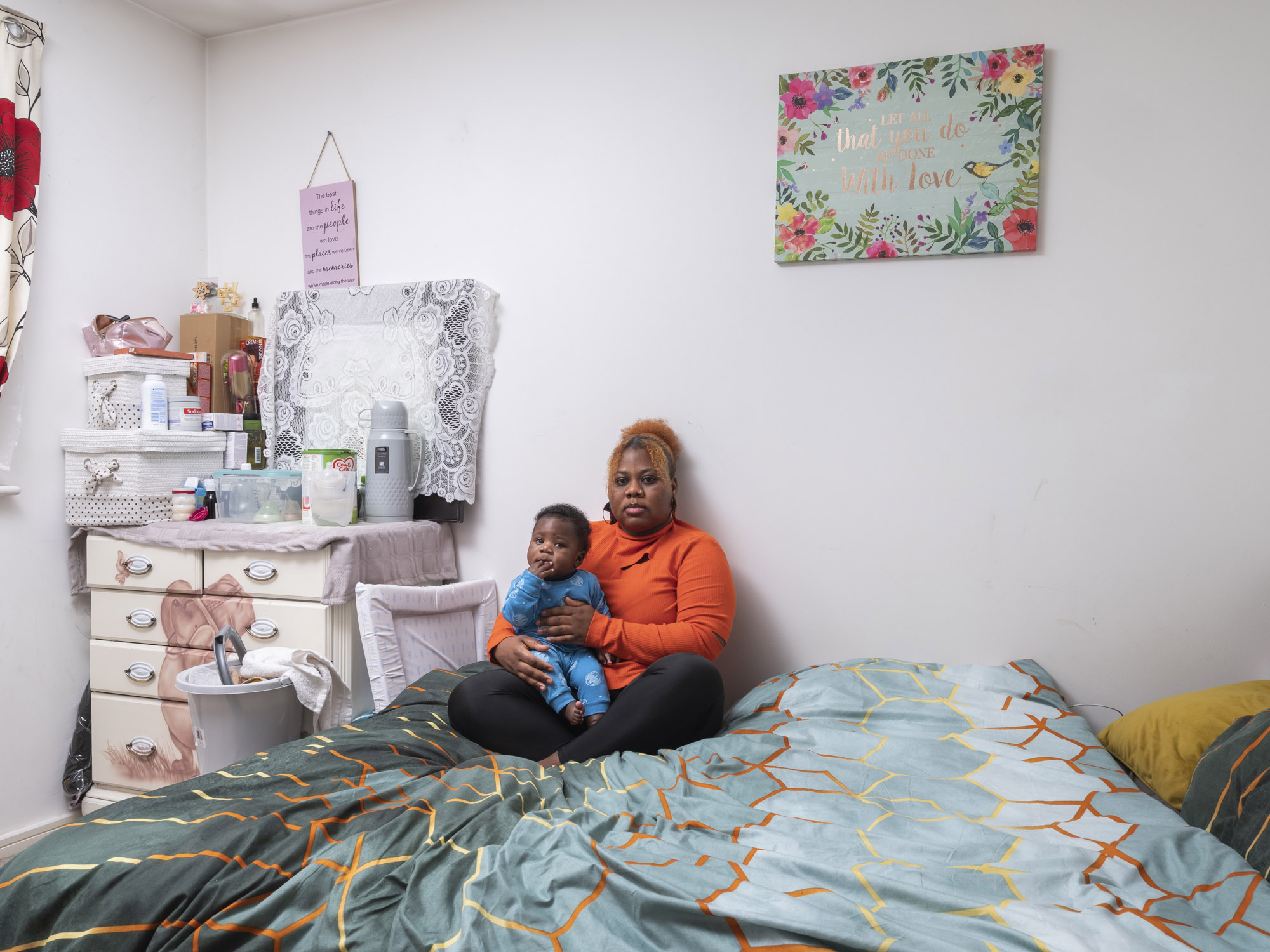
‘Gabriel-Nufasu (11 months), Sika-Gloria (28)’ from the series Families Living in Temporary Accommodation by Anthony Luvera
“Before, he used to sleep with me on my bed, which is not safe, cos he grew out of his Moses basket. So, now we have a travel cot. But there’s no space in the room for him, cos he wants to be on the floor, like, moving around. Cos the travel cot is not big enough for him to do all that. So, there's no space in the room. Sometimes, I take him downstairs in the kitchen to play around, cos he wants to be free. I never imagined having my own family will start like this. I never envisioned life will be like this.”
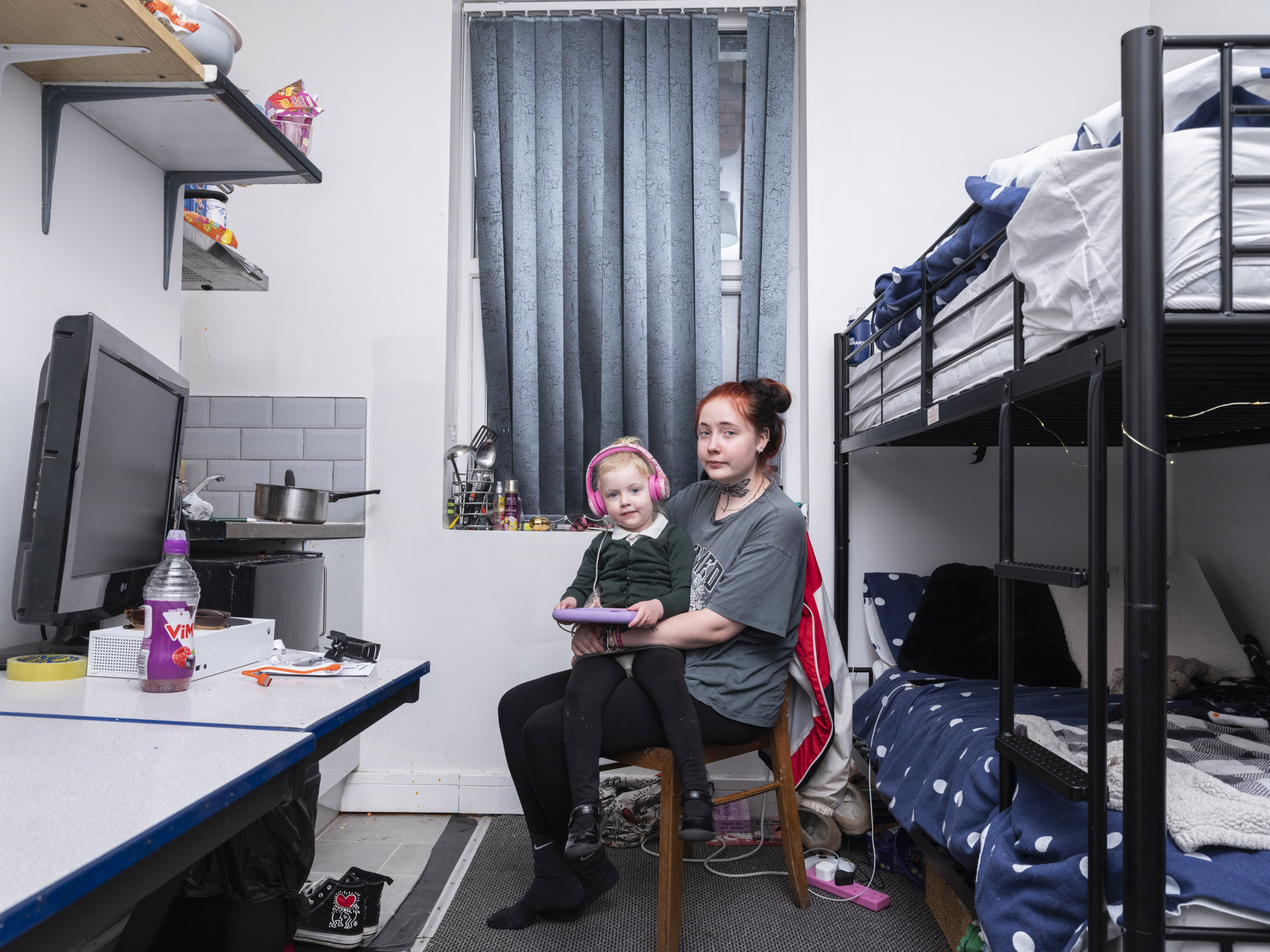
‘Lily-Rose (3), Rachael (20)’ from the series Families Living in Temporary Accommodation by Anthony Luvera
“It was a hotel about half an hour away from everyone that I knew. I was there for six weeks and then they called me one Friday morning and said, ‘We’re moving you.’ It was like just a small contained flat sort of thing. It was terrifying, cos I was being sent to this place and you don’t get given any information except the address. And when you turn up, you don’t know what you're going to find. I’m a student nurse and I had to wash my uniforms. I had to take it to a launderette to wash my uniforms every night, which was costing me money that I didn’t have. I worked so hard to get onto that course. I was a young mum. I had my baby at 16. Everybody said, ‘You won’t do it. You won’t do it. You won’t do it.’ And I’m proving everyone wrong.”
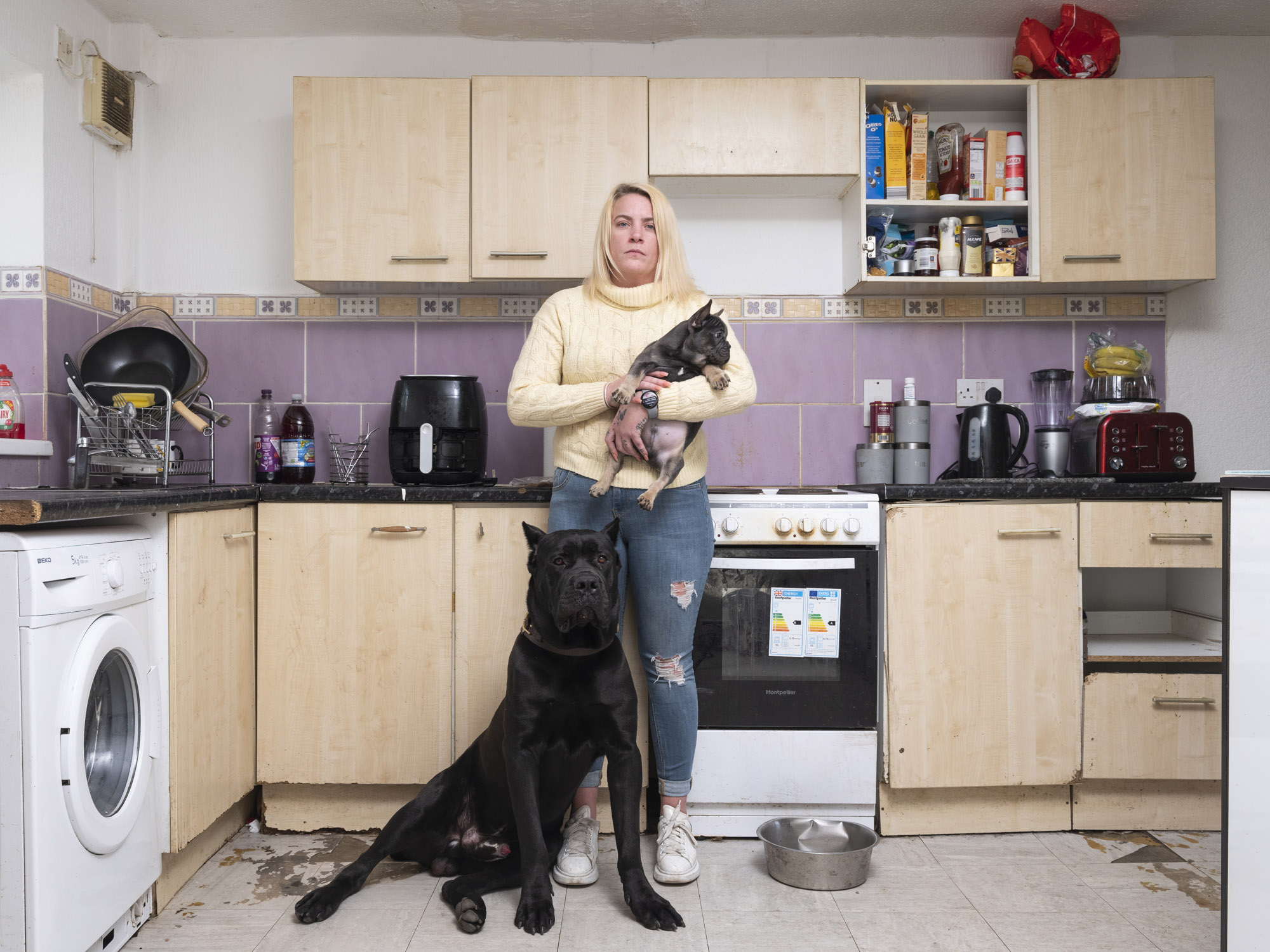
‘Lauren, 33’ from the series Families Living in Temporary Accommodation by Anthony Luvera
“I moved in with my ex-partner and that got quite emotionally abusive. Got put into a hotel for a week and then got put into the temporary accommodation where everything went wrong. To me, putting me in that temporary accommodation was like putting me into a hole and giving me a fork, and saying, ‘Get yourself out.’ I couldn’t make it a home. You’re not allowed to decorate. I couldn’t take any of my stuff with me. They said, 'You’ll probably only be in here for six months, so don't get comfortable. Don’t get internet. Don’t get anything.’ For everyone I know that’s been in temporary accommodation, it is not temporary. Once they put you in that temporary accommodation, that’s it. You’re forgotten about. Regardless of your needs, regardless of your children’s needs, you’re left to rot. I wouldn’t wish temporary accommodation on anybody. It ruined my life.”
The RPS Journal is available exclusively to members. Join the RPS to receive our award-winning magazine and read more inspiring features. Explore full member benefits here.