
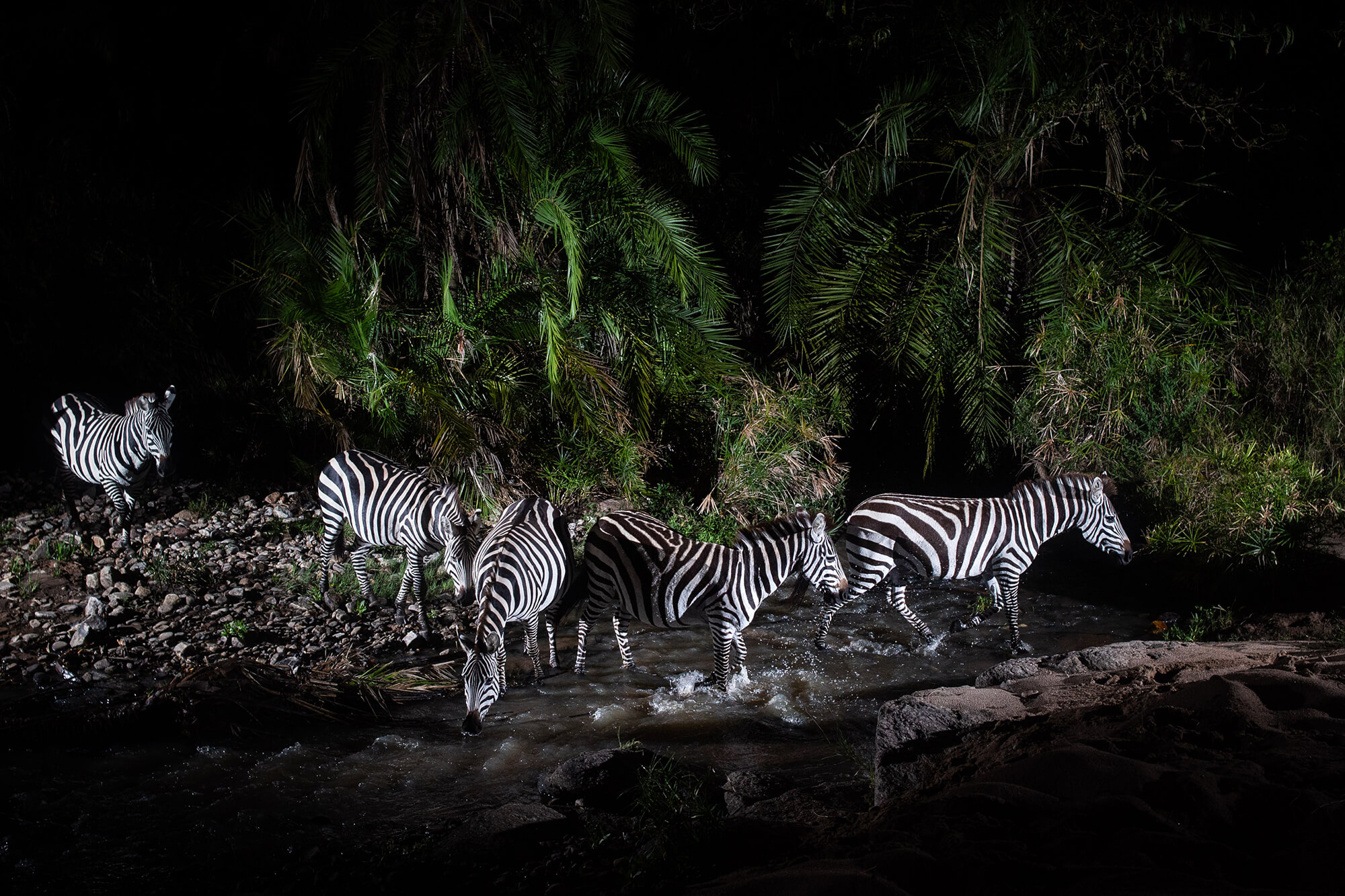
‘Zebras, Maasai Mara, 2025’ from the series Hidden Mara by Will Burrard-Lucas
I spent several months during 2025 working on a camera trap project in a little-seen part of Kenya’s Maasai Mara.
The project, in collaboration with the Mara Rhino Unit at the Maasai Mara National Reserve, focused on a secluded river crossing in dense forest where black rhinos and other wildlife moved through at night.
Most people know the Mara as a place of open plains and dramatic daytime sightings, but this was something completely different – a hidden, enclosed world of palms, fig trees, steep riverbanks and darkness. Using camera traps allowed me not only to create photographs, but to support rhino monitoring in habitat where direct sightings can be extremely difficult.
What I value most about this series, Hidden Mara, is it sits at the intersection of photography and conservation. It also reminds me why I love camera trapping so much. It allows you to photograph elusive wildlife in intimate ways and to create carefully considered images of scenes that unfold when no photographer is present.
For photographers who enjoy patience, fieldcraft and creative problem-solving, it is a deeply rewarding approach – and one that opens the door to a completely different kind of wildlife photography.
Below are five images that tell the story of Hidden Mara, winner of the Wildlife and Nature category of the Sony World Photography Awards 2026.
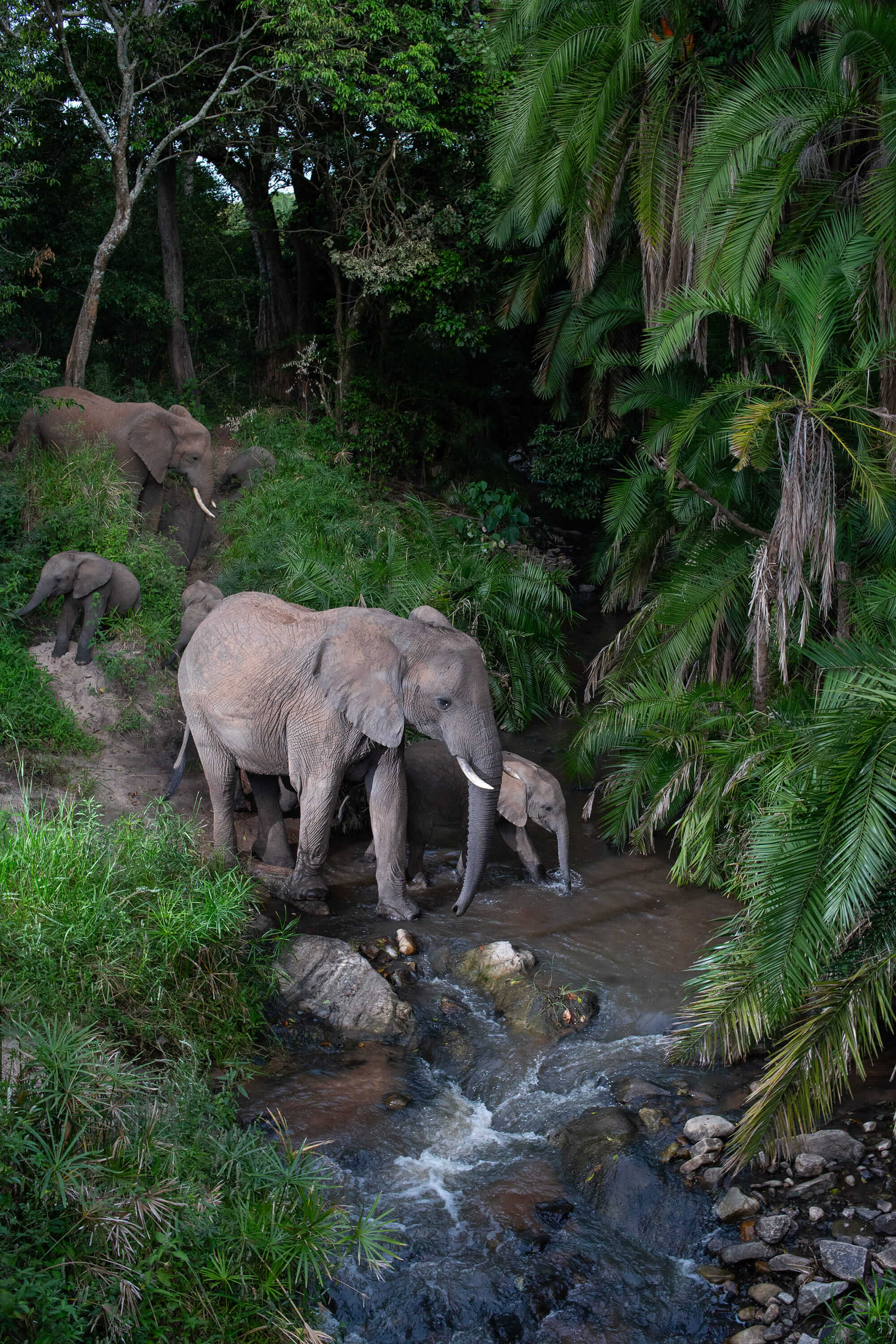
'The river crossing, 2025’ from the series Hidden Mara by Will Burrard-Lucas
This image captures the heart of the project – the secluded river crossing where one of my camera traps was left running for months. What first struck me about the location was how unlike the ‘classic’ Maasai Mara it felt. Instead of open grassland this was a dense, almost prehistoric-feeling pocket of forest.
From a photographic point of view it was ideal. The raised riverbank allowed me to mount the camera high above the crossing so the animals could be shown within the landscape rather than as simple close-up portraits. That was important to me – I wanted the photographs to convey not just the wildlife but also the atmosphere of this hidden place.
To make the photograph I used one of my own Camtraptions camera trap systems, with the camera mounted above the crossing and triggered remotely by a sensor when animals passed below. Working this way gives me far greater control over composition and lighting than is usually possible in wildlife photography.
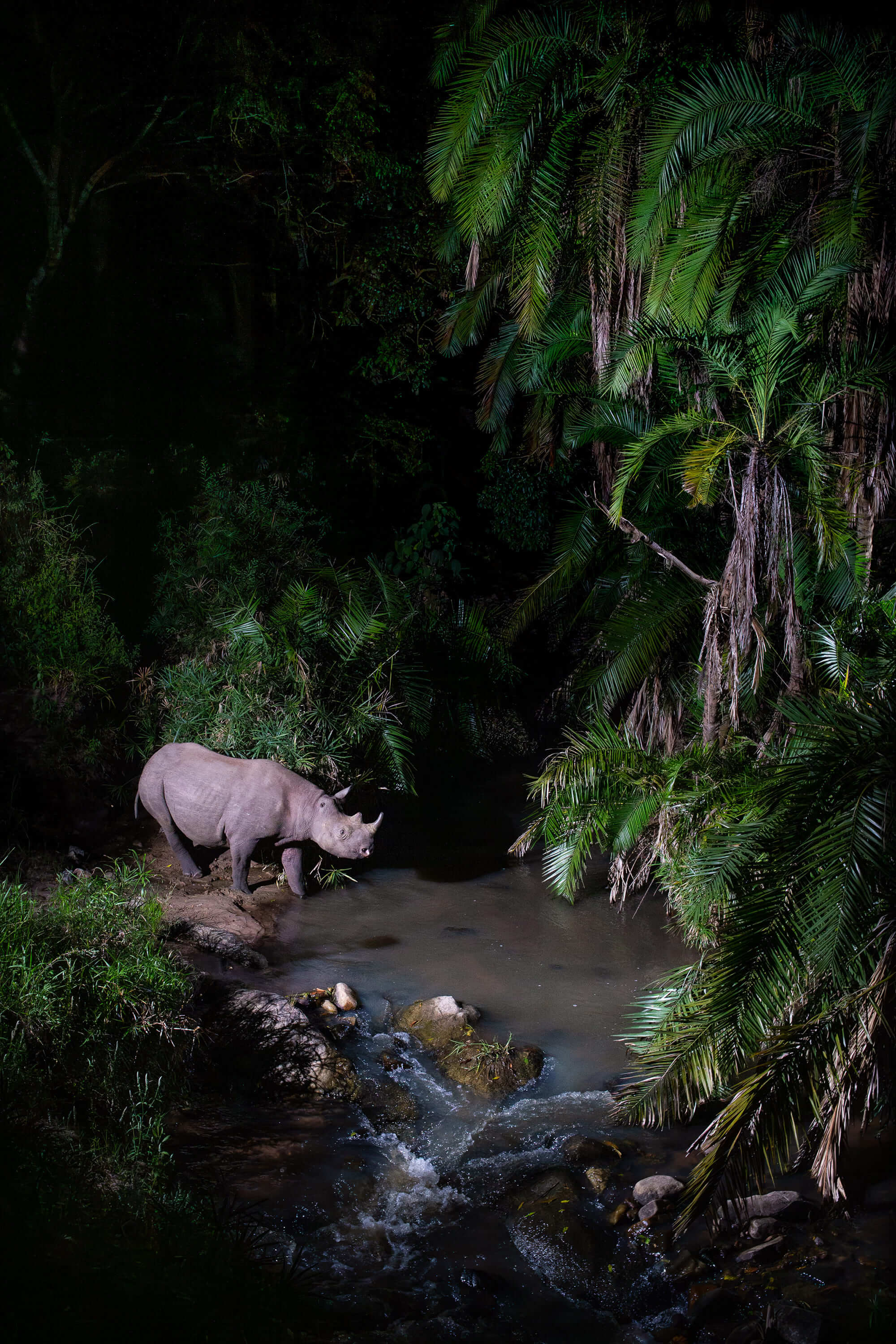
‘Black rhino at night, 2025’ from the series Hidden Mara by Will Burrard-Lucas
This was one of the first rhino images from the set-up and it immediately showed that the crossing was more productive than we had hoped. What made the project especially exciting was the camera did not just record the same animal repeatedly. Over time, it captured multiple individual rhinos using the corridor.
For the Mara Rhino Unit that was helpful because some of these animals had not been documented for many months. For me the thrill was also photographic. Rhinos have always felt like deeply prehistoric animals and seeing one move through this palm-framed forest at night felt like witnessing a scene from another era.
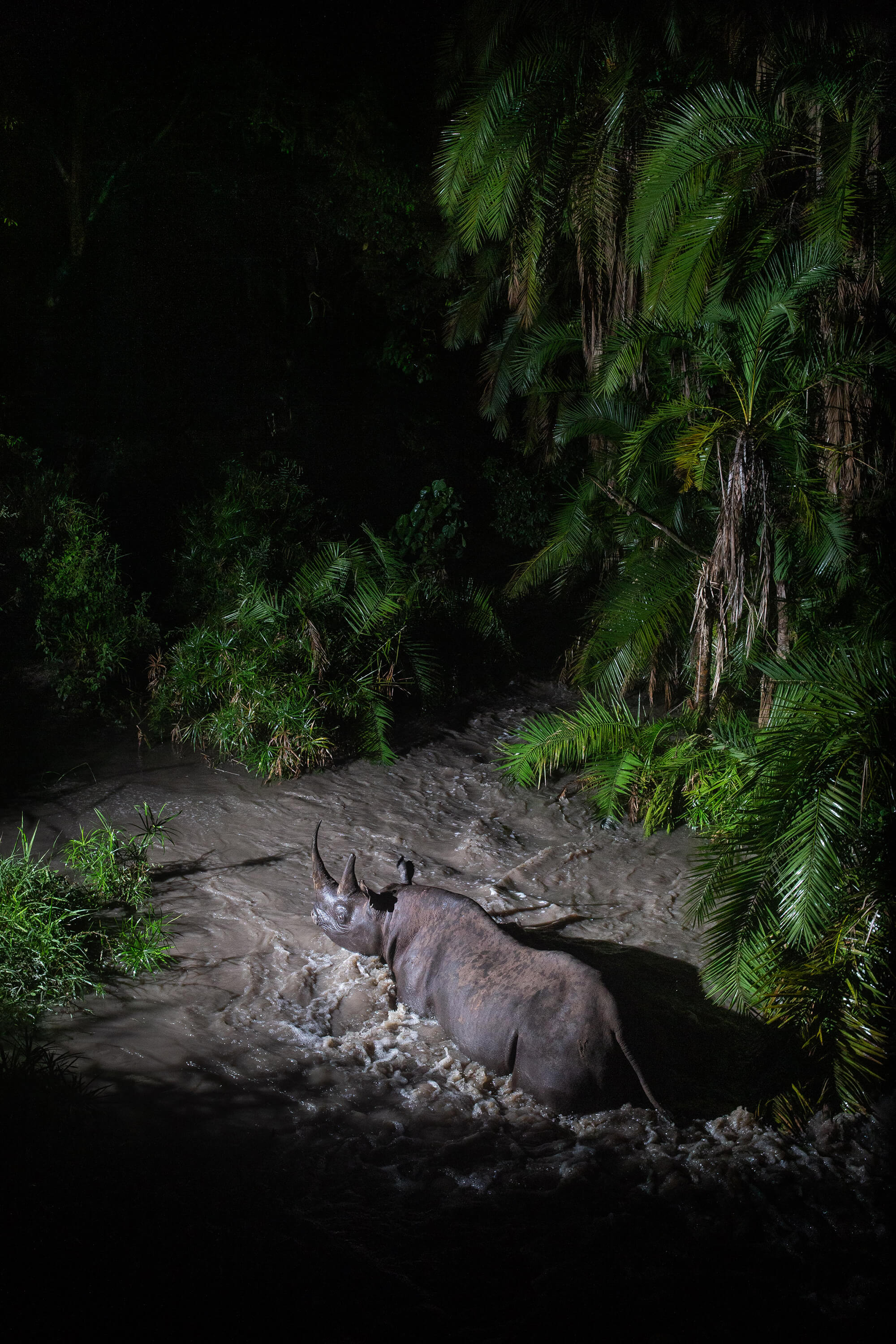
‘Rhino in floodwater, 2025’ from the series Hidden Mara by Will Burrard-Lucas
This is probably the most dramatic image from the project. During one night of heavy rain the quiet crossing turned into a torrent and the camera captured a black rhino forcing its way through the floodwater.
What I love about camera trapping is that it can produce moments you could never realistically plan for or witness in person. Once the setup is in place the forest takes over. Here, conditions that might just as easily have ruined the setup instead produced one of the most memorable photographs of the series – though one of my sensors, positioned further downstream, did end up submerged in the flood.
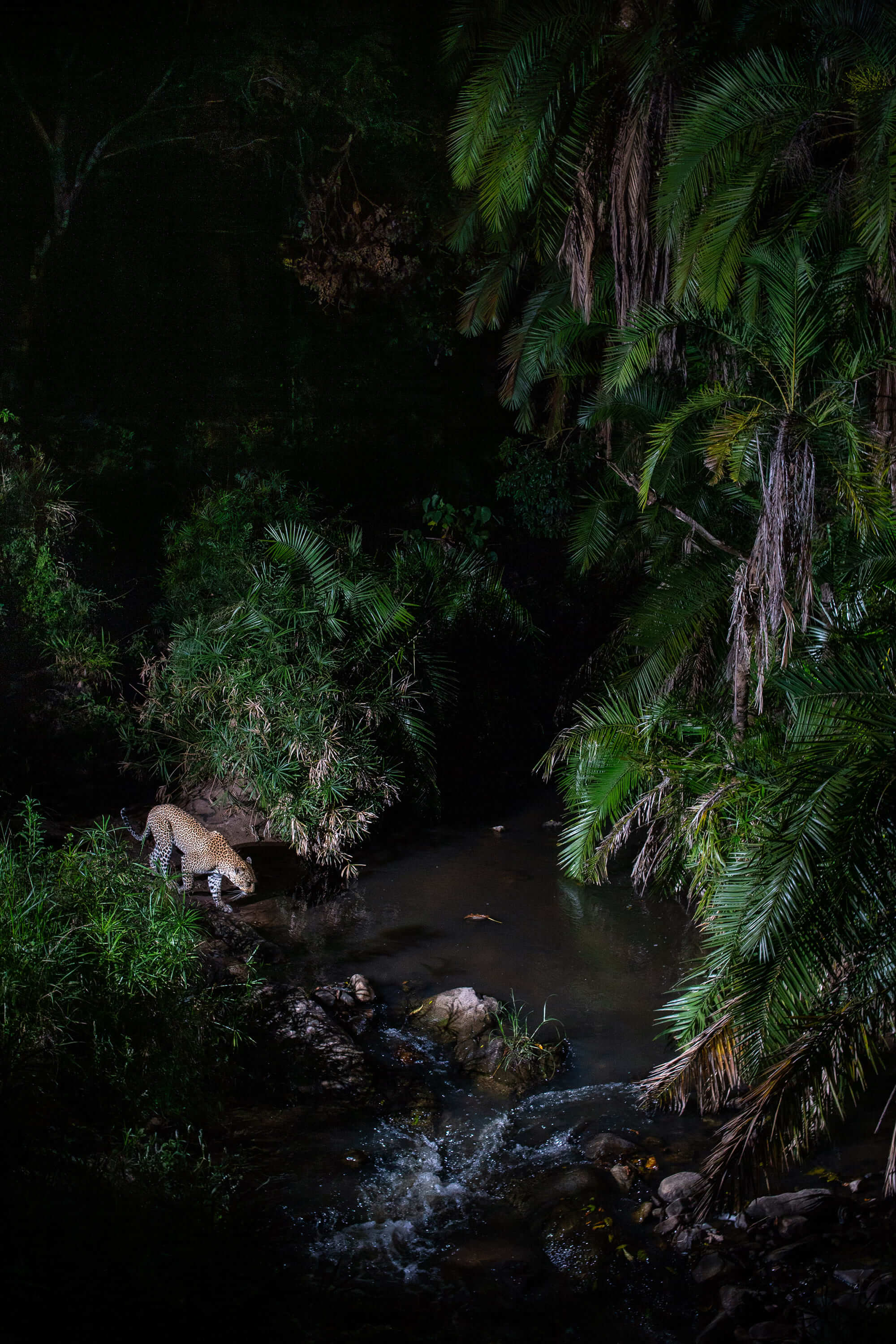
‘Leopard in the forest, 2025’ from the series Hidden Mara by Will Burrard-Lucas
The project began with rhinos in mind, but the crossing soon revealed itself to be a route used by all sorts of wildlife. Elephants, hippos, bushbuck and giraffe all passed through, but this leopard was one of the images that most strongly captured the mystery of the place.
There is something fleeting about it. The leopard seems to materialise out of the darkness for a moment then disappear again. Leopards are such elusive animals that photographing one with a camera trap is, for me, always the ultimate thrill. This image seemed to embody the feeling that the camera had become a window into a hidden nocturnal world that very few people ever get to witness.
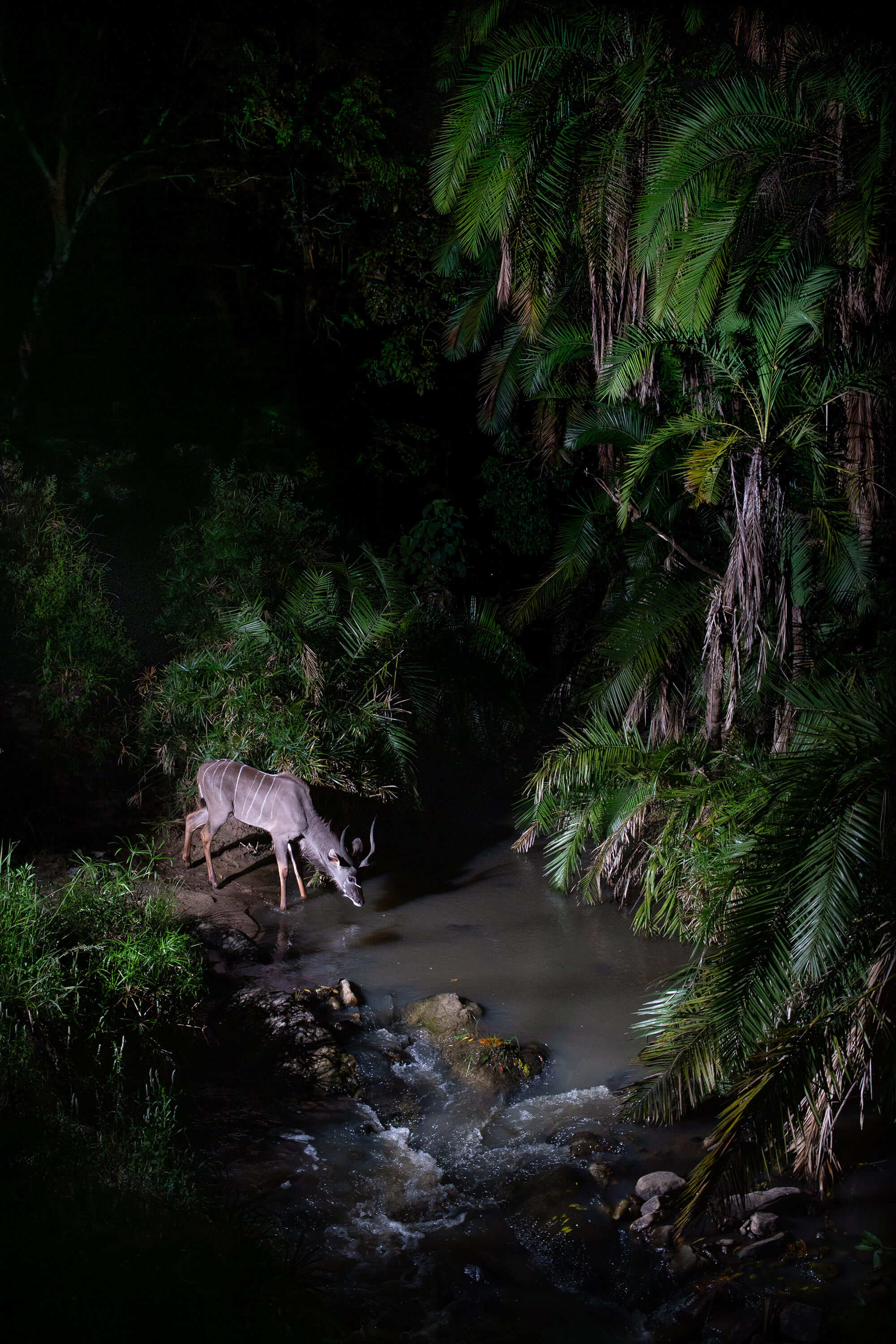
'Greater kudu, 2025’ from the series Hidden Mara by Will Burrard-Lucas
This was one of the biggest surprises of the whole project. When the image first appeared, there was an immediate sense of excitement among the team. For me, it was thrilling simply because kudus are such magnificent animals. But in the Maasai Mara, the sighting meant far more than that. Greater kudu are extremely rarely seen there and had even been considered for reintroduction to the area. To capture one on camera suggested this hidden corner of the Mara was supporting a richer and more unexpected wildlife community than many had realised.
It was a reminder that even in one of Africa’s most famous wildlife destinations there are still secrets waiting to be uncovered.
Discover more work by Will Burrard-Lucas.
The RPS Journal is available exclusively to members. Join the RPS to receive our award-winning magazine and read more inspiring features. Explore full member benefits here.