
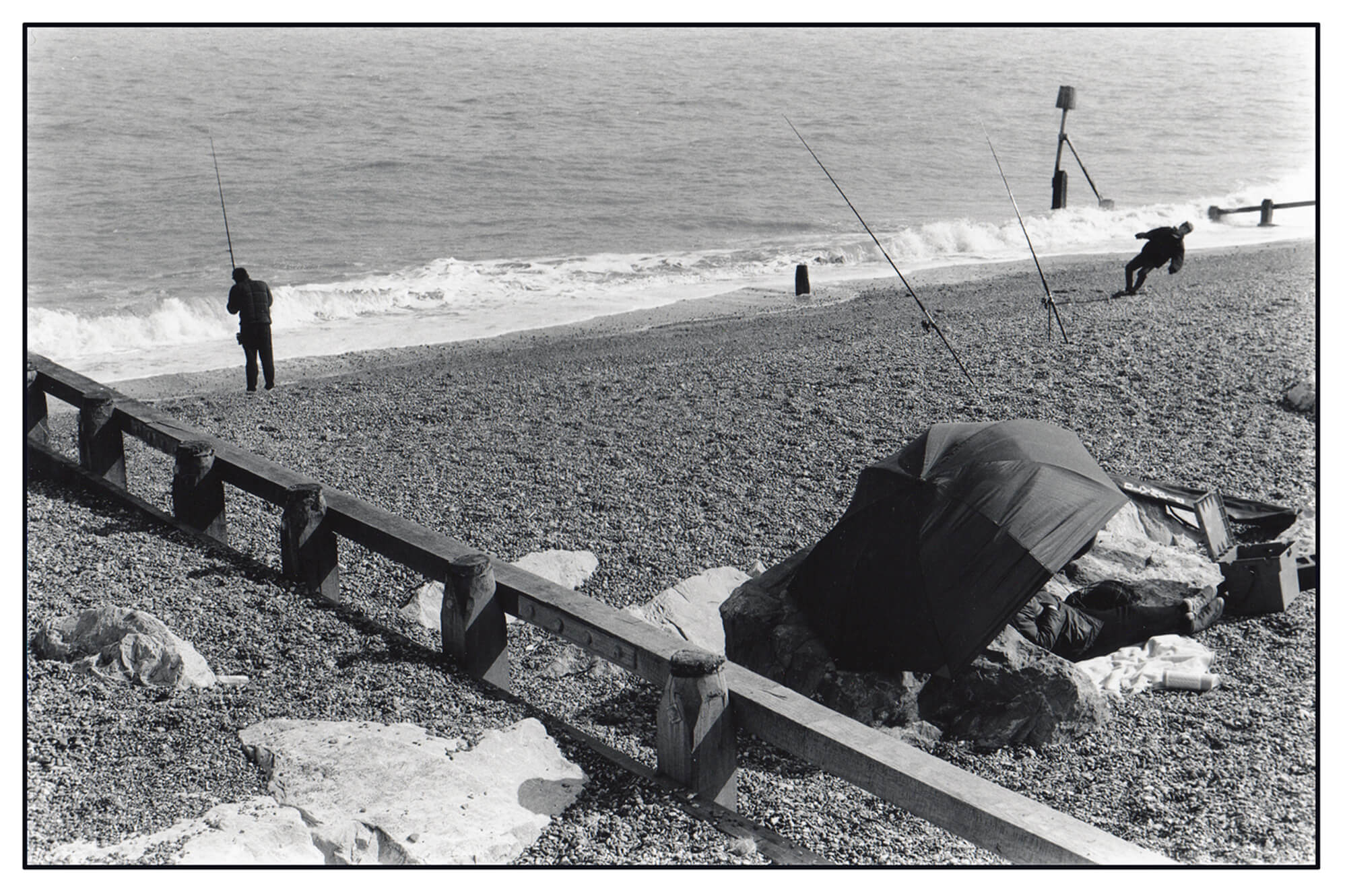
‘The one that got away’ by Clive Heritage-Tilley ARPS
Henri Cartier-Bresson once said that if you find something interesting and wait long enough, the subject will only become more interesting over time.
This aligns with the French photographer’s premise of the decisive moment, which he described as capturing that split second when everything – emotion, timing and composition – align perfectly.
Cartier-Bresson’s advice has steered the approach of the Coventry-born, West-Cornwall-based photographer Clive Heritage-Tilley ARPS – and is the foundation of his book 100 Black & White Photographs.
Here, the 76-year-old discusses his career, the motivation for the book and how learning to slow down can result in impactful black-and-white photography.
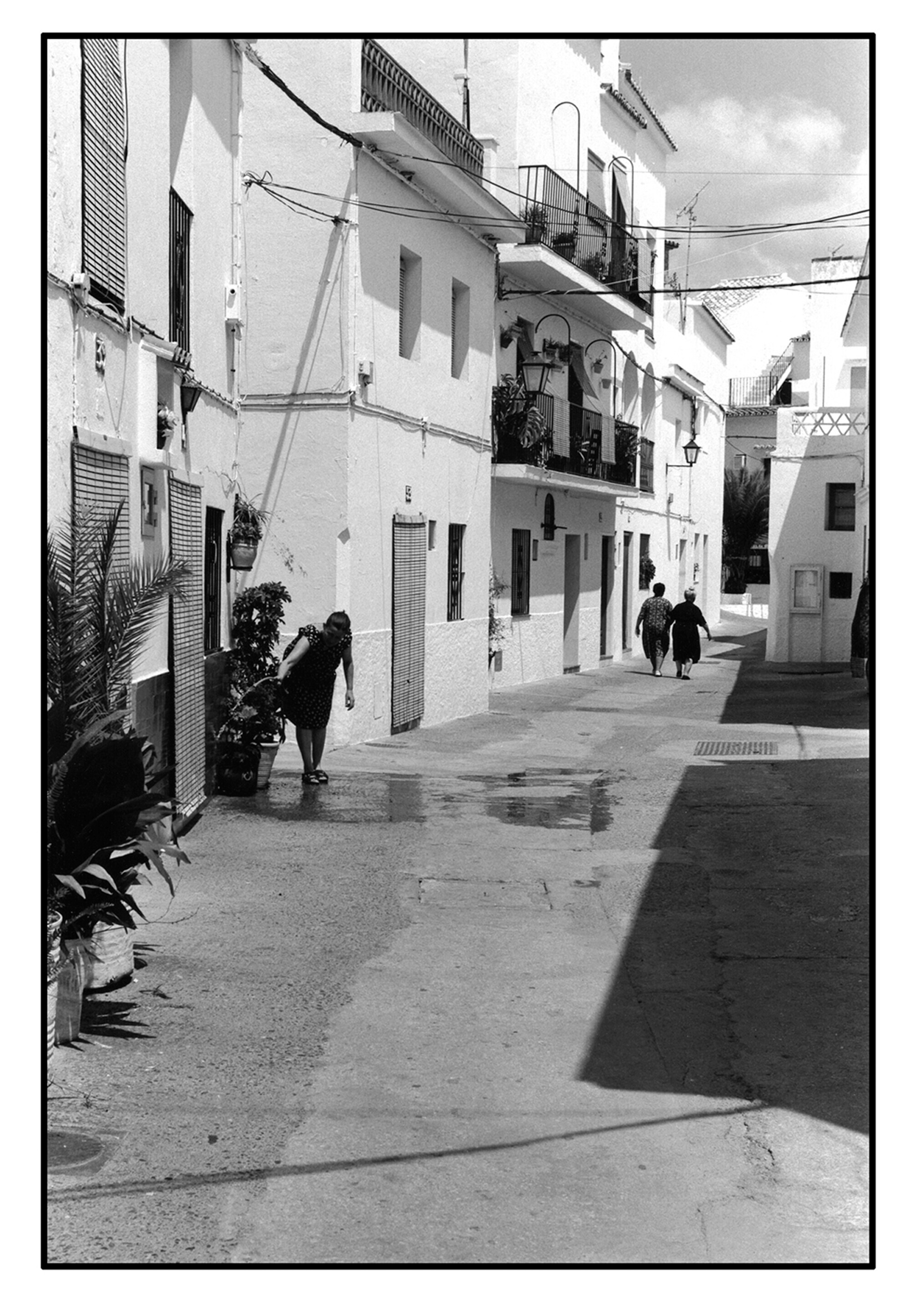
‘Watering time’ by Clive Heritage-Tilley ARPS
Where did your love of photography begin?
I started doing photographic experiments from about the age of seven using print-out paper in a contact printing frame. After leaving school at 16 I worked as an assistant photographer for Eric Penn, the photographer employed by Coventry City Council. While working in this role I attended evening classes at a local college to learn more about photography.
A few years later, I went to Salisbury College of Art to study with the Institute of Incorporated Photographers on a three-year full-time course. The course was very technical and industry orientated. I was more interested in the aesthetics of photography, which was my reason for joining the Society.
For the rest of my career, I was a photographer for a variety of companies before spending the next 25 years until retirement teaching A-Level Photography at colleges.
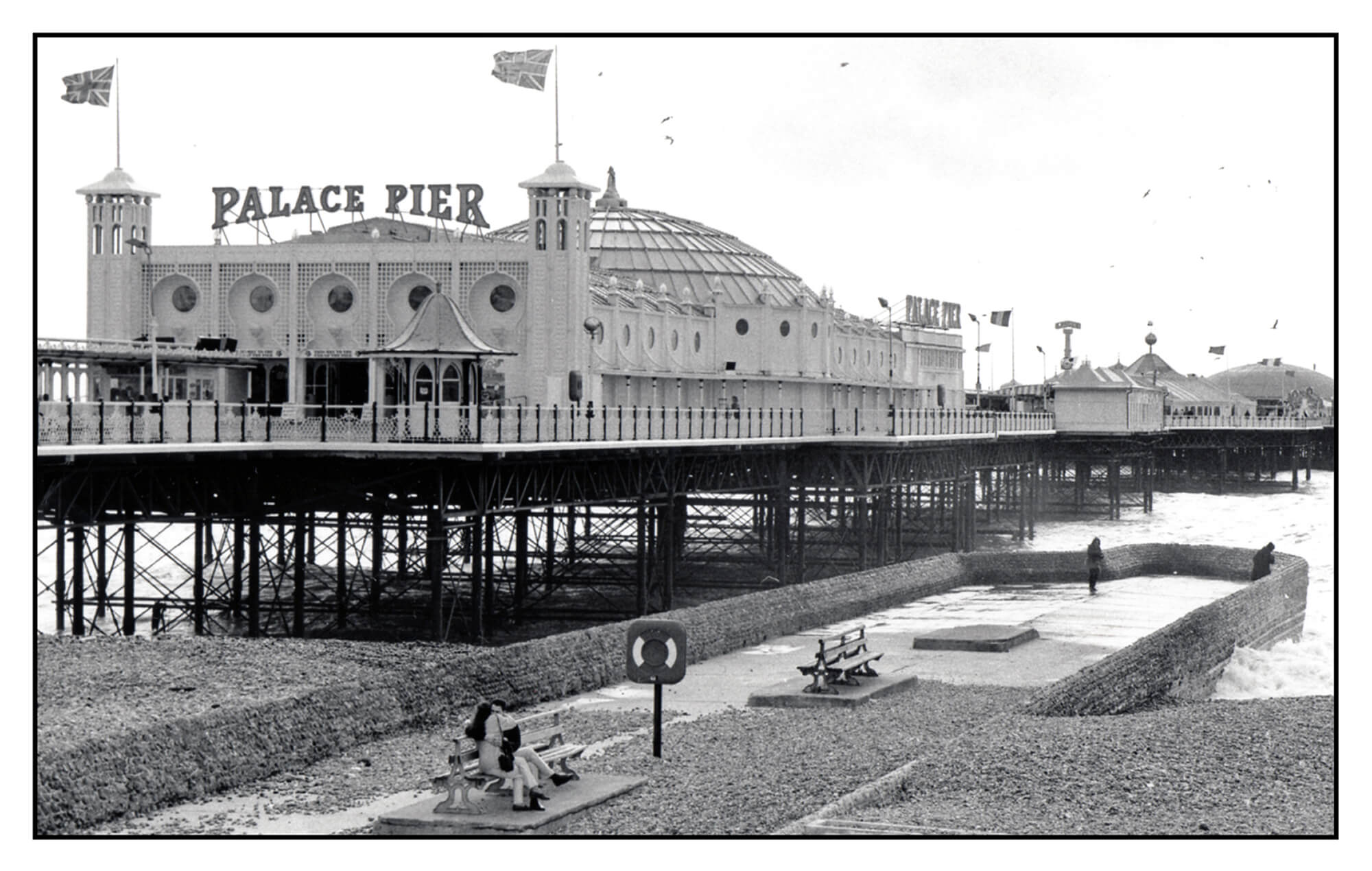
‘Pier of the realm’ by Clive Heritage-Tilley ARPS
Whose photography inspires you?
I admire many photographers, but mostly Henri Cartier-Bresson. The simplicity and composition of his images are what I enjoy the most.
I had the good fortune to meet and chat with him and other Magnum photographers at a Society event in the 1990s organised by members who formed the photographic agency in 1947.
I regard Eugène Atget as the Vincent van Gogh of photography.
When did you achieve your Licentiate and Associate distinctions?
I joined the Society just before applying for my Licentiate, which I achieved in 1975.
After retiring I set my sights on an Associate Distinction. I produced a book of photographs I’d captured on my travels years earlier and decided to submit these for my Associate Travel, awarded in September 2022.
Why do you prefer shooting in black-and-white over colour?
It’s the simplicity of black-and-white photography. Colour can work well but it can sometimes be distracting to a composition. Black-and-white photography allows you to convey meaning in your images more easily and directly.
What do you enjoy about photographing with film?
I really enjoy its physical integrity. Using it forces you to slow down and consider the environment around you.
You haven’t got the hundreds of shots to work with that digital affords – you must be more discerning and deliberate with what you’re trying to capture.
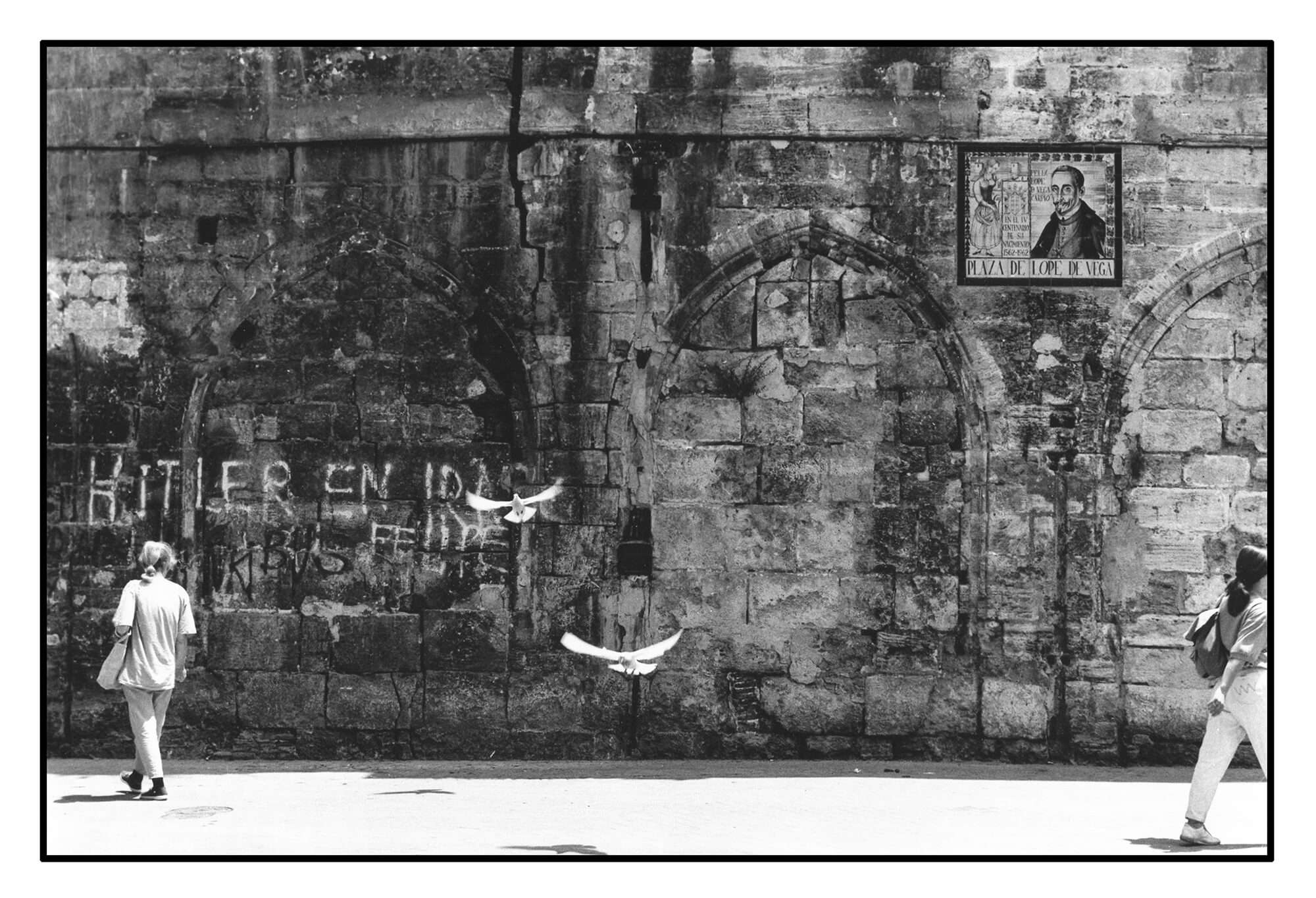
‘Doves of peace’ by Clive Heritage-Tilley ARPS
What will we find in your latest book, 100 Black & White Photographs?
All images within this book are unstaged and captured on black-and-white film using a 35mm camera with a standard 50mm lens.
Although the locations and subjects in these photographs vary, I maintained consistency and simplicity in the approach I used and photographed anything that created an interesting composition within the aspect ratio of the viewfinder.
When it came to selecting from three decades’ worth of images for this book, I simply selected the ones that I thought had the most striking compositions. Creating the book gave me the chance to reflect on and showcase my photographic composition and timing skills in lots of different scenes and scenarios.
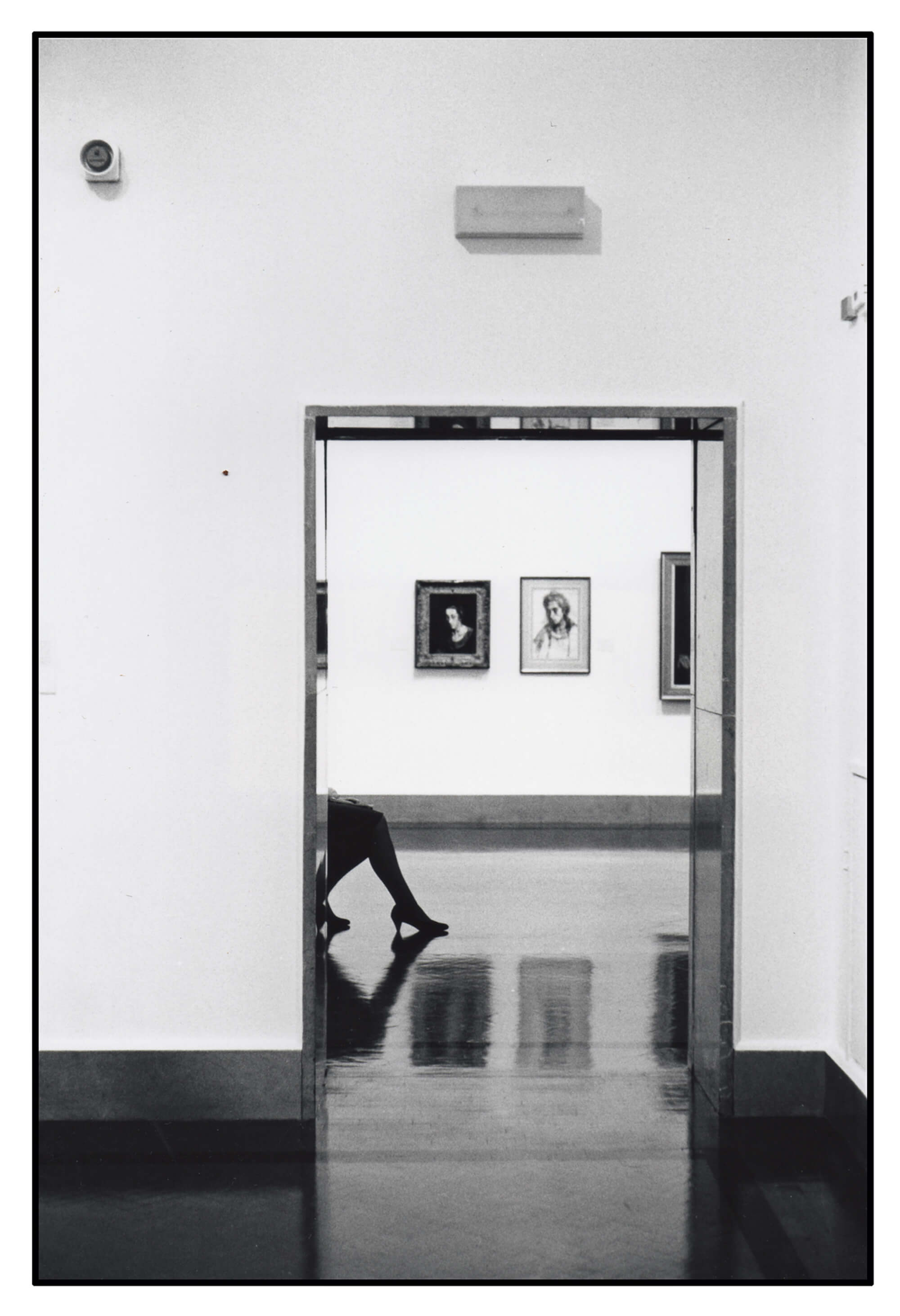
‘Art gallery’ by Clive Heritage-Tilley ARPS
Tell us about creating some of the images within 100 Black & White Photographs.
In many of my images you’ll find echoes of points of interest, together with classic compositional shapes.
In ‘Pier of the realm’, the closeness of the lovers is reflected in the white area of the lifebelt behind them, which forms brackets of enclosure and closeness.
‘The one that got away’ features a classic triangular composition. I viewed this scene of people fishing for quite a while and happened to capture it just as the person in the background is falling.
‘Watering time’ also features classic forms of composition and timing influenced by Henri Cartier-Besson.
What do you want audiences to take from your book?
That you can convey a clear sense of composition and timing through photography.
Also, you don’t have to be in exotic locations or special situations to take impactful pictures. By simply wandering and exploring locations with a camera, you can learn the techniques and methods needed to reveal visually interesting scenes worth photographing.
100 Black & White Photographs by Clive Heritage-Tilley ARPS is published by Troubador.